Women Doctor in Kolkata for Gynaecological & Obstetrical Disorders
Kolkata has a growing network of experienced women gynaecologists and obstetricians who diagnose and treat conditions ranging from menstrual irregularities and PCOS to fibroids, endometriosis, and high-risk pregnancies. Whether you need routine gynaecological screening or specialised obstetric care,
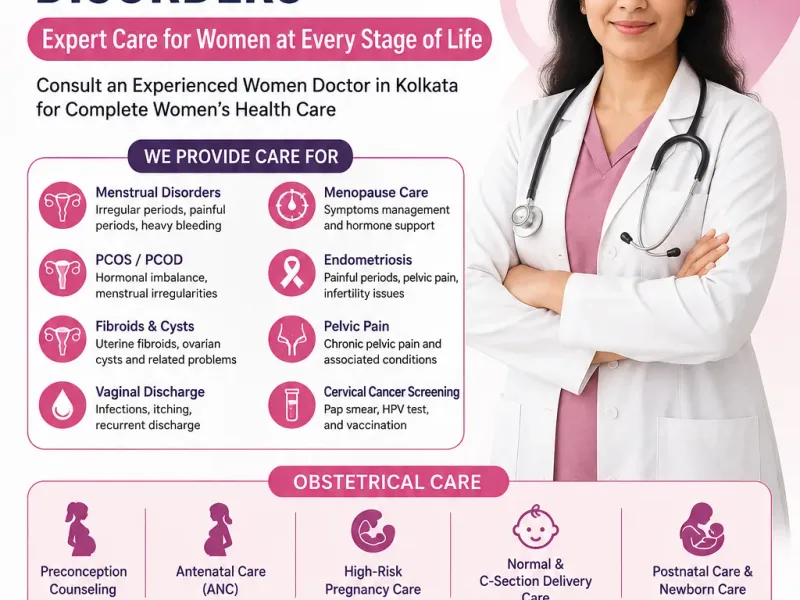
Women dealing with gynaecological or obstetrical disorders in Kolkata have access to a wide range of specialist care — from government medical colleges to private multispecialty hospitals. A qualified women doctor (gynaecologist or obstetrician) diagnoses and manages conditions affecting the female reproductive system across every life stage, from adolescence through menopause. Knowing what your symptoms might indicate is the first step toward getting the right help.
What Is the Difference Between a Gynaecologist and an Obstetrician?
These two specialities are closely related but distinct. A gynaecologist focuses on the female reproductive system — diagnosing and treating disorders of the uterus, ovaries, fallopian tubes, cervix, and vagina. An obstetrician manages pregnancy, labour, and the postpartum period.
Most specialists in India practise as OB-GYNs, handling both. If your concern involves pregnancy, you may need obstetric expertise specifically; for all other reproductive health issues, a gynaecologist is your primary point of contact.
Common Gynaecological Disorders Treated in Kolkata
1. Polycystic Ovary Syndrome (PCOS)
PCOS is one of the most prevalent hormonal disorders among women of reproductive age, affecting an estimated 6–12% of women globally, according to the U.S. Centers for Disease Control and Prevention (CDC). In India, studies published in the Journal of Human Reproductive Sciences suggest prevalence rates as high as 22% in some populations.
Symptoms include irregular periods, excess androgen (male hormone) levels, acne, unwanted facial hair, and difficulty conceiving. Kolkata-based gynaecologists typically manage PCOS through lifestyle modification, hormonal therapy, and, where fertility is a concern, ovulation induction.
[REVIEWER: Please add a brief clinical observation about the most common PCOS presentation pattern you see in your Kolkata patient population, and any locally relevant dietary or lifestyle factors.]
2. Endometriosis
Endometriosis occurs when tissue similar to the uterine lining grows outside the uterus — on the ovaries, fallopian tubes, or pelvic lining. The WHO estimates it affects roughly 190 million women of reproductive age worldwide.
The hallmark symptom is pelvic pain, often severe during menstruation. It is also a leading cause of infertility. Diagnosis requires laparoscopy — a minimally invasive surgical procedure — and treatment ranges from hormonal suppression to surgical removal of lesions.
3. Uterine Fibroids
Fibroids are non-cancerous growths in or on the uterus. According to research in the American Journal of Obstetrics and Gynecology, up to 70–80% of women develop fibroids by age 50, though many remain asymptomatic. Symptoms, when present, include heavy menstrual bleeding, pelvic pressure, frequent urination, and lower back pain.
Treatment depends on fibroid size, location, and the patient's reproductive goals — ranging from medication to minimally invasive procedures like uterine artery embolisation or myomectomy.
4. Cervical Disorders and Cervical Cancer Screening
Cervical cancer is largely preventable with regular Pap smears (Papanicolaou tests) and HPV vaccination. The National Cancer Institute (NCI) recommends Pap smears starting at age 21. In Kolkata, both government hospitals like SSKM and private facilities offer cervical screening.
Precancerous changes (cervical dysplasia) detected early can be treated before they progress. Women who have not had a Pap smear in the last three years should speak to a gynaecologist immediately.
5. Vaginal Infections and STIs
Bacterial vaginosis, vulvovaginal candidiasis (yeast infections), and sexually transmitted infections (STIs) such as chlamydia and gonorrhoea are routinely managed by gynaecologists. The WHO notes that over 1 million STIs are acquired globally every day, most of which are treatable when caught early.
Symptoms — unusual discharge, itching, burning, or odour — should prompt a medical consultation rather than self-treatment, as incorrect antibiotic use contributes to resistance.
6. Menstrual Disorders
Conditions like dysmenorrhoea (painful periods), amenorrhoea (absent periods), menorrhagia (heavy bleeding), and premenstrual dysphoric disorder (PMDD) are among the most common reasons women visit a gynaecologist. These are not simply inconveniences — untreated menorrhagia can cause iron-deficiency anaemia, and amenorrhoea may signal a serious underlying hormonal or structural issue.
7. Menopause-Related Conditions
The transition to menopause — typically between ages 45 and 55 — can bring vasomotor symptoms (hot flushes, night sweats), vaginal dryness, mood changes, and bone density loss. The North American Menopause Society (NAMS) recommends that women discuss symptom management options, including hormone replacement therapy (HRT), with a qualified specialist, as benefits and risks vary by individual health history.
Common Obstetrical Disorders Managed by Women Doctors in Kolkata
High-Risk Pregnancy
A pregnancy is classified as high-risk when maternal or foetal factors increase the chance of complications. Conditions include advanced maternal age (over 35), pre-existing diabetes or hypertension, multiple pregnancies (twins/triplets), and previous pregnancy losses.
High-risk pregnancies require more frequent monitoring, specialist ultrasounds, and sometimes multidisciplinary care. Several Kolkata hospitals — including Apollo Gleneagles, Fortis, and AMRI — have dedicated maternal-foetal medicine units.
Gestational Diabetes Mellitus (GDM)
GDM develops during pregnancy when the body cannot produce enough insulin to meet increased demands. The American Diabetes Association (ADA) notes GDM affects approximately 6–9% of pregnancies in the United States; Indian data suggest higher prevalence in South Asian women.
Left unmanaged, GDM raises the risk of preeclampsia, caesarean delivery, and neonatal hypoglycaemia. Management involves dietary modification, glucose monitoring, and sometimes insulin therapy.
Preeclampsia
Preeclampsia is a pregnancy complication characterised by high blood pressure and signs of organ damage, typically after 20 weeks. According to the WHO, it affects 2–8% of pregnancies globally and is a leading cause of maternal and perinatal mortality.
Early detection through regular antenatal check-ups is critical. Women should be aware that severe headache, sudden swelling of the face or hands, and visual changes during pregnancy require immediate medical attention.
Recurrent Pregnancy Loss
Recurrent miscarriage — defined as two or more consecutive pregnancy losses — affects approximately 1–2% of couples, according to the Royal College of Obstetricians and Gynaecologists (RCOG). Causes include chromosomal abnormalities, uterine structural issues, clotting disorders, and hormonal imbalances. Thorough investigation is essential before the next conception attempt.
[REVIEWER: Please add a clinical note on the investigations you routinely recommend for recurrent pregnancy loss patients in your practice, and any patterns specific to your patient cohort.]
How to Choose the Right Women Doctor in Kolkata
When selecting a gynaecologist or obstetrician in Kolkata, consider:
Qualification: Look for an MD or MS in Obstetrics & Gynaecology, or DNB (Diplomate of National Board).
Hospital affiliation: Reputed hospitals provide access to diagnostic infrastructure and emergency support.
Sub-specialisation: For fertility issues, seek a reproductive endocrinologist; for high-risk pregnancy, a maternal-foetal medicine specialist.
Accessibility: Locations across Kolkata — South Kolkata (Ballygunge, Gariahat), North Kolkata, Salt Lake, and New Town — all have established women's health clinics.
Referrals from a trusted general physician and verified patient reviews are practical starting points.
FAQ: Women Doctor in Kolkata for Gynaecological Disorders
Q1. When should a woman first see a gynaecologist?
The American College of Obstetricians and Gynecologists (ACOG) recommends a first gynaecological visit between ages 13 and 15. In practice, many women first visit when they develop symptoms. Ideally, every adult woman should have an annual gynaecological check-up regardless of symptoms.
Q2. Can a general physician treat gynaecological problems?
A GP can assess initial symptoms and refer appropriately, but gynaecological disorders — particularly PCOS, endometriosis, fibroids, and obstetric complications — require specialist diagnosis and management. Self-treatment or delayed specialist care can worsen outcomes.
Q3. What is the difference between a normal and a high-risk pregnancy?
A high-risk pregnancy involves conditions — maternal, foetal, or both — that increase the likelihood of complications before, during, or after delivery. These include pre-existing illnesses, multiple foetuses, or previous pregnancy complications. High-risk cases require more frequent antenatal visits and specialist oversight.
Q4. Is PCOS curable?
PCOS has no definitive cure, but it is manageable. Lifestyle changes — particularly weight management and diet — can significantly reduce symptoms. Medications regulate hormones and menstrual cycles. Long-term management reduces the risk of type 2 diabetes and cardiovascular disease associated with PCOS.
Q5. How often should a woman get a Pap smear in India?
Current guidelines recommend Pap smears every three years for women aged 21–65, or every five years if combined with an HPV test (co-testing), per the National Cancer Grid India recommendations. Women with certain risk factors may need more frequent screening — consult your gynaecologist.