AI in the Operating Room: How Robotic Surgery & Generative AI Are Redefining Modern Care
A quick look into how real-time generative AI and soft-tissue robotics are transforming the modern operating room—improving surgical precision, reducing recovery times, and giving surgeons super-human situational awareness.
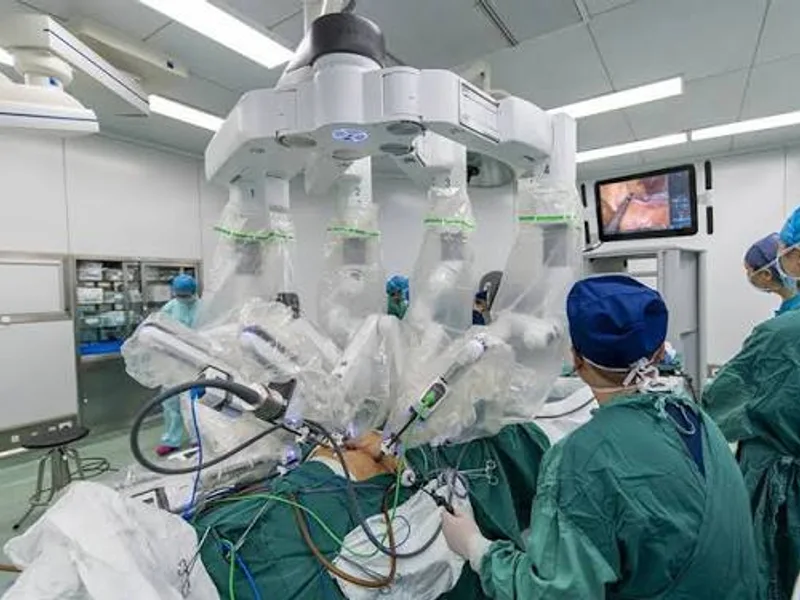
In operating rooms worldwide, a quiet revolution is taking place. High-definition screens illuminate complex anatomical structures while multi-jointed robotic arms execute incisions with sub-millimeter precision. Over the past decade, robotic-assisted surgery transitioned from a niche innovation to a mainstay in specialties like urology, gynecology, and orthopedics.
Today, surgical care is entering its next evolutionary phase: the fusion of artificial intelligence (AI) and soft-tissue robotics.
From Assistance to Augmented Reality
Traditional robotic surgery relies on a master-slave system where the surgeon sits at a console, manually controlling tiny instruments attached to robotic arms. While this improves dexterity and minimizes invasive trauma, the machine acts strictly as an extension of the human hand.
┌─────────────────────────────────────────────────────────┐
│              Surgical AI Integration                    │
├──────────────────────┬──────────────────────────────────┤
│ Pre-Op Planning      │ 3D Anatomical Mapping            │
│ Intra-Op Guidance    │ Real-time Tissue Tracking        │
│ Post-Op Analysis     │ Predictive Recovery Analytics    │
└──────────────────────┴──────────────────────────────────┘
Next-generation systems integrate generative AI and computer vision directly into the surgeon’s display:
Real-Time Tissue Identification: Machine vision algorithms analyze real-time video feeds during surgery to differentiate between tumors, critical blood vessels, and healthy nerves.
Predictive Trajectory Mapping: AI overlay software highlights optimal incision lines and alerts the surgeon if an instrument approaches a high-risk area.
Automated Task Execution: While fully autonomous surgery remains far off, robots can now perform repetitive micro-tasks—such as automated suturing and precise tissue clamping—under direct supervision.
Transforming Patient Outcomes
The real-world impact of these advanced techniques goes beyond high-tech hardware; it directly improves patient recovery metrics.
Parameter | Traditional Open Surgery | Advanced Robotic-AI Surgery |
Incision Size | Large single incision | Small keyhole incisions |
Blood Loss | Moderate to high | Minimal |
Hospital Stay | 3 to 7 days | Same-day or 24–48 hours |
Recovery Time | 4 to 8 weeks | 1 to 2 weeks |
"AI isn't taking over the surgeon's job; it's providing super-human perception so the surgeon can perform complex maneuvers safer and faster."
Key Challenges Facing the Field
Despite rapid adoption, several hurdles remain before AI-driven robotic surgery becomes universal:
High Implementation Costs: Capital investment for robotic platforms and annual maintenance software contracts can exceed millions of dollars per facility, creating disparities in healthcare access.
Surgeon Learning Curves: Transitioning from traditional methods to high-tech consoles requires extensive simulator-based training and fellowship specialization.
Data Security & Ethics: Integrating machine learning models requires vast datasets of recorded operations, raising questions about patient data privacy and liability during software glitches.
The Road Ahead
As 5G connectivity expands and edge computing improves, remote tele-surgery will allow specialist surgeons to operate on patients across different continents in real time. Combined with AI assistance, the surgical suite is transforming from a physical room into an interconnected digital network designed to maximize precision and keep recovery times minimal.