Addiction stigma arts coverage
Films, books and news stories about addiction rarely stay neutral — they either soften stigma or deepen it. This piece looks at how arts and media coverage of addiction shapes public attitudes, why lazy tropes like the
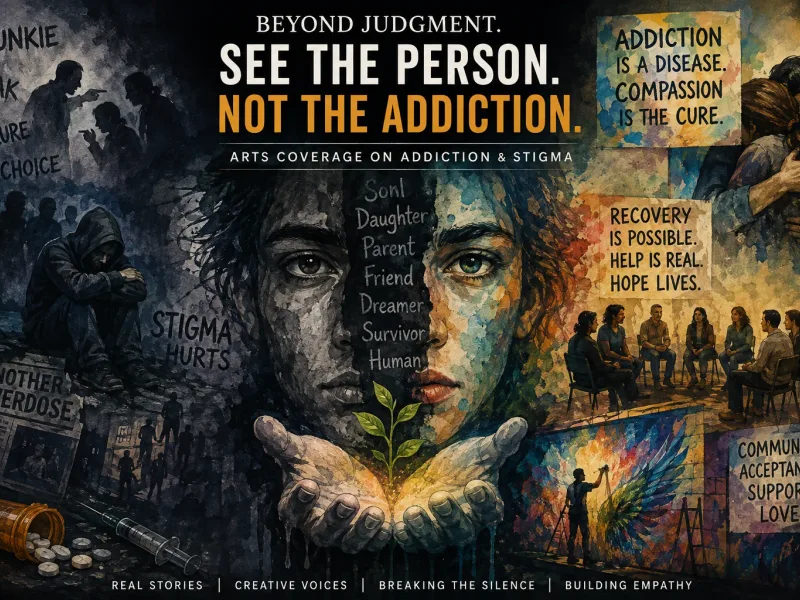
Why the Way We Tell Addiction Stories Matters
A film character stumbles through withdrawal, played for shock value. A news report calls a person "an addict" instead of "a person with a substance use disorder." A song romanticises the high but skips the years of relapse and rebuilding. None of this is accidental — it's a pattern, and it has consequences for real people trying to get help.
Addiction stigma doesn't live only in hospital corridors or family dinner tables. A lot of it is built, quietly, in newsrooms, film sets, and publishing houses. How art and media choose to portray addiction shapes what the general public believes about it — and, more worryingly, what people struggling with it believe about themselves.
The Trouble With the "Junkie" Trope
Older Bollywood and Hollywood films leaned hard on one image: the addict as a criminal, a moral failure, someone beyond saving until a dramatic rock-bottom moment fixes everything in the third act. It's a tidy story. It's also mostly wrong.
Addiction is a chronic, relapsing condition — meaning it tends to come and go over time, much like high blood pressure or asthma, rather than a single event with a clean before-and-after. When arts coverage skips that nuance, audiences walk away thinking recovery is a one-time willpower test. It isn't. Anyone who has sat with a patient through three or four relapses knows that.
In clinical practice, this is often missed because families arrive expecting a straight line from "seeking treatment" to "cured," and when the first attempt doesn't hold, they read it as failure rather than a normal part of a long process. That expectation gap often traces straight back to how recovery gets shown on screen.
When Journalism Gets It Right
Not all coverage is careless. Some of the better health journalism in recent years has moved away from mugshot-style crime reporting and toward interviews with people in recovery, told in their own words. That shift matters more than it might seem.
Language choice alone changes outcomes. Studies in public health communication have repeatedly found that calling someone "a substance abuser" triggers more punitive attitudes among readers than calling the same person "someone with a substance use disorder" — even when the facts described are identical. Word choice isn't just polite; it's functional.
Good coverage also resists the urge to end on either total despair or a too-neat happy ending. Real recovery is messier and slower than both. A documentary or article that shows the boring, unglamorous parts — the follow-up appointments, the routine, the setbacks — does more for public understanding than any dramatic intervention scene.
The Real-World Cost of Getting the Story Wrong
Why does any of this matter beyond the arts pages? Because stigma is one of the biggest reasons people delay treatment, sometimes for years.
Someone who has internalised the "addict as moral failure" narrative is less likely to walk into a clinic, less likely to tell a doctor the whole truth, and more likely to hide a relapse instead of reporting it early. Families exposed to the same tropes are quicker to blame and slower to support — not because they don't care, but because that's the script they've absorbed.
This isn't a call to sanitise every story about addiction. Honest, difficult art has value, and pretending recovery is easy would be its own kind of dishonesty. The goal is accuracy, not a happy filter — showing the condition as it actually behaves, medically and socially.
What Responsible Coverage Should Include
A few markers separate thoughtful coverage from stigmatising coverage:
It treats addiction as a health condition with known risk factors, not a character flaw. It uses person-first language ("a person with addiction," not "an addict"). It includes voices of people in recovery, not just clinicians or law enforcement. And it avoids using relapse as a plot twist or punchline.
Newsrooms and studios that get this right tend to work with a medical reviewer or addiction specialist during production — the same way health journalism should. That step alone catches most of the harmful shortcuts before they reach an audience.
If Stigma Has Kept You From Seeking Help
If any part of this article felt uncomfortably familiar — maybe you've put off a conversation with a doctor because of shame, or a family member has been reluctant to seek care — that hesitation is common, and it's worth pushing past.
A first conversation doesn't have to be dramatic. Many people start with a general physician for an initial, judgment-free check-in, then get referred onward. Others go straight to a psychiatrist or a clinical psychologist if the concern involves substance use alongside anxiety, low mood, or sleep problems, which is common. For nicotine specifically, a quit smoking specialist can help build a structured plan rather than relying on willpower alone.
If leaving the house feels like too big a first step, home visit doctors and nurse-at-home services exist for exactly that reason. Recovery also involves the body, not just behaviour — a pulmonologist for lung health, a gastroenterologist for liver and gut concerns, a cardiologist for heart strain, and an endocrinologist for hormone and metabolic follow-up are all part of a complete recovery plan, not an afterthought.