Understanding Yellowing in Newborns: A Guide for Indian Parents
Meena, 45, a homemaker from Jaipur, noticed her two-day-old infant, Rohan, looking distinctly yellow. A swift call to her paediatrician confirmed her apprehension: Rohan had neonatal jaundice.
This frequent occurrence, impacting a substantial proportion of infants in India, can understandably cause worry for new parents. Have you ever pondered why so many infants develop this yellowish hue?
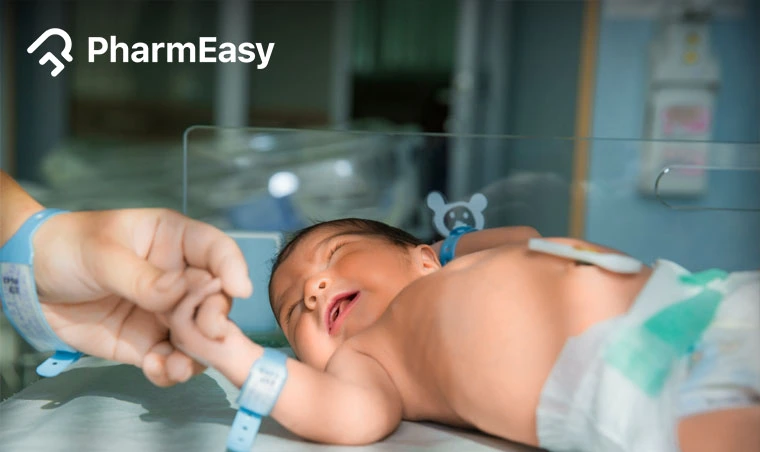
Neonatal jaundice, scientifically known as hyperbilirubinemia, is a condition marked by a yellowing of the skin and the whites of the eyes. It arises when there's an excess of bilirubin, a yellow substance generated during the natural degradation of red blood cells, circulating in the infant's bloodstream.
While frequently benign and transient, grasping its origins, manifestations, and when to seek professional assistance is vital for all guardians. The critical point is that early identification and proper handling can avert significant health issues.
Reasons for Yellowing in Newborns
The liver in a newborn is still developing. This developmental stage means it cannot metabolize bilirubin as effectively as an adult's liver.
This physiological form of jaundice is the most prevalent type, emerging after 24 hours of life and typically resolving on its own within one to two weeks. Nevertheless, other elements can contribute to more pronounced presentations of this disorder.
Recovery is rarely linear.
Physiological Jaundice
This represents a natural and anticipated state in approximately 60% of full-term infants and 80% of premature ones. It generally appears on the second or third day of life, reaches its peak around the fifth day, and then gradually subsides. The concentrations of bilirubin usually remain within safe limits in this scenario.
Breastfeeding Jaundice
This variant is linked to insufficient milk consumption. If an infant is not receiving adequate nourishment from nursing, their bowel movements might be infrequent, leading to reduced elimination of bilirubin from the body. This form is more commonly observed during the initial week of life.
Breast Milk Jaundice
Less prevalent than breastfeeding jaundice, this type emerges later, typically after the first week of life, and can persist for several weeks. It is believed to stem from substances present in the mother's milk that impede the infant's capacity to process bilirubin.
Honestly, differentiating this from other forms necessitates a thorough clinical assessment.
Blood Type Discrepancy (ABO or Rh)
When a mother and her infant possess different blood types, the mother's antibodies may traverse the placenta and cause the destruction of the infant's red blood cells. This results in a swift escalation of bilirubin levels. This is a marked contributor to severe newborn jaundice and demands immediate medical intervention.
The numbers don't lie.
Other Health Concerns
In less frequent circumstances, neonatal jaundice can signal underlying health problems. These encompass:
- Infections (sepsis)
- Bruising or bleeding beneath the scalp (cephalohematoma)
- Certain inherited disorders like G6PD deficiency, which is widespread in some regions of India.
- Issues affecting the infant's red blood cells.
- Complications involving the liver or bile ducts.
According to the Indian Academy of Pediatrics (IAP), roughly 30-40% of infants in India experience some degree of this disorder, with severe instances necessitating intervention.
Manifestations of Yellowing in Newborns
The most apparent indication is the yellowing of the skin and the sclera (whites of the eyes). This yellowish discolouration typically commences on the face and then progresses downwards to the chest, abdomen, arms, legs, and even the soles of the feet.
In numerous instances, the yellowing is most evident when gentle pressure is applied to the infant's skin.
Beyond the visible yellowing, other indicators that might suggest more meaningful jaundice or an underlying issue include:
- Lethargy or difficulty rousing the infant for feedings.
- Poor feeding or weak sucking reflex.
- Dark urine (although newborns' urine is often colourless, it can appear deeply yellow if concentrated).
- Pale stools (lighter than usual or clay-coloured).
- A high-pitched cry.
- Fever or a low body temperature.
- Vomiting.
What many overlook is that the yellowing can fluctuate. The discolouration might seem to diminish and then reappear, or worsen considerably over a brief period. This underscores the importance of continuous observation.
Identifying Jaundice
Identifying jaundice is generally uncomplicated. An initial visual assessment by a healthcare provider is the first step. To confirm the diagnosis and gauge the severity, a laboratory test is typically conducted. This test quantifies the concentration of bilirubin in the infant's circulation.
A transcutaneous bilirubinometer is a non-intrusive device that can be utilized for initial screening. It measures light reflected from the skin to estimate bilirubin levels.
However, if the readings are elevated or ambiguous, a laboratory analysis remains essential. As per the World Health Organization (WHO), prompt measurement of bilirubin levels is paramount for effective management.
That alone changes everything.
Treatment for Neonatal Jaundice
The therapeutic strategy is entirely contingent upon the underlying cause, the degree of jaundice (bilirubin levels), and the infant's gestational age and general well-being. Mild presentations, particularly physiological jaundice, often require no specific intervention beyond encouraging frequent nursing to assist the infant in excreting bilirubin.
Phototherapy
This is the most common and successful remedy for moderate to pronounced jaundice. The infant is positioned under specialized fluorescent lamps (blue or white) or a light-emitting diode (LED) system. These lights facilitate the breakdown of bilirubin within the skin into a form that can be more readily eliminated by the liver and kidneys.
The infant's eyes are shielded for protection, and they are typically clad only in a diaper to maximize skin exposure to the light. This therapy can be administered in a hospital setting or, in some instances, at home with specialized equipment.
Exchange Transfusion
This represents a more intensive intervention reserved for instances of meaningful jaundice that do not respond adequately to phototherapy or when bilirubin concentrations reach dangerously high levels. In this procedure, the infant's circulating blood is gradually withdrawn and replaced with donor blood.
That's the part worth remembering.
This process effectively removes bilirubin and antibodies responsible for red blood cell destruction. It is a critical intervention that can be life-saving but carries inherent risks.
Pharmaceutical Interventions
In particular circumstances, medications such as phenobarbital may be prescribed to aid the liver in processing bilirubin more rapidly. Intravenous immunoglobulin (IVIG) might be administered in cases of blood type incompatibility to reduce the necessity for exchange transfusions.
Home Care and Nourishment
For mild jaundice, increasing the frequency of feeding is paramount. Breast milk stands as the optimal source of sustenance and hydration for a newborn. Frequent nursing (8-12 times per day) helps stimulate bowel movements, which facilitates bilirubin elimination.
If nursing presents challenges, seeking guidance from a lactation consultant is strongly advised. Occasionally, a temporary supplement of expressed breast milk or formula may be recommended by the physician, particularly if breastfeeding jaundice is suspected.
When to Be Concerned: Warning Signs
Although the majority of newborn jaundice is not a cause for alarm, certain signals necessitate immediate professional evaluation. What actions should you take if you observe these?
- Jaundice that manifests within the initial 24 hours of life.
- The yellowing of the skin is intense and spreads rapidly.
- The infant appears very unwell, lethargic, or is difficult to awaken.
- The infant is not feeding effectively.
- The infant exhibits a fever or seems unusually agitated.
- The infant's stools are pale or chalky, and their urine appears dark.
It is essential to remember that persistent or worsening jaundice, especially when accompanied by other troubling symptoms, requires prompt assessment by a paediatrician or neonatologist. A study published in The Lancet underscored that kernicterus—a rare yet severe form of brain damage caused by exceedingly high bilirubin levels—can be averted through timely intervention.
Most people overlook this completely.
Preventing Newborn Jaundice
While not all instances of jaundice can be prevented, specific measures can mitigate the risk and severity:
- Adequate Antenatal Care: Regular prenatal check-ups allow for the early identification of potential complications such as blood type incompatibility.
- Encourage Early and Frequent Feeding: Initiate breastfeeding as soon as feasible after birth, ideally within the first hour. Aim for 8-12 feeding sessions every 24 hours. Proper hydration is crucial for assisting the infant in clearing bilirubin.
- Monitor for Jaundice: Regularly observe your infant's skin tone, particularly in natural light. Learn to recognize the signs and understand when to seek assistance.
- Communicate with Healthcare Providers: Always inform your doctor or nurse about your infant's jaundice, especially if it appears pronounced or is accompanied by other signs.
- Manage G6PD Deficiency: If there is a family history or if G6PD deficiency is suspected or diagnosed, avoid certain medications (such as sulfa drugs) and foods (like fava beans) that can provoke hemolytic anaemia in affected infants.
The International Diabetes Federation (IDF) notes that while diabetes and jaundice are distinct conditions, managing overall maternal and infant health is of utmost importance. Adopting proactive strategies can significantly contribute to a healthier beginning for your baby.
Key Takeaways
- Jaundice is a prevalent occurrence in newborns, affecting up to 60% of term infants, due to an immature liver's reduced capacity to process bilirubin.
- The most visible sign is yellowing of the skin and eyes; seek professional help if it appears within 24 hours, spreads rapidly, or is accompanied by lethargy or poor feeding.
- Phototherapy serves as the primary management for moderate to pronounced jaundice, utilizing special lights to break down bilirubin.
- Frequent nursing (8-12 times daily) is vital for mild cases, supporting bilirubin excretion.
- Regular monitoring and prompt medical evaluation are essential for preventing serious outcomes like kernicterus.
Nurturing a child involves numerous learning experiences, and understanding widespread infant conditions like jaundice is an integral part of that journey. By remaining well-informed and collaborating closely with healthcare professionals, you can ensure your baby receives the highest standard of care.
Always consult a qualified physician before making any health-related decisions.