Understanding Cryptococcus and Its Impact
Cryptococcus is a genus of fungi that can cause serious infections, particularly in individuals with weakened immune systems. These infections, known as cryptococcosis, often affect the lungs and the central nervous system, leading to meningitis. Think about it this way: the fungus, often found in soil and bird droppings, can become a significant threat when the body’s defenses are compromised.
Honestly, the consequences can be severe, ranging from persistent headaches and fever to life-threatening neurological complications. Have you ever wondered why prompt and accurate diagnosis is so vital?
The Role of India Ink in Diagnosis
For decades, a simple yet powerful laboratory technique has been instrumental in identifying the presence of Cryptococcus: the India ink stain. This method relies on the characteristic appearance of the yeast cells under a microscope. What should you actually do if you suspect such an infection?
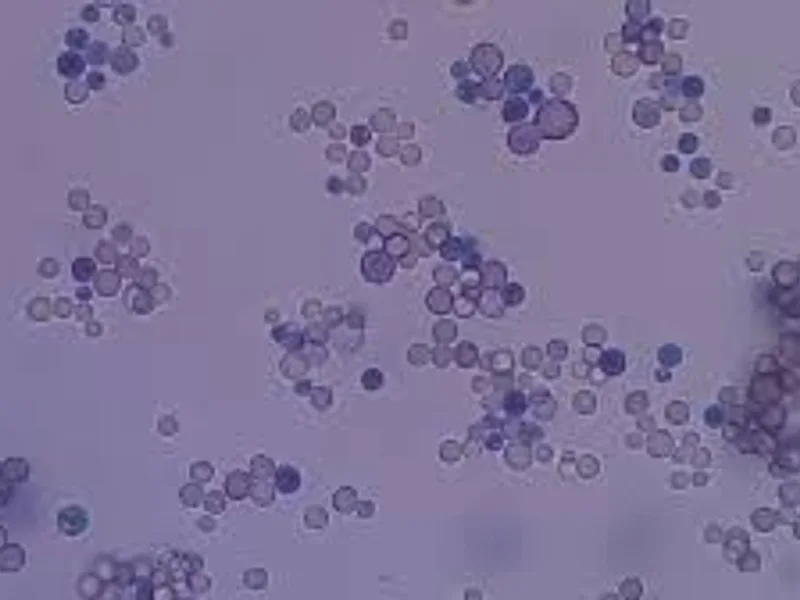
A sample, often cerebrospinal fluid (CSF) from a lumbar puncture, is mixed with India ink. The ink, which does not penetrate the yeast's capsule, creates a dark background, making the unstained yeast cells appear as clear halos. This visual contrast enables physicians to quickly detect the fungus.
And yet, so many people miss it.
How the India Ink Stain Works
In many cases, the India ink stain is a rapid, cost-effective, and readily available diagnostic approach. The process is straightforward: a drop of the biological sample is combined with a drop of India ink on a microscope slide. A coverslip is then applied, and the mixture is examined under a light microscope.
The distinctive clear halos surrounding the yeast cells are the key indicators. These capsules are a hallmark of Cryptococcus neoformans and Cryptococcus gattii, the primary species responsible for human infections. This visual confirmation can significantly speed up the initiation of appropriate therapy.
India Ink's Continued Relevance in India
Despite advancements in molecular diagnostic techniques, the India ink stain retains its crucial position, especially in resource-limited settings like many parts of India. Its simplicity and minimal requirement for specialized equipment make it an accessible tool for numerous laboratories across the country.
Specialists often rely on this method as a first-line diagnostic test due to its speed and reliability in detecting the characteristic yeast. In real-world terms, this means that even in remote areas, physicians can often get a preliminary diagnosis swiftly, enabling faster patient care.
It sounds simple. It rarely is.
Advantages of the India Ink Method
Speed: Results can often be obtained within minutes of sample collection.
Accessibility: Requires only basic microscopy equipment and readily available reagents.
Cost-effectiveness: Significantly cheaper than more complex molecular tests.
Visual Confirmation: Provides a direct visual identification of the fungal cells.
Limitations and When to Use Other Methods
However, it is important to acknowledge the limitations of the India ink stain. Its sensitivity can vary, meaning it might not detect all cases, particularly those with a very low fungal load. Sometimes, other yeasts or even white blood cells can be mistaken for Cryptococcus, leading to false positives. Have you ever wondered why?
This is why confirmatory tests are often necessary. For instance, fungal culture and antigen detection tests provide more definitive results and are crucial for confirming the diagnosis and guiding treatment decisions. Specialists may also employ polymerase chain reaction (PCR) for highly sensitive and specific detection.
Complementary Diagnostic Approaches
In conjunction with the India ink stain, physicians often order further investigations. Fungal cultures are considered the gold standard for confirming Cryptococcus species identification and determining antifungal susceptibility.
The capsular antigen test, particularly for Cryptococcal Antigen (CrAg), is another highly sensitive and specific method that helps in diagnosing cryptococcosis and assessing prognosis. Honestly, combining these approaches strengthens the diagnostic accuracy and enables a more tailored care plan for those affected.
That alone changes everything.
The Human Element: Patient Experience and Care
For people undergoing diagnostic procedures, especially those involving a lumbar puncture, the experience can be daunting. Understanding the purpose of tests like the India ink stain can help alleviate some anxiety. It's a vital step towards identifying the cause of their illness and initiating powerful therapy.
The swiftness with which this simple stain can provide answers is truly remarkable, offering hope and a clear path forward for patients facing serious infections. What should you actually do if you are concerned about your health? Always consult a qualified healthcare professional for accurate diagnosis and therapy advice.
The Future of Cryptococcus Diagnostics
While the India ink stain remains a cornerstone, research continues to develop even faster and more sensitive diagnostic tools. Efforts are focused on improving point-of-care diagnostics that can be used directly at the patient's bedside, further enhancing the speed of diagnosis.
Ultimately, the goal is to make sure proven care reaches all individuals affected by Cryptococcus infections as quickly as possible, improving outcomes and saving lives. The continued evolution of diagnostic technology promises even greater support for physicians and better health for people worldwide.
Recovery is rarely linear.