Understanding the Modified Acid-Fast Stain
Persistent digestive trouble can be incredibly frustrating. When standard tests come back negative, yet signs like chronic diarrhea, cramping, and unexplained weight loss continue, specialists often turn to more specific diagnostic tools to uncover the root cause.
One such vital test is the modified acid-fast stain for stool, a powerful laboratory technique designed to identify certain microscopic parasites that other methods might miss. This procedure isn't your everyday stool analysis; it’s a specialized approach for detecting organisms that are notoriously difficult to spot.
Unlike the standard acid-fast stain—which is famously used to detect the bacteria causing tuberculosis—the modified version uses a weaker acid solution for decolorization. This subtle but crucial change is what enables laboratory technicians to successfully identify specific protozoan parasites whose cell walls are less robust than mycobacteria but still resistant enough to hold onto a primary stain.
Without this modification, these tiny organisms would simply blend into the background, leaving people without a clear diagnosis.
Why is This Test Crucial for Diagnosis?
Physicians typically order this test when they suspect an infection by a specific group of parasites known as coccidia. What most people miss is that these aren't worms or bacteria; they are single-celled organisms that can wreak havoc on the gastrointestinal system. The primary targets of the modified acid-fast stain are:
The numbers don't lie.
Cryptosporidium parvum: A leading cause of prolonged, watery diarrhea, especially dangerous for those with weakened immune systems.
Cyclospora cayetanensis: Often linked to contaminated fresh produce, this parasite causes cyclical bouts of diarrhea, fatigue, and bloating that can last for weeks or even months.
Cystoisospora belli (formerly Isospora belli): This organism also causes severe diarrhea and malabsorption, leading to significant weight loss and nutritional deficiencies.
These parasites release oocysts (a hardy, egg-like stage) in the stool, which is precisely what the stain is designed to detect. In many cases, these infections are particularly prevalent among certain populations, including young children in daycare settings, international travelers, and, most critically, immunocompromised individuals (such as those with HIV/AIDS or organ transplant recipients), for whom these infections can be life-threatening.
A Look Inside the Laboratory Process
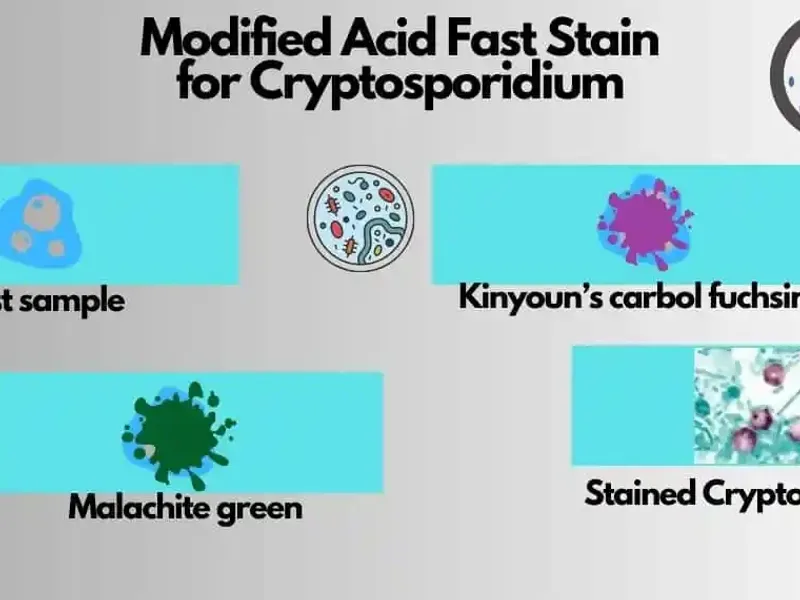
To demystify the science, let's walk through how this impactful diagnostic tool works. The entire process hinges on the unique composition of the parasite's oocyst wall, which contains waxy lipids that standard stains cannot penetrate effectively.
Step 1: Smear Preparation and Primary Staining
First, a technician prepares a thin smear of the concentrated stool sample on a glass microscope slide. The slide is then flooded with a bright red-pink dye called carbolfuchsin. A gentle heat may be applied to assist the dye in penetrating the waxy outer layer of any oocysts present in the sample.
Step 2: The 'Modified' Decolorization
Here is where the key step happens. A weak acid-alcohol solution is washed over the slide. This solution is strong enough to strip the red dye from almost everything else—background debris, other cells, and most bacteria—but not from the acid-fast oocysts. Their waxy walls lock the dye in, refusing to let it go.
And yet, so many people miss it.
Step 3: Counterstaining for Contrast
Finally, a contrasting dye, typically methylene blue or malachite green, is applied. This counterstain colors all the decolorized background elements blue or green. Think about it this way: the process essentially uses a special highlighter that only sticks to the parasitic culprits, making them stand out vividly against a different-colored backdrop.
When viewed under a microscope, the target oocysts appear as bright red or pink jewels against a sea of blue or green. This sharp contrast is what allows for a definitive identification.
Interpreting Your Results and Planning Your Care
Once the lab work is complete, a report is sent to your physician. Understanding what it means is the next vital step in your health journey. So what does that mean for you?
A Positive Result
A positive result confirms the presence of acid-fast oocysts in your stool sample. The report will often identify the specific parasite—*Cryptosporidium*, *Cyclospora*, or *Cystoisospora*.
This definitive diagnosis is excellent news, as it ends the uncertainty and allows your specialist to prescribe a targeted therapy. The right antiparasitic medication can effectively clear the infection and resolve your symptoms, enabling a path to recovery.
A Negative Result
A negative result means no acid-fast organisms were detected in the sample provided. While this can be reassuring, it doesn't necessarily mean you are in the clear.
It successfully rules out these specific parasites as the cause of your illness. Your physician will then use this information to explore other potential causes for your signs, which could include bacterial infections, viral agents, or non-infectious conditions like irritable bowel syndrome (IBS) or inflammatory bowel disease (IBD).
What's the bottom line here? The modified acid-fast stain is an exceptionally useful diagnostic tool. It provides clarity for people suffering from persistent and otherwise unexplained gastrointestinal distress. By accurately identifying or ruling out these tricky parasites, this test empowers physicians to create an effective care plan tailored to your specific situation. Honestly, getting a precise diagnosis is the first and most crucial step toward regaining your health and well-being.