

Emergency & Help
24/7 Emergency & General Advisory
🚨 24/7 Medical Emergency
Non-Emergency Advisory
10:00 AM – 6:00 PM, Mon–Sat
For appointments & general queries.
24/7 Emergency & General Advisory
🚨 24/7 Medical Emergency
Non-Emergency Advisory
10:00 AM – 6:00 PM, Mon–Sat
For appointments & general queries.
Understand how Aetna Medicare Advantage plans can cover your vision needs, including eye exams, glasses, and contacts. Learn about eligibility, costs, and enrollment.

Navigating health insurance can feel like a maze, especially when it comes to understanding what’s covered. If you’re eligible for Medicare and considering an Aetna Medicare Advantage plan, you might be wondering about vision care. Many people rely on their insurance to help manage the costs of routine eye exams and prescription eyewear. This is where Aetna Medicare Advantage plans can offer significant benefits, often going beyond what Original Medicare provides.
Original Medicare, which includes Part A (hospital insurance) and Part B (medical insurance), generally doesn't cover routine eye exams or glasses. Part B does cover some medically necessary eye care, like treatment for macular degeneration or glaucoma, and diagnostic tests for conditions like diabetes-related eye disease. However, for everyday vision needs, you’ll typically need additional coverage.
Medicare Advantage plans, also known as Part C, are an alternative way to receive your Medicare benefits. These plans are offered by private insurance companies, like Aetna, and must provide at least the same coverage as Original Medicare. A key advantage of many Medicare Advantage plans is that they often include extra benefits, such as vision, hearing, and dental care.
Yes, many Aetna Medicare Advantage plans do offer vision coverage. This is a significant plus for beneficiaries who need regular eye check-ups and corrective lenses. These plans are designed to provide a more comprehensive healthcare package, integrating essential services like vision care alongside standard medical and hospital coverage.
While the specifics can vary from plan to plan, Aetna Medicare Advantage vision coverage often includes:
It’s important to remember that these benefits are part of the package offered by the Medicare Advantage plan, not Original Medicare itself. This means you'll be using the services provided through your Aetna plan.
Aetna offers a range of Medicare Advantage plan types, and vision coverage can be included in many of them. These can include:
The availability of specific plans, including those with vision benefits, can depend on your location (ZIP code) and the state you live in. Aetna operates in many U.S. states, but plan offerings are localized.
The cost associated with vision coverage within an Aetna Medicare Advantage plan isn't a one-size-fits-all figure. Several factors influence your out-of-pocket expenses:
To get a clear picture of the costs, you’ll need to compare specific plans available in your area. Medicare’s official plan finder tool is an excellent resource for this.
Eligibility for Aetna Medicare Advantage plans, including those with vision benefits, follows the general rules for Medicare enrollment:
Before you can enroll in an Aetna Medicare Advantage plan, you must first be enrolled in Original Medicare (Part A and/or Part B). If you are eligible for Original Medicare, you can then explore Aetna’s Advantage plans during your Initial Enrollment Period, a Special Enrollment Period, or the Annual Election Period.
Enrolling in an Aetna Medicare Advantage plan is a straightforward process:
A Real-Life Scenario: Mrs. Sharma, a 70-year-old retired teacher living in Jaipur, recently noticed her eyesight wasn't as sharp as it used to be. She was worried about the cost of an eye exam and new glasses, as her Original Medicare didn't cover these. After looking into her options, she found an Aetna Medicare Advantage plan available in her area that included an annual $150 allowance for glasses and covered her routine eye exam with a $20 copay. This made her decision easy, and she scheduled her appointment the same week.
While routine check-ups are essential, it’s also vital to seek medical attention promptly if you experience any of the following:
These symptoms could indicate a more serious eye condition that requires immediate medical evaluation and treatment, which may be covered under Part B of Original Medicare or your Medicare Advantage plan’s medical benefits.
Cataract surgery is typically considered a medically necessary procedure and is usually covered by Original Medicare (Part B) and, by extension, Medicare Advantage plans. Coverage details, including any copayments or coinsurance, will depend on your specific plan. You’ll likely need to use an in-network surgeon for the best coverage.
Whether you can use any eye doctor depends on the type of Aetna Medicare Advantage plan you have. HMO plans generally require you to see in-network providers. PPO plans offer more flexibility but may cost more if you go out-of-network. Always check your plan's provider directory to confirm if your preferred eye doctor is in-network.
You can have Original Medicare, a Medicare Advantage plan, and a separate, stand-alone vision plan. However, if your Medicare Advantage plan includes vision benefits, you might not need a separate plan, depending on your needs and the coverage offered. It’s best to compare the benefits to avoid paying for overlapping coverage.
Most Aetna Medicare Advantage plans provide coverage for new frames and lenses once per year, often through an annual allowance. The exact frequency and the amount of the allowance vary by plan. Review your plan's Evidence of Coverage for precise details.
Visit Hospital
Near You
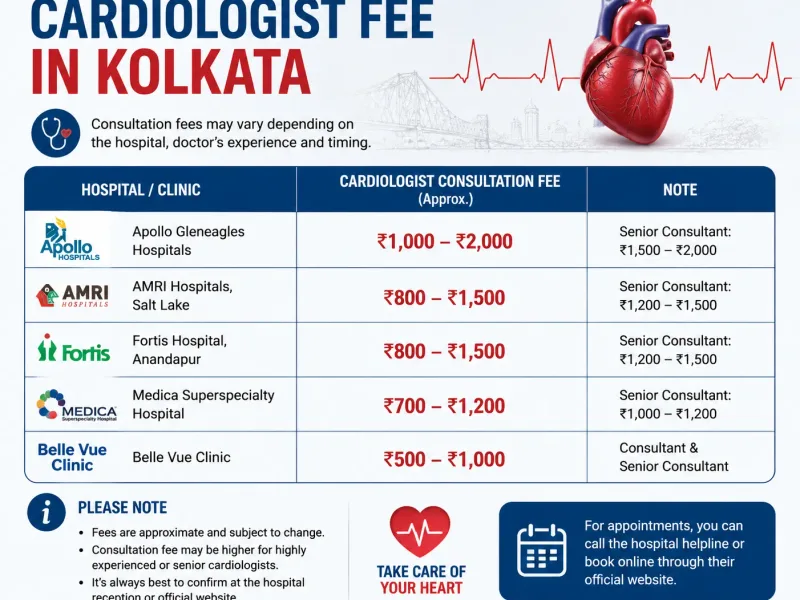
Learn about cardiologist fee in Kolkata, consultation charges, factors affecting costs, and tips to choose the right heart specialist.
May 29, 2026

A simple guide to the best shortness of breath specialist in Kolkata, including causes, symptoms, treatment options, and expert medical advice.
May 29, 2026

Find the best chest pain doctor in Kolkata. Learn causes, symptoms, tests, and treatment options from top heart specialists in simple English.
May 29, 2026