

Emergency & Help
24/7 Emergency & General Advisory
🚨 24/7 Medical Emergency
Non-Emergency Advisory
10:00 AM – 6:00 PM, Mon–Sat
For appointments & general queries.
24/7 Emergency & General Advisory
🚨 24/7 Medical Emergency
Non-Emergency Advisory
10:00 AM – 6:00 PM, Mon–Sat
For appointments & general queries.
Learn about Ankylosing Spondylitis (AS), its symptoms, causes, and treatment options available in Bathinda.
Ankylosing Spondylitis (AS) represents a chronic rheumatic condition that predominantly impacts the vertebral column and the sacroiliac articulations, which are the points where the spinal structure joins the pelvis. Although this disease manifests across India, comprehending its prevalence and therapeutic approaches within particular locales, such as Bathinda, holds significant importance for those living with the ailment.
The onset of this disorder typically occurs in late adolescence or early adulthood, with a higher incidence observed in men, though women are also susceptible to developing AS. Given its progressive trajectory, prompt identification and continuous treatment are essential for controlling symptoms and averting lasting complications.
AS is classified as an autoimmune situation, meaning the body's immune system erroneously attacks its own healthy tissues, leading to a detrimental immune response. Specifically, in individuals with this problem, this reactive process targets the entheses—the sites where ligaments or tendons connect to bone, most frequently observed in the back and hip regions.
Over an extended period, this activity can induce the development of new bone material, which may cause vertebrae to coalesce, ultimately resulting in a stiffened vertebral column and diminished range of motion.
That's the part worth remembering.
A primary indicator of AS involves persistent discomfort and rigidity in the lower back, particularly noticeable upon waking or following extended periods of sedentary behavior. This particular type of discomfort frequently diminishes with physical activity but intensifies during repose, a characteristic pattern that differentiates it from mechanical forms of back pain. Further common signs comprise:
Discomfort and rigidity affecting the hips and gluteal region.
Profound fatigue and a general sense of unease.
Aching in additional articulations, including the shoulders, rib cage, or heels.
Ocular irritation (uveitis), which presents as redness and soreness.
Decreased suppleness of the vertebral column, impeding the ability to maintain an erect posture or rotate the head.
Occasionally, an immune response observed in other internal organs, such as the pulmonary system or cardiac muscle.
Worth keeping in mind: the emergence of signs may be subtle and incremental, which can lead individuals to overlook them as typical discomforts. Prompt identification of these indicators is therefore paramount for obtaining medical consultation without delay.
While the precise etiology of this specific rheumatic ailment remains undetermined, genetic predispositions are recognized as highly influential. A substantial majority of patients diagnosed with AS possess the HLA-B27 gene.
Nevertheless, the presence of this gene does not universally lead to the development of the disorder, indicating the involvement of additional environmental or hereditary components. Essentially, while carrying the HLA-B27 gene elevates the probability, it does not ensure the manifestation of the problem.
This is where most people struggle.
Other potential contributing factors include:
Genetic Predisposition: As previously noted, a strong association exists with the HLA-B27 gene.
Familial Background: An elevated risk is observed if a direct family member has been diagnosed with this chronic disorder.
Microbial Triggers: Certain scholarly theories propose that specific bacterial infections could precipitate the issue in individuals who are genetically predisposed.
The diagnostic process for AS incorporates an individual's medical background, a comprehensive physical assessment, and specific diagnostic evaluations. Healthcare professionals practicing in this locality will meticulously seek out typical manifestations and clinical indicators. They might prescribe:
Hematological Assessments: These are performed to identify markers of systemic irritation (such as ESR and CRP) and to confirm the existence of the HLA-B27 gene.
Radiological Examinations: X-ray and MRI imaging are indispensable for visualizing evidence of tissue reactivity and morphological alterations within the sacroiliac articulations and the vertebral column.
For a precise diagnosis, a comprehensive assessment conducted by a rheumatologist or an orthopedic specialist is indispensable. Should an individual encounter persistent dorsal discomfort and rigidity, seeking consultation with such a specialist constitutes the initial and most prudent course of action.
Although a definitive cure for this chronic situation does not yet exist, a range of therapeutic interventions can substantially manage its progression, mitigate discomfort, and enhance overall well-being. The primary objectives of these treatments are to diminish systemic irritation, alleviate pain, preserve optimal posture, and impede the eventual consolidation of the vertebral column.
Specialists often prescribe a range of medications:
Nonsteroidal Anti-Inflammatory Drugs (NSAIDs): Typically serving as the initial therapeutic approach, these agents work to lessen pain and abate the body's reactive response.
Disease-Modifying Antirheumatic Drugs (DMARDs): Pharmaceutical compounds such as sulfasalazine or methotrexate may be employed to regulate the immune activity in peripheral articulations.
Biologic Agents: These sophisticated treatments specifically target components of the immune system that drive the immunological reaction. They have demonstrated considerable efficacy for numerous individuals, particularly those experiencing more pronounced disease severity.
Consistent engagement in physical activity constitutes a fundamental element in the comprehensive management of AS. Fundamentally, movement assists in maintaining the flexibility of the vertebral column and averts the onset of rigidity. A customized regimen of physical exercises, frequently supervised by a physiotherapist, can encompass:
Here's where it gets interesting.
Flexibility exercises designed to preserve range of motion.
Cardiovascular conditioning to enhance heart health and endurance.
Alignment-focused drills to promote optimal body positioning.
Sustaining correct bodily alignment throughout daily activities is paramount. Medical practitioners frequently provide guidance on appropriate sleeping postures and recommend the utilization of firm mattresses to foster optimal health of the vertebral structures.
Modest adjustments to one's daily habits can yield substantial benefits. Such modifications encompass the cessation of tobacco use (a practice known to exacerbate systemic reactivity) and the maintenance of a salutary body mass to minimize mechanical load on the articulations.
On top of that,, a nutritionally balanced dietary intake may contribute positively to general health.
Effectively managing this chronic rheumatic disorder necessitates both a proactive personal stance and the presence of robust support networks. Establishing connections with healthcare professionals in the Bathinda region who possess expertise in rheumatology is fundamental.
Additionally, patient advocacy groups and support organizations provide valuable informational resources and crucial emotional aid to those impacted. The collective understanding derived from shared experiences often proves profoundly empowering for individuals facing similar health challenges.
That's the part worth remembering.
Prompt therapeutic intervention, steadfast compliance with prescribed care regimens, and dedicated engagement in routine physical activity represent established methodologies for sustaining a vigorous and gratifying existence despite the presence of this ailment. When appropriate medical care is provided, individuals are capable of competently overseeing their health status and elevating their holistic quality of life.
Visit Hospital
Near You
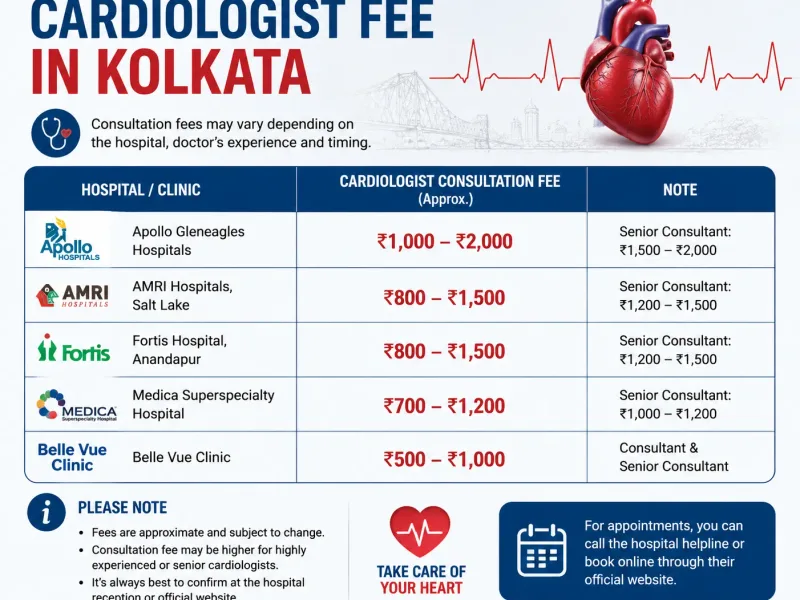
Learn about cardiologist fee in Kolkata, consultation charges, factors affecting costs, and tips to choose the right heart specialist.
May 29, 2026
A simple guide to the best shortness of breath specialist in Kolkata, including causes, symptoms, treatment options, and expert medical advice.
May 29, 2026
Find the best chest pain doctor in Kolkata. Learn causes, symptoms, tests, and treatment options from top heart specialists in simple English.
May 29, 2026