

Emergency & Help
24/7 Emergency & General Advisory
🚨 24/7 Medical Emergency
Non-Emergency Advisory
10:00 AM – 6:00 PM, Mon–Sat
For appointments & general queries.
24/7 Emergency & General Advisory
🚨 24/7 Medical Emergency
Non-Emergency Advisory
10:00 AM – 6:00 PM, Mon–Sat
For appointments & general queries.
Explore composite veneers: an affordable and effective way to enhance your smile by covering chips, stains, and minor imperfections. Learn about direct vs. indirect application, pros, cons, and care.

Are you unhappy with the appearance of your smile? Do you find yourself hiding your teeth when you talk or laugh? If so, you might be a good candidate for dental veneers. While porcelain veneers have long been the go-to option for many, composite veneers are gaining popularity due to their affordability and effectiveness. This guide will explore everything you need to know about composite veneers, helping you make an informed decision about your dental health and aesthetic goals. What Exactly Are Dental Veneers? Think of dental veneers as thin shells designed to fit over the front surface of your existing teeth. Their primary purpose is to improve the appearance of your teeth, masking imperfections and creating a more uniform, attractive smile. Veneers are different from crowns, which are thicker and cover the entire tooth, both front and back. Crowns are typically recommended for teeth that are significantly damaged or require more extensive restoration, like after a root canal. If your teeth are generally healthy but you wish to alter their shape, colour, or overall look, veneers can be an excellent choice. Understanding Composite Veneers Composite veneers are crafted from a tooth-colored resin material. This is the same versatile material often used in dental bonding procedures. Unlike porcelain veneers, which are custom-made in a lab from porcelain, composite veneers are usually applied directly to your teeth by your dentist. Types of Composite Veneers: Direct vs. Indirect When considering composite veneers, your dentist might present you with two main types: Direct Composite Veneers: These are made from composite resin that is applied directly onto your teeth during a single dental visit. The dentist shapes the resin to match your desired smile. The process is generally quick and minimally invasive, requiring little preparation of your natural teeth. Indirect Composite Veneers: For this type, your dentist will take impressions of your teeth. These impressions are then used to create custom-made veneers, either in the dental office or a separate laboratory. While you wait for your permanent indirect veneers, you may receive temporary ones. Once ready, they are bonded to your teeth with a special adhesive. Indirect composite veneers tend to be more durable and resistant to chips and fractures compared to their direct counterparts, but they often come with a higher cost and may require multiple appointments. Porcelain Veneers: A Brief Comparison Porcelain veneers are custom-made shells crafted from high-quality porcelain. The process involves taking detailed impressions of your teeth, which are then sent to a dental laboratory. This manufacturing process can take a week or more, during which you’ll likely wear temporary veneers. Once ready, the dentist carefully cements the thin porcelain shells onto your teeth, meticulously shaping them for a natural look. Porcelain veneers are known for their durability and stain resistance, often lasting 10 to 15 years or even longer. Pros and Cons of Composite Veneers Like any dental treatment, composite veneers have their advantages and disadvantages. Weighing these carefully will help you determine if they are the right fit for you. Advantages: Cost-Effective: Composite veneers are generally more affordable than porcelain veneers. The cost per tooth can range from ₹2,000 to ₹12,000 (approximately $250 to $1,500), making them accessible to a wider range of individuals. Minimally Invasive: The application process, especially for direct composite veneers, often requires minimal or no removal of your natural tooth enamel. This preserves more of your natural tooth structure. Quicker Application: Direct composite veneers can typically be placed in a single dental visit, offering a fast transformation for your smile. Repairability: If a composite veneer chips or cracks, it can often be repaired relatively easily by your dentist, sometimes without needing a complete replacement. Natural Appearance: When expertly applied, composite resin can be shaded to perfectly match your natural tooth color, providing a seamless and lifelike result. Disadvantages: Durability: Composite veneers are not as strong as porcelain veneers. They are more prone to chipping, staining, and wear over time. Lifespan: On average, composite veneers last about 5 to 7 years. After this period, they will likely need to be replaced. Staining: While resistant to some stains, composite resin can absorb stains from foods and drinks like coffee, tea, and red wine over time, potentially affecting their brightness. Potential for Wear: The resin material can wear down over time, especially with habits like teeth grinding or clenching. Composite Veneers vs. Porcelain Veneers: Which is Right for You? The choice between composite and porcelain veneers depends on your specific needs, budget, and expectations. Consider these points: Budget: If cost is a primary concern, composite veneers are a more budget-friendly option. Durability and Longevity: For maximum durability and a longer lifespan, porcelain veneers are generally superior. Aesthetic Goals: Both can provide excellent aesthetic results. However, porcelain may offer a more lustrous and stain-resistant finish. Maintenance: Both types require good oral hygiene. Composite veneers may need more frequent touch-ups or repairs due to their material properties. A Real-Life Scenario Rina, a 35-year-old teacher, felt self-conscious about a small chip on her front tooth that occurred years ago. She also noticed some slight discoloration that whitening treatments hadn't fully addressed. She wanted a quick and affordable solution before an upcoming family wedding. After discussing her options with her dentist, she opted for direct composite veneers. The procedure took just a couple of hours, and she left the clinic with a noticeably brighter and smoother smile, ready to confidently attend the wedding. What Imperfections Can Composite Veneers Address? Composite veneers are versatile and can effectively correct a variety of dental imperfections: Chipped or cracked teeth Slightly misaligned or misshapen teeth Discolored or stained teeth that don't respond well to whitening Gaps between teeth (minor spacing) Worn-down enamel The Application Process: What to Expect The procedure for applying composite veneers is relatively straightforward: Consultation: Your dentist will examine your teeth, discuss your smile goals, and determine if composite veneers are suitable for you. They will also discuss the types of composite veneers available (direct or indirect). Tooth Preparation: For direct veneers, your dentist will lightly etch the surface of your teeth and may apply a mild bonding agent. Minimal or no enamel removal is usually required. For indirect veneers, impressions are taken. Material Application: The composite resin material is carefully applied to your teeth, layer by layer, and shaped by the dentist to achieve the desired form and contour. Curing: A special curing light is used to harden the resin material, making it strong and durable. Finishing and Polishing: The dentist will trim and polish the veneers to ensure they are smooth, comfortable, and blend seamlessly with your natural teeth. Caring for Your Composite Veneers Proper care will help extend the life and maintain the appearance of your composite veneers: Maintain Excellent Oral Hygiene: Brush your teeth at least twice a day with a soft-bristled toothbrush and fluoride toothpaste. Floss daily to remove plaque and food particles between teeth and around veneers. Avoid Staining Foods and Drinks: Limit your intake of coffee, tea, red wine, and dark-colored foods, or rinse your mouth with water after consuming them. Avoid Habits That Damage Teeth: Refrain from chewing on hard objects like ice, pens, or fingernails. If you grind or clench your teeth (bruxism), talk to your dentist about wearing a night guard. Regular Dental Check-ups: Visit your dentist for regular check-ups and cleanings. They can monitor the condition of your veneers and address any issues promptly. Gentle Cleaning: Use non-abrasive toothpaste. Avoid harsh scrubbing, which can dull the surface of the veneers. When to Consult a Doctor It's essential to consult a qualified dentist if you are considering veneers or experiencing any issues with existing dental work. You should seek professional advice if you notice: Chips, cracks, or significant wear on your veneers. Changes in color or staining that cannot be removed by regular cleaning. Sensitivity or pain in your teeth or gums around the veneers. Loose or detached veneers. Any concerns about the fit or comfort of your veneers. Your dentist is the best resource to assess your oral health and recommend the most suitable treatment plan for your aesthetic and functional needs. Frequently Asked Questions (FAQ) Q1: Are composite veneers permanent? No, composite veneers are not permanent. They typically last 5 to 7 years and will eventually need to be replaced. Q2: Do composite veneers stain easily? Composite resin can be susceptible to staining from certain foods and drinks over time, though they are generally less prone to staining than natural teeth. Good oral hygiene and limiting staining substances can help. Q3: Can composite veneers be whitened? Composite veneers cannot be whitened. If they become discolored, they may need to be repaired or replaced. Q4: Is the procedure for composite veneers painful? The procedure is generally not painful, especially for direct composite veneers, as it often requires minimal or no removal of tooth enamel. Local anesthetic may be used if any enamel reduction is necessary. Q5: How much do composite veneers cost in India? The cost can vary depending on the
In summary, timely diagnosis, evidence-based treatment, and prevention-focused care improve long-term health outcomes.
Visit Hospital
Near You
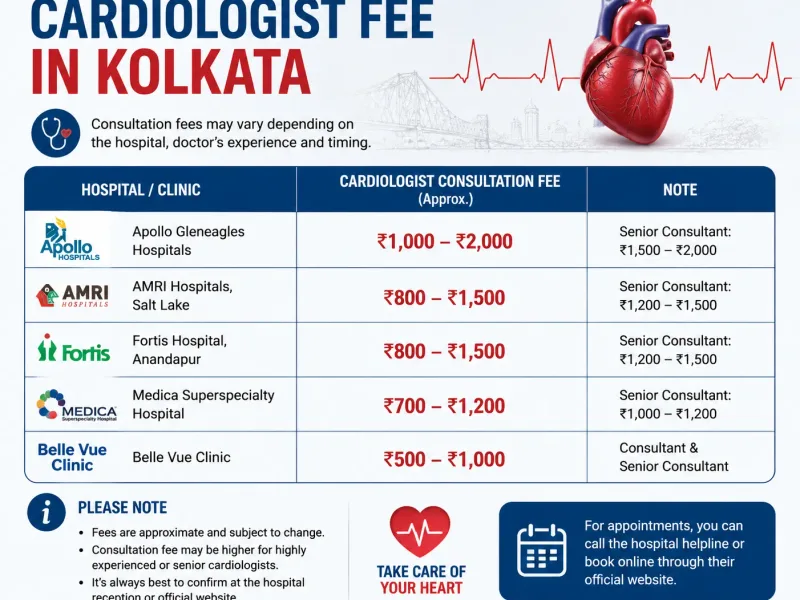
Learn about cardiologist fee in Kolkata, consultation charges, factors affecting costs, and tips to choose the right heart specialist.
May 29, 2026

A simple guide to the best shortness of breath specialist in Kolkata, including causes, symptoms, treatment options, and expert medical advice.
May 29, 2026

Find the best chest pain doctor in Kolkata. Learn causes, symptoms, tests, and treatment options from top heart specialists in simple English.
May 29, 2026