

Emergency & Help
24/7 Emergency & General Advisory
🚨 24/7 Medical Emergency
Non-Emergency Advisory
10:00 AM – 6:00 PM, Mon–Sat
For appointments & general queries.
24/7 Emergency & General Advisory
🚨 24/7 Medical Emergency
Non-Emergency Advisory
10:00 AM – 6:00 PM, Mon–Sat
For appointments & general queries.
Understand if Medicare covers assisted living costs. Learn what Medicare Parts A, B, and C cover, and explore alternative payment options for assisted living.

As we age, the need for assistance with daily activities can become a reality. For many, assisted living offers a comfortable and supportive environment that bridges the gap between living independently at home and requiring the intensive care of a nursing home. These facilities provide housing, personal care services, and health monitoring, all while promoting a sense of independence. However, a common question arises: Does Medicare cover the costs associated with assisted living? Unfortunately, the straightforward answer is generally no. Original Medicare (Parts A and B) does not typically pay for long-term custodial care, which includes the services provided by assisted living facilities. This can be a significant concern for seniors and their families, as assisted living can be a substantial financial commitment, often costing over $3,000 per month, and sometimes exceeding $100 per day.
Medicare is a federal health insurance program primarily for individuals aged 65 and older, as well as younger people with certain disabilities. It's divided into different parts, each covering specific types of healthcare services:
The key distinction to understand is that Medicare is designed to cover medically necessary services, not custodial care. Custodial care refers to assistance with everyday activities like bathing, dressing, eating, and toileting. Assisted living facilities primarily offer this type of support. While they may provide health monitoring and assistance with medications, their core services are generally considered custodial.
Original Medicare does not pay for:
This means that if you move into an assisted living facility primarily for help with daily tasks, Medicare will not cover the majority of your expenses.
While Medicare doesn't directly pay for assisted living, it's important to know that it may cover certain medical services you receive while living in an assisted living facility. This is a critical nuance. For example:
A Real-Life Scenario: Consider Mrs. Sharma, who had a fall and a subsequent hip fracture. After a hospital stay, her doctor recommended she go to a skilled nursing facility for intensive physical therapy to regain her mobility. Medicare Part A covered her stay at the SNF for the prescribed rehabilitation period because it was deemed medically necessary following her hospitalization.
This is where things can get a little more hopeful. Medicare Advantage plans, offered by private insurers, must provide at least the same benefits as Original Medicare. However, many Part C plans go above and beyond and may offer additional benefits that Original Medicare does not, such as:
It is crucial to carefully review the specific benefits offered by any Medicare Advantage plan you are considering. Some plans might include a benefit that helps with costs related to non-medical home care or support services, but this is not a widespread offering and typically has strict limitations. You would need to check if your specific plan covers any aspect of assisted living, and if so, what the conditions and coverage limits are.
Since Medicare generally does not cover assisted living, seniors and their families typically use a combination of other resources:
A common situation involves individuals with dementia or Alzheimer's disease who may benefit from the structured environment and specialized care offered in assisted living. However, Medicare Part A does not cover assisted living specifically for dementia care. If hospitalization or a stay in a skilled nursing facility is medically necessary due to complications related to dementia, Medicare Part A might cover those specific, short-term, medically intensive services. For ongoing care, other payment sources are necessary.
Since Original Medicare does not cover assisted living, you won't find facilities that 'accept Medicare' for the room and board or custodial care aspects. However, you can search for facilities that accept Medicare for any covered medical services they might provide on-site, such as visits from nurses or therapists who bill Medicare. For finding assisted living facilities in general, resources include:
If you are enrolled in a Medicare Advantage plan that offers some assisted living benefits, you will need to inquire with your plan provider about their network of approved facilities or services.
It's always wise to discuss your long-term care needs with your primary care physician. They can help assess your health status, recommend appropriate levels of care (such as assisted living versus a nursing home), and explain how Medicare might cover any associated medical treatments. If you have complex medical needs, they might refer you to a geriatric care specialist or a neurologist.
No, Original Medicare does not pay for the full cost of assisted living. It generally does not cover custodial care, which is the primary service provided by assisted living facilities.
Medicare may cover medically necessary home healthcare services if you qualify, even if you reside in an assisted living facility. However, this coverage is for skilled care and is typically intermittent, not for ongoing daily assistance.
A skilled nursing facility (SNF) provides 24/7 medical care and supervision by licensed health professionals, focusing on rehabilitation and intensive medical needs. Assisted living provides housing, personal care services, and health monitoring, but with less intensive medical care and more focus on supporting independence with daily activities.
Visit Hospital
Near You
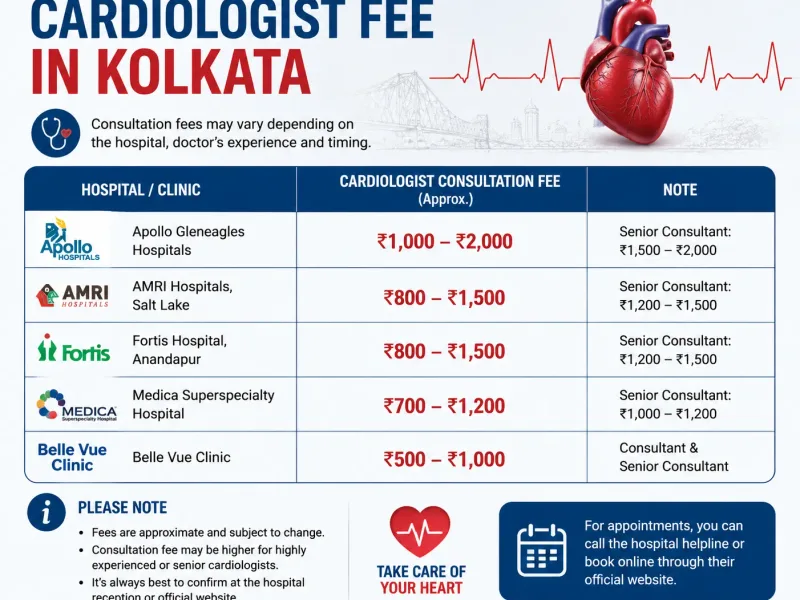
Learn about cardiologist fee in Kolkata, consultation charges, factors affecting costs, and tips to choose the right heart specialist.
May 29, 2026
A simple guide to the best shortness of breath specialist in Kolkata, including causes, symptoms, treatment options, and expert medical advice.
May 29, 2026

Find the best chest pain doctor in Kolkata. Learn causes, symptoms, tests, and treatment options from top heart specialists in simple English.
May 29, 2026