

Emergency & Help
24/7 Emergency & General Advisory
🚨 24/7 Medical Emergency
Non-Emergency Advisory
10:00 AM – 6:00 PM, Mon–Sat
For appointments & general queries.
24/7 Emergency & General Advisory
🚨 24/7 Medical Emergency
Non-Emergency Advisory
10:00 AM – 6:00 PM, Mon–Sat
For appointments & general queries.
Confused about whether to see an esthetician or a dermatologist for your skin concerns? Learn the key differences in their education, services, and when to consult each professional for optimal skin health.

When it comes to maintaining healthy and radiant skin, you might wonder who to consult: an esthetician or a dermatologist. While both are skin care professionals, they possess distinct expertise and offer different services. Understanding these differences is crucial to making an informed decision about your skin health and achieving your desired results. This guide will break down the roles, education, and services of estheticians and dermatologists, helping you navigate the world of skincare professionals in India.
An esthetician, also known as a skin care specialist, focuses on improving the external appearance of the skin. Their primary goal is to enhance the look and feel of your skin through non-medical treatments. Estheticians are trained in various cosmetic procedures that target the surface of the skin, aiming to make it look healthier and more vibrant.
The path to becoming an esthetician involves specialized training in cosmetology schools. While specific requirements can vary, aspiring estheticians typically need to complete a program that includes a significant number of training hours. These programs cover topics such as:
Upon completion of their training, estheticians must obtain a license to practice. This ensures they meet a certain standard of competence and adhere to safety regulations. The duration of esthetician programs can range from a few months to a year, depending on the institution and the depth of the curriculum.
Estheticians offer a range of services designed to beautify and refresh the skin. These typically include:
It's important to note that estheticians do not diagnose or treat medical skin conditions. Their scope of practice is limited to cosmetic enhancements and general skin care.
A dermatologist is a medical doctor who specializes in the diagnosis and treatment of conditions affecting the skin, hair, nails, and mucous membranes. They possess extensive knowledge of dermatology and are equipped to handle a wide spectrum of skin issues, from common ailments to complex diseases.
The journey to becoming a dermatologist is rigorous and lengthy, requiring a significant commitment to medical education and training. In India, this typically involves:
This extensive education ensures that dermatologists have a deep understanding of skin physiology, pathology, and the latest treatment modalities. They are qualified to perform medical procedures and prescribe medications.
Dermatologists offer a comprehensive range of services, encompassing both medical and cosmetic aspects of skin care. Their expertise includes:
Here’s a quick comparison to highlight the main distinctions:
| Feature | Esthetician | Dermatologist |
| Primary Focus | External appearance, cosmetic enhancement | Skin health, diagnosis and treatment of medical conditions |
| Education | Cosmetology school (months to a year) | MBBS + 3 years specialization (MD/DNB) |
| Scope of Practice | Non-medical cosmetic treatments, facials, waxing | Medical diagnosis, prescription of medication, surgical procedures, advanced cosmetic treatments |
| Can Diagnose Conditions? | No | Yes |
| Can Prescribe Medication? | No | Yes |
Regardless of whether you see an esthetician or a dermatologist, good daily skincare practices are essential. These include:
Estheticians can help manage mild acne through facials and recommending appropriate skincare products. However, for severe or persistent acne, a dermatologist is the best choice as they can diagnose the underlying cause and prescribe medical treatments.
Generally, insurance covers medical procedures deemed necessary for health. Elective cosmetic procedures, such as those performed purely for aesthetic enhancement, are typically not covered by insurance. However, some procedures that have both medical and cosmetic benefits might be partially covered, depending on the policy and the specific condition.
This depends on your individual needs. Many people see an esthetician for regular facials every 4-6 weeks for maintenance. You should see a dermatologist whenever you have a specific skin concern, a new or changing mole, or a persistent skin condition that requires medical attention. Regular check-ups with a dermatologist are also recommended, especially if you have a history of skin cancer or other significant skin issues.
No, estheticians are typically trained and licensed to perform superficial or mild chemical peels. Deeper, medical-grade peels that involve more significant skin penetration and potential downtime are usually performed by dermatologists or under their supervision.
Choosing between an esthetician and a dermatologist depends on your specific skin concerns and goals. Estheticians are excellent for enhancing the appearance of your skin through non-medical treatments, while dermatologists are essential for diagnosing and treating medical skin conditions and performing advanced procedures. By understanding their respective roles and expertise, you can make the right choice for healthier, more beautiful skin.
Visit Hospital
Near You
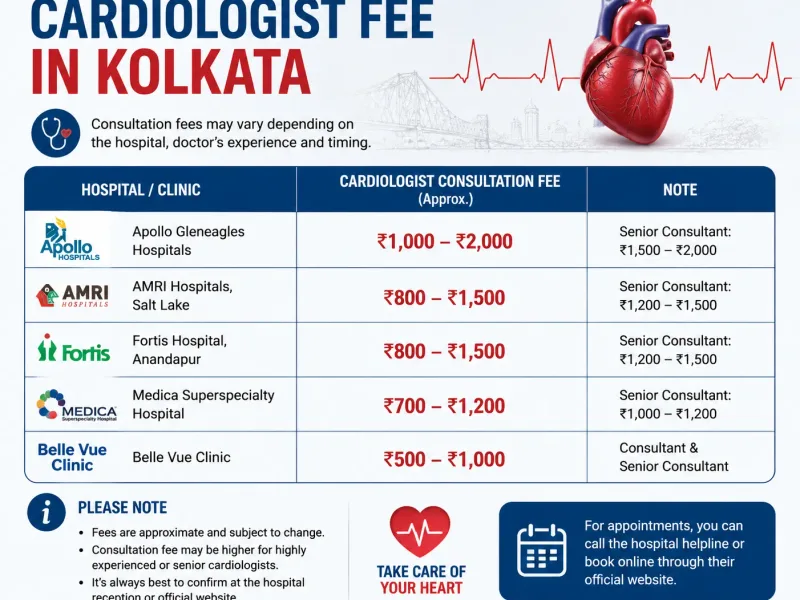
Learn about cardiologist fee in Kolkata, consultation charges, factors affecting costs, and tips to choose the right heart specialist.
May 29, 2026
A simple guide to the best shortness of breath specialist in Kolkata, including causes, symptoms, treatment options, and expert medical advice.
May 29, 2026

Find the best chest pain doctor in Kolkata. Learn causes, symptoms, tests, and treatment options from top heart specialists in simple English.
May 29, 2026