

Emergency & Help
24/7 Emergency & General Advisory
🚨 24/7 Medical Emergency
Non-Emergency Advisory
10:00 AM – 6:00 PM, Mon–Sat
For appointments & general queries.
24/7 Emergency & General Advisory
🚨 24/7 Medical Emergency
Non-Emergency Advisory
10:00 AM – 6:00 PM, Mon–Sat
For appointments & general queries.
Discover how to find doctors who speak your language in India. Learn why bilingual healthcare is vital and explore practical steps and resources for effective communication with your doctor.

Effective communication is the bedrock of good healthcare. When you visit a doctor, you want to feel understood, confident that your concerns are heard, and that the treatment plan is crystal clear. But what happens when language becomes a barrier? For many in India, especially those who might not be fluent in English or the local dialect of a specific region, finding a healthcare professional who speaks their language can feel like a daunting task. This isn't just about comfort; it's about accuracy, safety, and ensuring you receive the best possible care. Let's explore how you can navigate this challenge and find bilingual medical professionals who can cater to your specific language needs.
India is a land of incredible linguistic diversity. With over 22 official languages and hundreds of dialects, it's no surprise that finding a doctor who speaks your mother tongue is paramount for effective healthcare. When you can express your symptoms, medical history, and concerns in your native language, the doctor gains a more precise understanding. This clarity minimizes the risk of misdiagnosis, ensures you fully grasp treatment instructions, and builds a stronger doctor-patient relationship. Imagine trying to explain a sharp, stabbing pain or a persistent cough when you’re struggling to find the right words. It’s stressful and can lead to crucial information being lost in translation.
The benefits of having a healthcare provider who speaks your language extend far beyond mere convenience:
In essence, a language-concordant doctor empowers you to be an active participant in your own healthcare journey.
While India has made strides in healthcare, language remains a significant hurdle for many. Here are some common challenges:
Don't let language be a barrier to your health. Here are practical steps you can take:
If you are registered with a specific hospital or clinic, begin by enquiring with their reception or administration. They often maintain a list of doctors who speak various languages or can guide you to available translators.
The digital age has brought immense convenience. Several online platforms and apps allow you to search for doctors based on location, specialty, and crucially, the languages they speak. Websites like Practo, Lybrate, and others often have filters for language preference. When searching, look for options to filter by languages such as Hindi, Tamil, Telugu, Marathi, Bengali, Gujarati, etc.
Tips for using online platforms:
Many community groups and non-profit organizations are dedicated to supporting specific linguistic or cultural groups. These organizations often have a network of healthcare providers who cater to their community. For instance, if you are part of a specific linguistic minority in a large city, search for community centres or associations related to your language group. They can be invaluable resources.
The National Alliance for Hispanic Health, though US-based, offers a model that many local Indian organizations might emulate. They provide helplines (like their Su Familia helpline) that connect people with health resources in their language. While specific Indian helplines may vary, searching for
This section adds practical context and preventive advice to help readers make informed healthcare decisions. It is important to verify symptoms early, consult qualified doctors, and avoid self-medication for persistent health issues.
Maintaining healthy routines, following prescribed treatment plans, and attending regular checkups can improve outcomes. If symptoms worsen or red-flag signs appear, immediate medical evaluation is recommended.
Track symptoms and duration.
Follow diagnosis and treatment from a licensed practitioner.
Review medication side effects with your doctor.
Seek urgent care for severe warning signs.
Visit Hospital
Near You
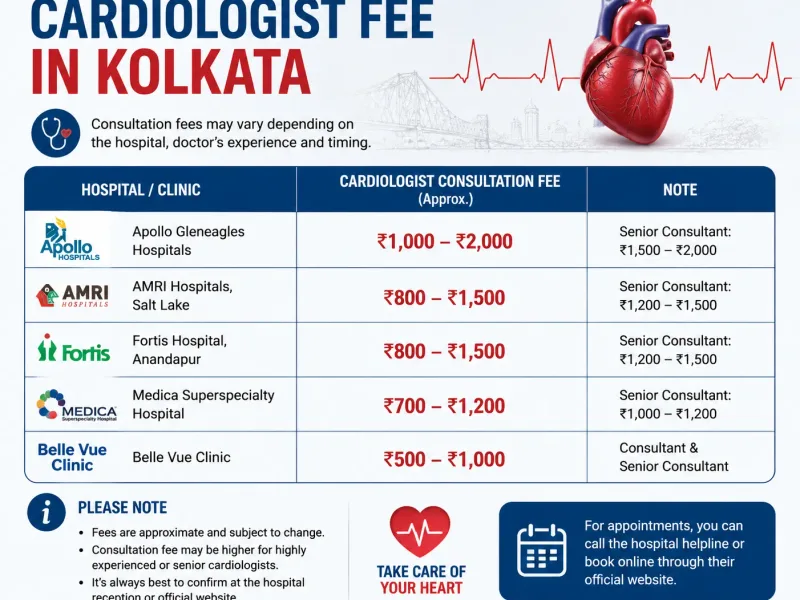
Learn about cardiologist fee in Kolkata, consultation charges, factors affecting costs, and tips to choose the right heart specialist.
May 29, 2026
A simple guide to the best shortness of breath specialist in Kolkata, including causes, symptoms, treatment options, and expert medical advice.
May 29, 2026

Find the best chest pain doctor in Kolkata. Learn causes, symptoms, tests, and treatment options from top heart specialists in simple English.
May 29, 2026