

Emergency & Help
24/7 Emergency & General Advisory
🚨 24/7 Medical Emergency
Non-Emergency Advisory
10:00 AM – 6:00 PM, Mon–Sat
For appointments & general queries.
24/7 Emergency & General Advisory
🚨 24/7 Medical Emergency
Non-Emergency Advisory
10:00 AM – 6:00 PM, Mon–Sat
For appointments & general queries.
Understand how Medicare covers gastric bypass surgery, including eligibility criteria, costs, and what to expect from Parts A, B, C, and D.

Gastric bypass surgery, also known as Roux-en-Y gastric bypass, is a significant procedure aimed at helping individuals achieve substantial weight loss. It involves altering your digestive system to reduce the amount of food you can eat and the calories your body absorbs. For many, this surgery can be life-changing, improving health conditions linked to obesity and enhancing overall quality of life. However, understanding the financial aspect, particularly how Medicare covers such a procedure, is essential before making a decision.
Gastric bypass surgery is a type of bariatric surgery. It works by dividing the stomach into a small upper pouch and a larger lower part. The surgeon then connects the small intestine to the pouch. This means that food bypasses a large portion of the stomach and the first section of the small intestine, leading to reduced calorie intake and absorption. This procedure is generally recommended for individuals who have struggled with significant obesity and related health issues, and for whom other weight loss methods have not been successful.
Yes, Medicare generally covers gastric bypass surgery, but with specific conditions. Original Medicare (Parts A and B) and Medicare Advantage (Part C) can provide coverage if the surgery is deemed medically necessary and you meet certain criteria. It’s not a blanket coverage for everyone seeking weight loss surgery. The key is that the surgery must be considered essential for your health, not just a cosmetic choice.
A common scenario involves Mr. Sharma, who has struggled with his weight for years. He has type 2 diabetes that is difficult to manage, and his doctor has suggested gastric bypass surgery as a way to improve his diabetes control and overall health. Mr. Sharma has tried various diets and exercise plans, but his weight remains high, and his health conditions persist. His doctor is now preparing the necessary documentation for Medicare to review his case for coverage.
Medicare coverage for gastric bypass surgery is spread across different parts:
Part A is your inpatient hospital insurance. If your gastric bypass surgery is performed during a hospital stay, Part A covers services such as:
Part B covers outpatient services that are related to your gastric bypass surgery. This includes:
Medicare Advantage plans are offered by private insurance companies approved by Medicare. These plans must provide at least the same coverage as Original Medicare (Parts A and B) for gastric bypass surgery, provided you meet the eligibility criteria. However, each plan has its own network of doctors and hospitals, and its own set of costs, including premiums, deductibles, and copayments. Staying within the plan’s network is usually more cost-effective.
Even with Medicare coverage, you will likely have some out-of-pocket expenses. These can include:
After gastric bypass surgery, you will likely need prescription medications to manage your health and prevent complications. These can include:
Part D plans help cover the costs of prescription drugs. If you have Original Medicare, you can enroll in a standalone Part D plan. Most Medicare Advantage plans include Part D coverage. The specific costs and coverage depend on the plan's formulary (list of covered drugs) and your drug tier.
Medigap policies can help pay for some of the out-of-pocket costs associated with Original Medicare, such as deductibles, copayments, and coinsurance. However, you cannot use a Medigap plan if you have a Medicare Advantage plan.
If you are considering gastric bypass surgery and are a Medicare beneficiary, the first step is to discuss your options with your primary care physician. They can help you determine if you meet the medical criteria for the surgery and for Medicare coverage.
Your doctor will:
Next, it’s vital to speak with a bariatric surgeon and their team. They can provide detailed information about the surgical procedure, the risks and benefits, and the recovery process. They can also guide you on navigating the Medicare approval process and understanding the specific financial responsibilities.
Finally, contact Medicare directly or your Medicare Advantage plan provider. You can ask specific questions about coverage for gastric bypass surgery in your area, understand your estimated out-of-pocket costs, and clarify any requirements for pre-authorization.
No, Medicare coverage is not automatic. You must meet specific medical criteria, including a BMI of 35 or higher and at least one obesity-related health condition, and have documentation showing previous unsuccessful weight loss attempts.
While a BMI of 35 is a common threshold, Medicare may consider coverage in exceptional cases if your healthcare provider can strongly document that the surgery is medically necessary to treat life-threatening conditions and that other treatments have failed. This often involves extensive documentation and may be reviewed on a case-by-case basis.
Yes, Medicare Part B generally covers nutritional counseling and other medically necessary services related to your post-surgery care, including follow-up visits with your doctor and dietitian.
No, you cannot use Medigap (supplemental insurance) to cover costs if you are enrolled in a Medicare Advantage (Part C) plan. Medigap plans only work with Original Medicare (Parts A and B).
If your Medicare Advantage plan denies coverage, you have the right to appeal the decision. Your doctor and the bariatric surgery center can assist you in this process by providing additional documentation and supporting your appeal.
Visit Hospital
Near You
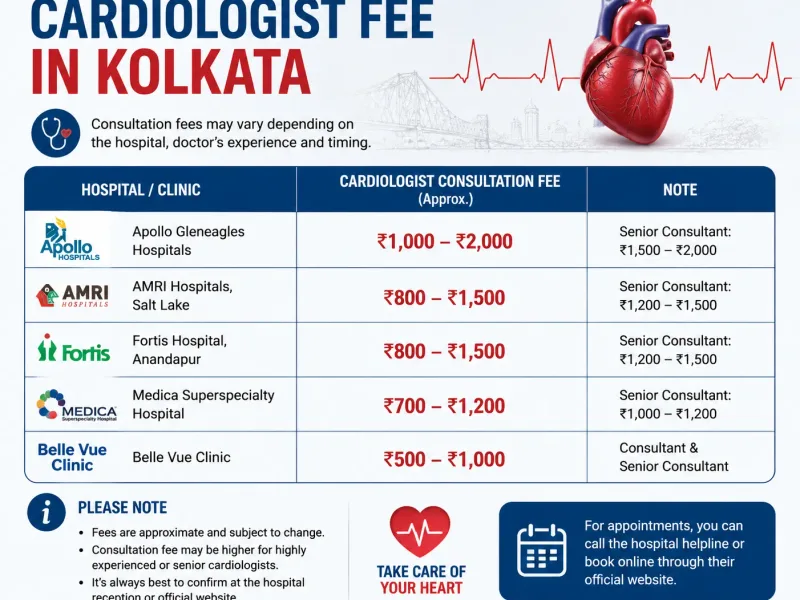
Learn about cardiologist fee in Kolkata, consultation charges, factors affecting costs, and tips to choose the right heart specialist.
May 29, 2026
A simple guide to the best shortness of breath specialist in Kolkata, including causes, symptoms, treatment options, and expert medical advice.
May 29, 2026

Find the best chest pain doctor in Kolkata. Learn causes, symptoms, tests, and treatment options from top heart specialists in simple English.
May 29, 2026