

Emergency & Help
24/7 Emergency & General Advisory
🚨 24/7 Medical Emergency
Non-Emergency Advisory
10:00 AM – 6:00 PM, Mon–Sat
For appointments & general queries.
24/7 Emergency & General Advisory
🚨 24/7 Medical Emergency
Non-Emergency Advisory
10:00 AM – 6:00 PM, Mon–Sat
For appointments & general queries.
Understand the differences between Medicare Advantage HMO and PPO plans, including costs, provider flexibility, and how to choose the best option for your healthcare needs.

Navigating the world of Medicare Advantage can feel like trying to decipher a complex map. Two of the most common plan types you'll encounter are Health Maintenance Organizations (HMOs) and Preferred Provider Organizations (PPOs). Understanding the key differences between these plans is essential for making an informed decision that aligns with your healthcare needs and financial situation. This guide aims to clarify what HMO and PPO Medicare Advantage plans offer, helping you choose the path that best suits your health journey.
Before diving into HMOs and PPOs, let's briefly touch upon Medicare Advantage, also known as Medicare Part C. These plans are offered by private insurance companies approved by Medicare. They bundle together your Medicare Part A (hospital insurance) and Part B (medical insurance) benefits into a single plan. Many Medicare Advantage plans also include prescription drug coverage (Part D) and can offer additional benefits like dental, vision, and hearing care, often at a lower overall cost than Original Medicare.
A Health Maintenance Organization (HMO) plan is a type of Medicare Advantage plan that focuses on coordinated care within a specific network of doctors, hospitals, and other healthcare providers.
A Real-Life Scenario: Imagine Mrs. Sharma, who has a chronic condition like diabetes. Her HMO plan allows her to have a dedicated endocrinologist within her network. Her PCP coordinates her appointments with the specialist and arranges for necessary lab tests, all within her plan's approved providers. This coordinated approach helps her manage her condition effectively and keeps her out-of-pocket expenses predictable each month.
A Preferred Provider Organization (PPO) plan offers more flexibility in choosing your healthcare providers, including options to see doctors and specialists outside the plan's network.
A Real-Life Scenario: Consider Mr. Gupta, who travels frequently for his business. He has a PPO plan that gives him the freedom to see any doctor he chooses. If he needs to see a specialist while on a business trip, he can do so without needing a referral. He understands that if he sees a doctor outside his network, his costs will be higher, but this flexibility is worth it for his busy lifestyle.
The main distinctions between HMO and PPO Medicare Advantage plans revolve around provider choice, referral requirements, and associated costs.
| Feature | HMO Plan | PPO Plan |
|---|---|---|
| Primary Care Physician (PCP) | Usually required | Not required |
| Referrals for Specialists | Usually required | Not required |
| Out-of-Network Care | Generally not covered (except emergencies) | Covered, but at a higher cost |
| Flexibility | Lower | Higher |
| Potential Costs | Often lower premiums and out-of-pocket expenses | Potentially higher premiums and out-of-pocket expenses, especially for out-of-network care |
Regardless of whether you choose an HMO or a PPO, all Medicare Advantage plans have certain costs you should be aware of:
It's important to note that while HMOs and PPOs share these cost structures, the actual amounts can vary significantly between plans. PPOs may have higher out-of-pocket costs when you use providers outside the network.
Choosing between an HMO and a PPO Medicare Advantage plan depends on your personal preferences and healthcare habits. Consider these questions:
When to Consult a Doctor or Insurance Advisor: If you're still unsure after reviewing the plan details, it's wise to speak with your current doctors about which plan type they participate in. Additionally, consulting with a licensed insurance agent or a SHIP (State Health Insurance Assistance Program) counselor can provide unbiased advice tailored to your specific situation.
Generally, no. HMO plans require you to use doctors and hospitals within their network. You will likely pay the full cost for any care you receive from out-of-network providers, except in cases of emergency, urgent care when traveling, or if your plan specifically allows for out-of-network care with a referral and higher costs.
Yes, all Medicare Advantage plans, including PPOs, are required by law to have an out-of-pocket maximum per year. This protects you from extremely high medical costs.
HMO plans are often cheaper because they have a more limited network and require referrals, which helps control costs. PPO plans typically have higher premiums and out-of-pocket costs, especially for out-of-network care, due to their greater flexibility.
You can switch plans during specific enrollment periods, such as the Annual Enrollment Period (October 15 – December 7) or the Medicare Advantage Open Enrollment Period (January 1 – March 31) if you are already enrolled in a Medicare Advantage plan.
Visit Hospital
Near You
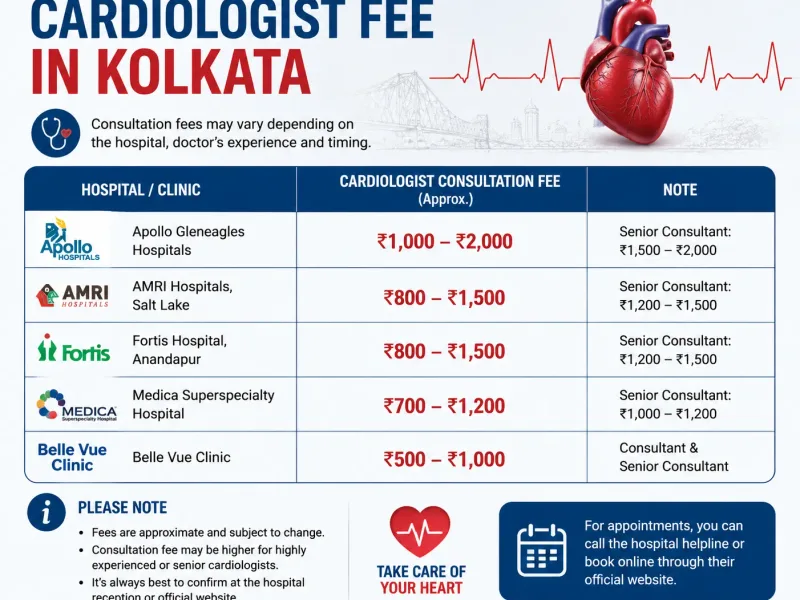
Learn about cardiologist fee in Kolkata, consultation charges, factors affecting costs, and tips to choose the right heart specialist.
May 29, 2026

A simple guide to the best shortness of breath specialist in Kolkata, including causes, symptoms, treatment options, and expert medical advice.
May 29, 2026

Find the best chest pain doctor in Kolkata. Learn causes, symptoms, tests, and treatment options from top heart specialists in simple English.
May 29, 2026