

Emergency & Help
24/7 Emergency & General Advisory
🚨 24/7 Medical Emergency
Non-Emergency Advisory
10:00 AM – 6:00 PM, Mon–Sat
For appointments & general queries.
24/7 Emergency & General Advisory
🚨 24/7 Medical Emergency
Non-Emergency Advisory
10:00 AM – 6:00 PM, Mon–Sat
For appointments & general queries.
Understand how Medicare covers glaucoma screenings, treatments, and medications. Learn about Part B, Part D, and Medicare Advantage coverage for this sight-threatening condition.

Glaucoma is a serious eye condition that can lead to irreversible vision loss if not detected and treated early. Characterized by a buildup of fluid within the eye, it damages the optic nerve, which connects the eye to the brain. Fortunately, Medicare provides coverage for various aspects of glaucoma care, including screenings, treatments, and medications. Understanding what Medicare covers can help you manage your eye health effectively and avoid unexpected costs. This guide breaks down how Medicare Parts A, B, C, and D apply to glaucoma care, ensuring you can access the necessary services to protect your sight.
Before diving into Medicare coverage, it's essential to understand glaucoma. It's a group of eye diseases that damage the optic nerve. This damage is often caused by an abnormally high pressure inside your eye, known as intraocular pressure. The optic nerve is vital for good vision, and when it becomes damaged, vision loss can occur. Glaucoma is often called the 'silent thief of sight' because it typically progresses without any pain or noticeable symptoms in its early stages. Many people don't realize they have it until significant vision loss has already occurred.
Medicare covers annual glaucoma screenings for individuals considered to be at high risk. So, who falls into this category? Medicare defines high risk based on several factors:
If any of these apply to you, it's a good idea to discuss regular glaucoma screenings with your doctor.
Medicare Part B is the primary part of Original Medicare that covers outpatient medical services, and this includes glaucoma screenings. If you meet the criteria for being at high risk, Medicare Part B will pay for one glaucoma test every 12 months. The doctor performing the screening must be enrolled in Medicare and licensed to conduct these tests in your state.
Important Note: If you have Original Medicare (Parts A and B), you will typically pay 20% of the Medicare-approved cost for the screening after you have met your annual Part B deductible. For 2024, the Part B deductible is $240. You'll also pay a monthly premium for Part B, which is $174.70 in 2024.
Scenario: Mrs. Sharma, a 65-year-old woman with a family history of glaucoma and diabetes, goes for her annual check-up. Her doctor, knowing her risk factors, refers her for a glaucoma screening. Because she is at high risk, Medicare Part B covers this test, and she only pays her portion of the cost after meeting her deductible.
When glaucoma is diagnosed, treatment becomes crucial to prevent further vision loss. Medicare Part B also covers the medical treatments for glaucoma. These can include:
Most glaucoma treatments, even if they require a hospital stay for observation, are considered outpatient services. This means Medicare Part B will cover 80% of the Medicare-approved costs for these treatments, provided you've met your Part B deductible. Even if you stay overnight in the hospital for observation after a procedure, it's often still classified as an outpatient service under Part B.
For those who require prescription medications, such as medicated eye drops, to manage glaucoma, Medicare Part D plays a vital role. Part D plans are prescription drug plans that help cover the cost of your medications. If you have Original Medicare (Parts A and B), you can enroll in a standalone Part D plan. The specific coverage and costs will depend on the plan you choose and its formulary (list of covered drugs).
Medicare Advantage plans, also known as Part C, are an alternative way to receive your Medicare benefits. These plans are offered by private insurance companies approved by Medicare. Part C plans must cover everything that Original Medicare (Parts A and B) covers, including glaucoma screenings and treatments. Often, these plans may offer additional benefits, such as routine vision exams, which could include more comprehensive eye health checks beyond just glaucoma screening.
A Word of Caution: If you have a Medicare Advantage plan, it's important to ensure that your doctors and treatment facilities are within your plan's network. Using out-of-network providers can result in higher out-of-pocket costs.
While Medicare offers comprehensive coverage for glaucoma, there are a few limitations:
It is essential to see an eye doctor if you experience any of the following:
Even if you don't have symptoms, if you fall into a high-risk category, schedule your annual Medicare-covered glaucoma screening. Early detection is key to preserving your vision.
No, Medicare typically covers glaucoma screenings only once every 12 months for individuals identified as high risk. If your doctor recommends more frequent screenings, you may have to pay for the additional tests yourself.
Yes, if prescribed by your doctor, Medicare Part D plans cover prescription eye drops used to treat glaucoma. If you have Original Medicare, you'll need to enroll in a Part D plan. Medicare Advantage plans often include prescription drug coverage.
With Original Medicare (Parts A and B), you are typically responsible for 20% of the Medicare-approved cost for glaucoma treatments after you meet your Part B deductible. For 2024, the deductible is $240. Costs can vary depending on the specific treatment needed.
Yes, Medicare Advantage (Part C) plans must provide at least the same coverage as Original Medicare for glaucoma screenings and treatments. Many plans may also offer additional vision benefits.
Visit Hospital
Near You
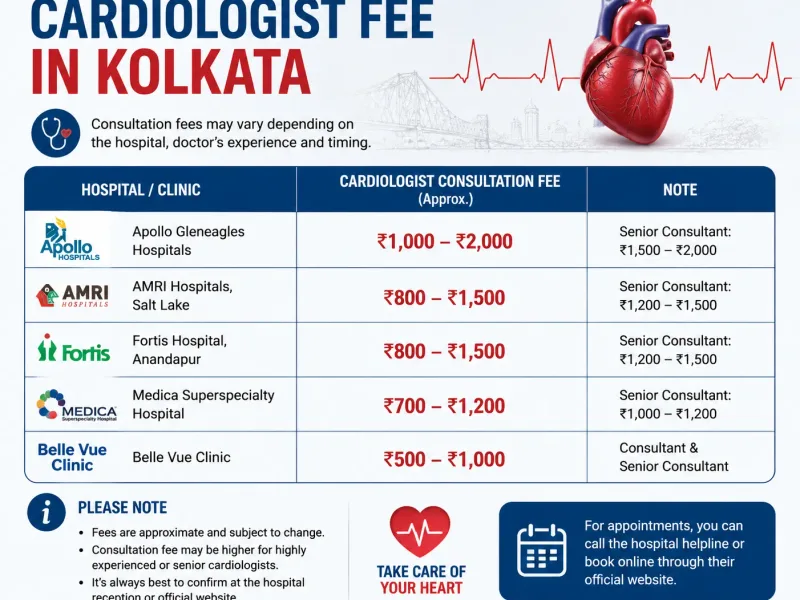
Learn about cardiologist fee in Kolkata, consultation charges, factors affecting costs, and tips to choose the right heart specialist.
May 29, 2026

A simple guide to the best shortness of breath specialist in Kolkata, including causes, symptoms, treatment options, and expert medical advice.
May 29, 2026

Find the best chest pain doctor in Kolkata. Learn causes, symptoms, tests, and treatment options from top heart specialists in simple English.
May 29, 2026