

Emergency & Help
24/7 Emergency & General Advisory
🚨 24/7 Medical Emergency
Non-Emergency Advisory
10:00 AM – 6:00 PM, Mon–Sat
For appointments & general queries.
24/7 Emergency & General Advisory
🚨 24/7 Medical Emergency
Non-Emergency Advisory
10:00 AM – 6:00 PM, Mon–Sat
For appointments & general queries.
Navigating pregnancy care in India? Understand the key differences between OB-GYNs and midwives to choose the right provider for your journey.

Embarking on the journey of pregnancy is an exciting time, filled with anticipation and a flurry of decisions. One of the earliest and most significant choices you’ll make is selecting the right healthcare provider to guide you through prenatal care and childbirth. In India, as in many parts of the world, this often means choosing between an Obstetrician-Gynecologist (OB-GYN) and a midwife. Both are dedicated professionals committed to ensuring a safe and healthy pregnancy for you and your baby, but they come with different training, philosophies, and scopes of practice. Understanding these differences can empower you to make an informed decision that aligns with your personal preferences and medical needs. The landscape of maternity care in India is diverse. While OB-GYNs are widely recognized and available across the country, the role and accessibility of midwives are evolving. Traditionally, childbirth in many Indian communities was attended by dais or traditional birth attendants, a role that is gradually being integrated with modern healthcare practices. Today, you might encounter Certified Nurse Midwives (CNMs), Certified Midwives (CMs), or other forms of trained birth attendants, though their recognition and practice vary by state and institution. This guide aims to clarify the distinctions between OB-GYNs and midwives, helping you navigate this important choice with confidence. Understanding the OB-GYN: The Medical Doctor Approach An OB-GYN is a medical doctor who specializes in women's reproductive health, encompassing both obstetrics (pregnancy, childbirth, and postpartum care) and gynecology (female reproductive system health). Their extensive medical training equips them to handle a wide spectrum of pregnancy scenarios, from routine check-ups to high-risk pregnancies and complex medical conditions. In India, OB-GYNs are typically found in hospitals, large clinics, and private practices, offering comprehensive care. Training and Certification for OB-GYNs To become an OB-GYN in India, a medical professional must first complete a Bachelor of Medicine, Bachelor of Surgery (MBBS) degree from a recognized medical college. Following this, they pursue a postgraduate specialization, usually a Master of Surgery (MS) or Doctor of Medicine (MD) in Obstetrics and Gynecology. This rigorous training involves several years of hands-on experience in managing pregnancies, performing deliveries (both vaginal and Cesarean sections), and addressing gynecological issues. They are trained to use medical interventions when necessary, such as inducing labor, performing assisted deliveries, or managing complications like pre-eclampsia or gestational diabetes. Scope of Practice for OB-GYNs OB-GYNs offer a broad range of services: Comprehensive prenatal care, including regular check-ups, ultrasounds, and diagnostic tests. Management of all types of pregnancies, including those with pre-existing conditions or those that develop complications. Delivery of babies, including vaginal births and Cesarean sections (C-sections). Postpartum care for both mother and newborn. Management of gynecological health issues, including menstrual problems, infections, and screenings for cancers. Surgical interventions for various gynecological conditions. If you have a history of complicated pregnancies, chronic health conditions like diabetes or hypertension, or anticipate a high-risk pregnancy, an OB-GYN provides a high level of medical expertise and the capability to manage emergencies. Exploring the Role of a Midwife: A Holistic and Patient-Centered Approach Midwives, in the context of modern healthcare, are trained professionals who provide care for women before, during, and after childbirth. While they are not medical doctors, many hold advanced degrees and specialized certifications. Their philosophy often emphasizes a more holistic and natural approach to pregnancy and birth, focusing on supporting the body's natural processes while monitoring for any signs of complications. In India, the concept of a trained midwife is evolving, with increasing recognition for professionals who can offer supportive care, particularly in low-risk pregnancies. Training and Certification for Midwives The training pathways for midwives can vary. Some may be nurses who have completed a specialized midwifery program and obtained certification, such as a Certified Nurse-Midwife (CNM) if trained internationally or equivalent certifications available in India. Others might be direct-entry midwives who have completed accredited midwifery education programs. Their training focuses on prenatal care, labor support, normal birth, and postpartum care. They are skilled in recognizing when a pregnancy requires the expertise of an OB-GYN and know when to refer or collaborate. Scope of Practice for Midwives Midwives typically focus on: Providing personalized prenatal care, emphasizing education and support. Supporting women through labor and delivery, often with a focus on non-medical comfort measures. Monitoring the well-being of the mother and baby during pregnancy and birth. Offering postpartum support and breastfeeding assistance. Managing uncomplicated, low-risk pregnancies. Educating families on childbirth and early parenting. A midwife's practice might be centered in birthing centers, home births (where legally permitted and safe), or within hospital settings, often collaborating with OB-GYNs. Their approach is often characterized by longer, more frequent consultations, allowing for a deeper connection and addressing the emotional and psychological aspects of pregnancy. Key Differences Summarized Here’s a quick comparison to highlight the distinctions: Feature OB-GYN Midwife Medical Degree Yes (MBBS, MS/MD) No (May have nursing or other degrees) Surgical Training Yes No Management of High-Risk Pregnancies Yes, extensive training Referral or collaboration with OB-GYN Philosophy of Care Medical and intervention-focused when needed Holistic, natural birth, patient-centered Typical Setting Hospitals, clinics Birthing centers, home births, hospitals Making Your Choice: What’s Right for You? Choosing between an OB-GYN and a midwife is a deeply personal decision. Consider the following factors: Your Health Status: If you have pre-existing health conditions or your pregnancy is considered high-risk, an OB-GYN’s expertise might be more suitable. For a low-risk pregnancy, a midwife can provide excellent care. Your Birth Philosophy: Do you envision a birth with minimal medical intervention, focusing on natural processes? A midwife might align better with this. If you are more comfortable with the security of immediate medical intervention capabilities, an OB-GYN is a strong choice. Personal Connection: Whom do you feel more comfortable with? Building a trusting relationship with your healthcare provider is paramount. Schedule consultations with both to gauge their approach and your comfort level. Availability and Location: Consider the availability of these professionals in your area and the facilities they are affiliated with. Scenario: Priya is in her first trimester and feeling overwhelmed. She wants a birth experience that feels natural and supported, but her mother is worried about potential complications and insists she needs a doctor. Priya needs to weigh her desire for a natural birth against her mother's concerns and her own potential risk factors. When to Consult an OB-GYN You should strongly consider choosing an OB-GYN if: You have chronic health conditions like diabetes, high blood pressure, heart disease, or kidney problems. You have a history of previous pregnancy complications, such as premature birth, miscarriage, or pre-eclampsia. Your current pregnancy is identified as high-risk due to factors like multiple gestation (twins or more), fetal growth issues, or placental problems. You are over 35 years old, as advanced maternal age can sometimes increase risks. You are experiencing any concerning symptoms like severe bleeding, persistent vomiting, or reduced fetal movement. When a Midwife Might Be Ideal A midwife could be an excellent choice if: You are experiencing a healthy, low-risk pregnancy. You desire a more personalized, holistic approach to pregnancy and birth. You are interested in exploring non-medical pain relief options during labor. You value building a strong, ongoing relationship with your caregiver. It's also important to remember that collaboration is common. In many settings, midwives work closely with OB-GYNs. If a complication arises during labor or delivery managed by a midwife, they can seamlessly transfer care to an OB-GYN or call for their assistance. The Importance of Patient-Centered Care Regardless of whether you choose an OB-GYN or a midwife, the most critical factor is finding a provider who listens to you, respects your choices, and makes you feel safe and supported throughout your pregnancy. They should be your partner in making informed decisions about your health and your baby's well-being. Don't hesitate to ask questions about their training, their approach to birth, and how they handle emergencies. Your birth experience is unique, and your care provider should be someone you trust implicitly. Frequently Asked Questions (FAQs) Can a midwife perform a Cesarean section? No, midwives are not trained to perform surgery, including Cesarean sections. If a C-section is necessary, care would typically be transferred to an OB-GYN. Can an OB-GYN and a midwife work together? Absolutely. In many healthcare systems, OB-GYNs and midwives collaborate to provide comprehensive care. A midwife might manage a low-risk pregnancy, and an OB-GYN might be on call or consulted if complications arise. What if my low-risk pregnancy becomes high-risk? If a complication develops during your pregnancy, your midwife will work with you to transfer your care to an OB-GYN or a specialist who can manage the new situation. Are midwives available in all parts of India? The availability and scope of practice for midwives can vary significantly across different states and regions in India. It's advisable to research the options available in your specific locality. Choosing your pregnancy care provider is a significant step. By understanding the roles of OB-GYNs and midwives, you can make a decision that best supports your health, your values,
In summary, timely diagnosis, evidence-based treatment, and prevention-focused care improve long-term health outcomes.
Visit Hospital
Near You
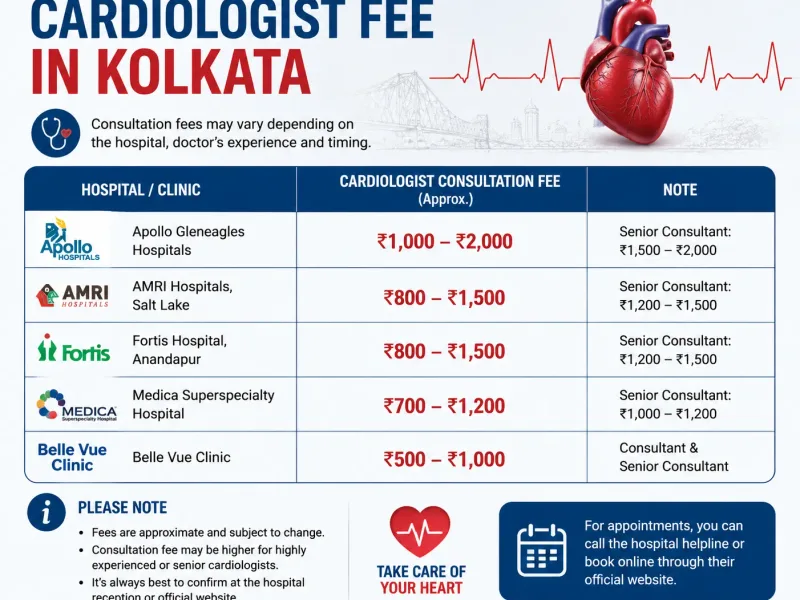
Learn about cardiologist fee in Kolkata, consultation charges, factors affecting costs, and tips to choose the right heart specialist.
May 29, 2026

A simple guide to the best shortness of breath specialist in Kolkata, including causes, symptoms, treatment options, and expert medical advice.
May 29, 2026

Find the best chest pain doctor in Kolkata. Learn causes, symptoms, tests, and treatment options from top heart specialists in simple English.
May 29, 2026