

Emergency & Help
24/7 Emergency & General Advisory
🚨 24/7 Medical Emergency
Non-Emergency Advisory
10:00 AM – 6:00 PM, Mon–Sat
For appointments & general queries.
24/7 Emergency & General Advisory
🚨 24/7 Medical Emergency
Non-Emergency Advisory
10:00 AM – 6:00 PM, Mon–Sat
For appointments & general queries.
Understand how CHAMPVA and Medicare work together for eligible veterans' families. Learn about primary/secondary payers, eligibility rules, and cost savings with dual coverage.

For many veterans and their families, understanding healthcare coverage can feel like navigating a complex map. Two significant programs that often come up are CHAMPVA (Civilian Health and Medical Program of the Department of Veterans Affairs) and Medicare. If you're a dependent of a U.S. veteran and also eligible for Medicare, you might be wondering how these two systems interact. Can you use them together? Which one pays first? This guide aims to clarify these important questions, helping you make informed decisions about your healthcare.
CHAMPVA is a health benefits program that provides coverage to eligible dependents of U.S. military veterans. It's important to distinguish CHAMPVA from TRICARE, another program serving military members and their families. CHAMPVA is specifically designed for those who are not eligible for TRICARE. This often includes spouses and children of veterans with permanent and total service-connected disabilities, as well as surviving spouses and children of certain veterans.
Key features of CHAMPVA:
Medicare is the federal health insurance program primarily for people aged 65 or older, as well as certain younger people with disabilities and people with End-Stage Renal Disease. It consists of several parts:
Most people pay a monthly premium for Part B, and there's an annual deductible and coinsurance for services covered under Part B.
Yes, absolutely! In many cases, CHAMPVA beneficiaries can use their coverage alongside Medicare. This is particularly relevant for CHAMPVA beneficiaries who have turned 65 and become eligible for Medicare. Having both can significantly reduce your out-of-pocket healthcare expenses.
When you have both CHAMPVA and Medicare, Medicare generally acts as the primary payer. This means Medicare processes and pays for your covered healthcare services first. After Medicare has paid its portion, CHAMPVA then steps in as the secondary payer to cover most of your remaining out-of-pocket costs.
This coordinated approach is designed to ensure you have comprehensive coverage while minimizing your financial burden. Think of it this way: Medicare pays its share, and then CHAMPVA helps cover what's left, including deductibles and coinsurance that you might otherwise have to pay.
The primary payer is the insurance company or program that pays first for medical services. In the case of Medicare and CHAMPVA, Medicare is almost always the primary payer when you are eligible for and enrolled in both.
Scenario: Let's say you visit your doctor for a covered service. You present both your Medicare card and your CHAMPVA information. The doctor's office will typically submit the claim to Medicare first. Once Medicare processes the claim and pays its share (usually 80% of the Medicare-approved amount after the Part B deductible), the remaining bill, including the 20% coinsurance, will be sent to CHAMPVA. CHAMPVA will then pay its portion, covering most of that remaining 20% (often paying 75% of the allowable amount, meaning you'd pay only 5% of the original Medicare-approved amount).
The rules for how Medicare interacts with CHAMPVA, especially concerning your eligibility for CHAMPVA after turning 65, depend on when you turned 65 and your Medicare enrollment status at that time. Since 2001, specific guidelines are in place:
To keep your CHAMPVA coverage, you must be enrolled in both Medicare Part A and Medicare Part B.
The requirements are slightly different based on your Medicare enrollment at that time:
Important Note: CHAMPVA will not pay for your Medicare Part B premium. You are responsible for that monthly cost if you enroll in Part B.
When discussing healthcare costs, several terms are important:
By using CHAMPVA and Medicare together, you can significantly lower your overall out-of-pocket costs. Medicare pays its share, and CHAMPVA covers a substantial portion of your remaining expenses, including deductibles and coinsurance, making healthcare much more affordable.
CHAMPVA beneficiaries who are also eligible for Medicare Part D (prescription drug coverage) can use both. Medicare Part D will be the primary payer for prescription drugs. If you have CHAMPVA and enroll in a Medicare Part D plan, CHAMPVA may help cover some of your out-of-pocket costs for prescriptions after Medicare Part D has paid its share, depending on the specific Part D plan and its formulary.
Understanding your dual coverage is essential, but so is seeking timely medical care. Always consult your doctor or healthcare provider for any health concerns, new symptoms, or when you need routine check-ups and screenings. Don't delay seeking care because you're unsure about insurance; understanding your benefits can help make care more accessible.
No, you generally cannot have both CHAMPVA and TRICARE. CHAMPVA is for dependents who are not eligible for TRICARE. If you are eligible for TRICARE, you must use that coverage.
No, CHAMPVA does not cover the cost of your Medicare Part B premium. You are responsible for paying this monthly premium if you enroll in Part B.
If you are required to have both Medicare Part A and Part B to maintain your CHAMPVA coverage (based on your age and enrollment date), and you fail to enroll in Part B when eligible, you risk losing your CHAMPVA benefits. It's critical to follow the specific enrollment rules.
Typically, healthcare providers who accept both Medicare and CHAMPVA will know how to coordinate benefits. They will usually submit the claim to Medicare first. If they don't, you may need to ensure the claim is sent to Medicare first, and then to CHAMPVA with the Medicare Explanation of Benefits (EOB) attached.
Navigating dual health coverage like CHAMPVA and Medicare can seem daunting, but understanding how they work together is empowering. By recognizing that Medicare generally acts as the primary payer and CHAMPVA as the secondary payer, you can anticipate how claims will be processed and appreciate the significant cost savings this combined coverage offers. Always refer to official VA and Medicare resources for the most current and personalized information regarding your specific eligibility and benefits. Your health and well-being are paramount, and having clear, comprehensive coverage is a vital step in ensuring you receive the care you need.
Most people do not notice early warning signs right away. That is common. A simple symptom diary, basic routine checks, and timely follow-up visits can prevent small problems from becoming serious.
If you are already on treatment, stay consistent with medicines and lifestyle advice. If your symptoms change, do not guess. Check with a qualified doctor and update your plan early.
Write down symptoms, triggers, and timing for a few days.
Carry old prescriptions and test reports to your consultation.
Ask clearly about side effects, red-flag signs, and follow-up dates.
Seek urgent care for severe pain, breathing trouble, bleeding, fainting, or sudden worsening.
Visit Hospital
Near You
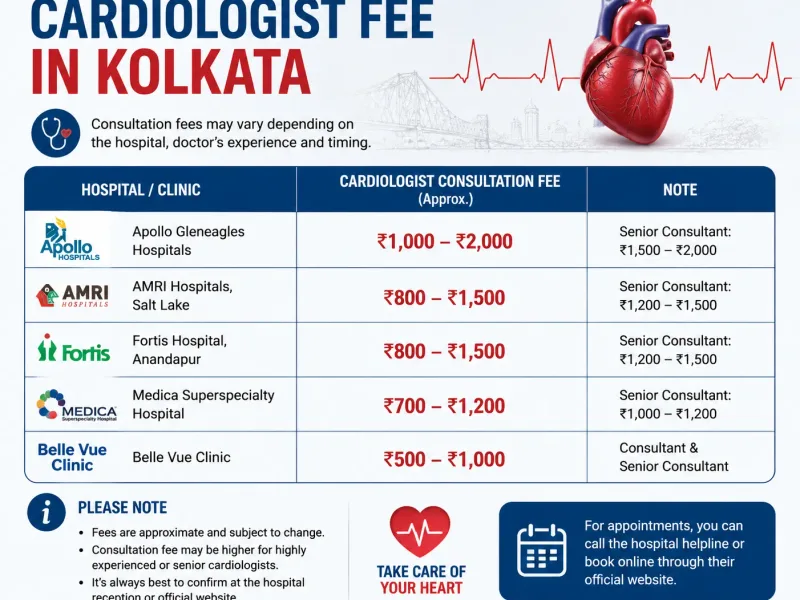
Learn about cardiologist fee in Kolkata, consultation charges, factors affecting costs, and tips to choose the right heart specialist.
May 29, 2026
A simple guide to the best shortness of breath specialist in Kolkata, including causes, symptoms, treatment options, and expert medical advice.
May 29, 2026

Find the best chest pain doctor in Kolkata. Learn causes, symptoms, tests, and treatment options from top heart specialists in simple English.
May 29, 2026