

Emergency & Help
24/7 Emergency & General Advisory
🚨 24/7 Medical Emergency
Non-Emergency Advisory
10:00 AM – 6:00 PM, Mon–Sat
For appointments & general queries.
24/7 Emergency & General Advisory
🚨 24/7 Medical Emergency
Non-Emergency Advisory
10:00 AM – 6:00 PM, Mon–Sat
For appointments & general queries.
Learn how Medicare can complement your Indian Health Service (IHS) benefits to expand access to medical care, specialist visits, and prescription drugs for Native Americans and Alaska Natives.

For many Native Americans and Alaska Natives, the Indian Health Service (IHS) has long been a cornerstone of healthcare. However, the IHS, while invaluable, doesn't cover every medical need. This is where Medicare steps in, offering a vital complement to IHS services, especially for those aged 65 and older, or those with specific disabilities. Understanding how these two systems can work together can unlock a wider range of healthcare options and improve overall well-being. What is the Indian Health Service (IHS)? The IHS is a federal government program, operating under the Department of Health and Human Services. Its primary mission is to provide healthcare services to federally recognized Native American and Alaska Native tribes. This includes care for approximately 2.6 million individuals across 574 tribes. The IHS operates a network of hospitals, clinics, and health stations across the United States. It also plays a role as a healthcare advocate for these communities. A key point to remember is that the IHS is not an insurance plan. It provides care exclusively at IHS facilities. Furthermore, federal funding often covers only a portion of the actual healthcare needs, estimated to be around 60%. This means that while IHS is a critical resource, it may not always have the capacity or funding to cover all necessary treatments or services. Who is Eligible for IHS? Eligibility for IHS healthcare is generally based on membership in a federally recognized Native American or Alaska Native tribe. This includes: Registered members of 574 federally recognized tribes. Children, including adopted and step-children under 19 years old, who are members of or have a parent who is a member of a federally recognized tribe. Individuals receiving a diagnosis of a disability that makes them eligible for Social Security Disability Insurance (SSDI) benefits for at least two years, and who are also members of a federally recognized tribe. Understanding Medicare Medicare is the federal health insurance program primarily for people aged 65 or older. However, it also covers younger people with certain disabilities and people with End-Stage Renal Disease (ESRD). Medicare is divided into several parts, each covering different types of healthcare services: Medicare Part A (Hospital Insurance): Helps cover inpatient hospital stays, care in a skilled nursing facility, hospice care, and some home health care. Medicare Part B (Medical Insurance): Helps cover outpatient care, doctor's services, preventive care, durable medical equipment, and other medical services. Medicare Part D (Prescription Drug Coverage): Helps cover the cost of prescription drugs, including many recommended vaccines. How Medicare and IHS Can Work Together For eligible individuals, Medicare can significantly enhance the healthcare services available through the IHS. Think of it as a way to fill the gaps that the IHS may not be able to cover due to funding or service limitations. Seeing Your Regular IHS Doctors One of the major benefits is that you can continue seeing your trusted doctors and healthcare providers at IHS facilities. All IHS facilities are equipped to accept Medicare. This means you don't have to change your primary care providers to access Medicare-covered services. Accessing Expanded Services Medicare can open doors to services that your local IHS facility might not offer. This could include: Specialist Visits: If you need to see a cardiologist, dermatologist, or other specialist, Medicare can help cover these costs, even if the specialist isn't based at the IHS facility. Services Not Available at IHS: Some advanced diagnostic tests or treatments might only be available at non-IHS hospitals or clinics. Medicare can provide coverage for these. Care While Traveling: If you travel away from your usual IHS service area, Medicare can ensure you have coverage for medical needs. Emergency Care: In urgent situations, Medicare provides a safety net for care received outside of IHS facilities. Using Medicare Parts with IHS Medicare Part A and IHS: You can use Part A to cover inpatient hospital stays at an IHS hospital or any other hospital that accepts Medicare. This is particularly helpful if an IHS facility is at capacity or doesn't have the necessary resources for a prolonged stay. Medicare Part B and IHS: Part B is incredibly useful for accessing outpatient services. You can use it to visit your doctor at an IHS clinic, undergo medical tests, receive physical therapy, or obtain necessary medical equipment. If you need to see a specialist not available at your IHS facility, Part B can cover those appointments and treatments. Medicare Part D and IHS: Prescription drug coverage is vital. With Part D, you can get your medications filled at an IHS pharmacy or any other pharmacy that is part of your Medicare drug plan's network, offering more convenience and choice. Medicare Savings Programs and Low-Cost Medicare Many individuals eligible for IHS can enroll in Medicare at a very low cost, or even for free. This is often possible through Medicare Savings Programs (MSPs) . These programs help beneficiaries with limited income and resources pay for Medicare costs, such as premiums, copayments, and deductibles. For example, in 2025, income limits for qualifying for certain MSPs could be as low as $1,325 per month for an individual or $1,783 for a married couple, though these figures can change annually. These programs are designed to make Medicare accessible to those who might otherwise find the costs prohibitive. What if you don't qualify for an MSP? If your income is slightly higher, you'll pay the standard Medicare costs. As of 2025, this typically includes: Medicare Part B Premium: Around $185 per month. Medicare Part B Deductible: $257 annually. Coinsurance: After meeting the deductible, you'll typically pay 20% of the Medicare-approved amount for most services covered by Part B. Even with these standard costs, using Medicare can still be more affordable and provide better access to care than relying solely on IHS, especially for services outside the IHS system. A Real-Life Scenario Meet Mrs. Yellowhammer, an 80-year-old member of the Navajo Nation living in Arizona. She relies on her local IHS clinic for most of her healthcare needs, including regular check-ups and medication for her high blood pressure. Recently, she developed severe knee pain that limits her mobility. Her IHS doctor recommended a consultation with an orthopedic specialist and potential knee surgery, but the nearest IHS orthopedic specialist is several hours away and has a long waiting list. Mrs. Yellowhammer is also enrolled in Medicare Part B and has a Medicare Savings Program that covers most of her Part B premium. Her doctor helps her schedule an appointment with a Medicare-accepting orthopedic specialist in a nearby town. Medicare covers the specialist's consultation and the subsequent knee surgery at a local hospital, allowing Mrs. Yellowhammer to get the care she needs much sooner and closer to home. When to Consult a Doctor or Specialist It's always a good idea to discuss your healthcare coverage options with both your IHS provider and a Medicare representative. Here are some key times to seek advice: Approaching Age 65: If you are eligible for IHS and nearing 65, start learning about Medicare enrollment. Receiving a New Diagnosis: If you are diagnosed with a condition requiring specialist care or services not readily available at your IHS facility. Experiencing Gaps in Care: If you find that the IHS cannot provide a specific service or you face long delays for necessary treatments. Traveling or Relocating: If you plan to travel for extended periods or move to an area with limited IHS access. Taking the Next Steps Navigating healthcare systems can seem complex, but understanding the synergy between Medicare and IHS can empower you to make informed decisions. Here’s what you can do: Talk to your IHS Provider: Discuss your healthcare needs and ask how Medicare can supplement the services they offer. Contact Medicare: Visit the official Medicare website (Medicare.gov) or call 1-800-MEDICARE to learn about enrollment, plans, and potential savings programs. Connect with Tribal Health Programs: Many tribes offer navigators or patient advocates who can help you understand both IHS and Medicare benefits. Explore Medicare Savings Programs: Investigate if you qualify for assistance with Medicare costs through your state's Medicaid office or social services department. By actively exploring these options, you can ensure you are leveraging all available resources to maintain your health and well-being. Frequently Asked Questions (FAQ) Can I use Medicare at any doctor's office? You can use Medicare at any doctor or hospital that accepts Medicare. Since all IHS facilities accept Medicare, you can continue your care there. Additionally, you can seek care from any other provider who accepts Medicare, expanding your options significantly. Is the IHS considered insurance? No, the IHS is not an insurance plan. It is a direct healthcare provider that operates its own facilities. You can only receive care at an IHS facility through the IHS program itself. Medicare, on the other hand, is an insurance program that helps pay for healthcare services. What happens if my IHS facility doesn't have a specific service? If your IHS facility cannot provide a necessary service, you can often use Medicare to access that service at a
In summary, timely diagnosis, evidence-based treatment, and prevention-focused care improve long-term health outcomes.
Visit Hospital
Near You
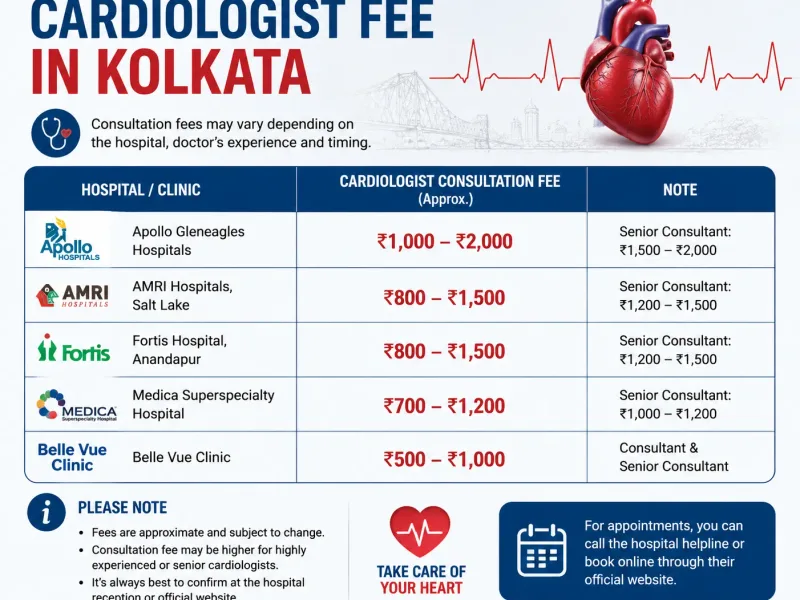
Learn about cardiologist fee in Kolkata, consultation charges, factors affecting costs, and tips to choose the right heart specialist.
May 29, 2026
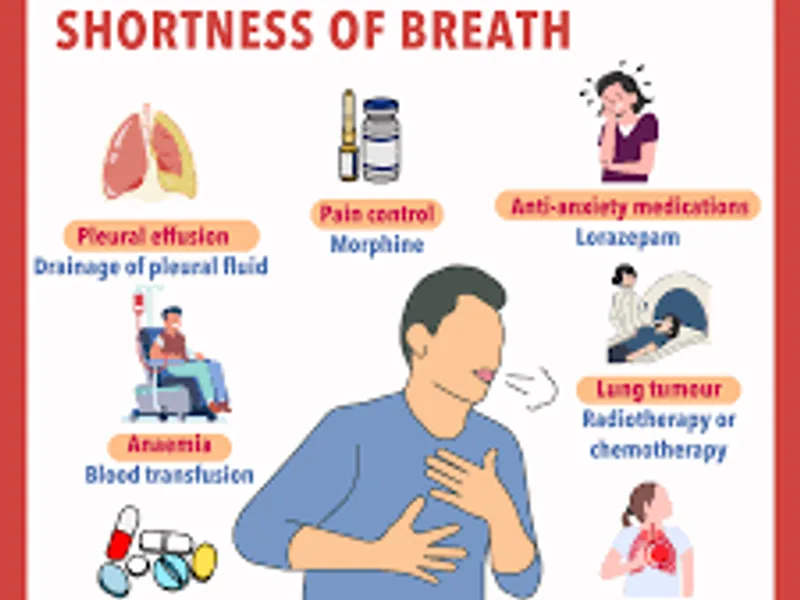
A simple guide to the best shortness of breath specialist in Kolkata, including causes, symptoms, treatment options, and expert medical advice.
May 29, 2026

Find the best chest pain doctor in Kolkata. Learn causes, symptoms, tests, and treatment options from top heart specialists in simple English.
May 29, 2026