

Emergency & Help
24/7 Emergency & General Advisory
🚨 24/7 Medical Emergency
Non-Emergency Advisory
10:00 AM – 6:00 PM, Mon–Sat
For appointments & general queries.
24/7 Emergency & General Advisory
🚨 24/7 Medical Emergency
Non-Emergency Advisory
10:00 AM – 6:00 PM, Mon–Sat
For appointments & general queries.
Explore no-prep veneers: a less invasive way to enhance your smile. Learn about their benefits, drawbacks, and what to expect compared to traditional veneers.

Understanding No-Prep Veneers: Your Guide to a Dazzling Smile Are you dreaming of a straighter, whiter, and more uniform smile but hesitant about invasive dental procedures? You're not alone. Many people in India desire a smile makeover but worry about the pain, discomfort, and permanence associated with traditional cosmetic dentistry. Fortunately, advancements in dental technology have introduced options like no-prep veneers, offering a less invasive way to enhance your smile's appearance. This guide will explore what no-prep veneers are, how they differ from traditional veneers, their benefits, potential drawbacks, and what you can expect during the process. We aim to provide clear, practical information for our Indian readers considering this cosmetic dental solution. What Exactly Are No-Prep Veneers? Dental veneers are thin shells, typically made from porcelain or composite resin, that dentists bond to the front surface of your teeth. Their primary purpose is to improve your smile's aesthetics by masking imperfections such as chips, cracks, discoloration, or minor alignment issues. Traditional veneers often require dentists to significantly alter your natural tooth structure, usually by removing a layer of enamel, to ensure a proper fit and a natural look. No-prep veneers, as the name suggests, require little to no preparation of your natural teeth. They are exceptionally thin – often around 0.33 mm, which is thinner than a typical contact lens. Because they are so slim, they can often be bonded directly to the front of your teeth without the need to grind down or remove any tooth enamel. This characteristic makes them a more conservative and often quicker option compared to their traditional counterparts. No-Prep vs. Traditional Veneers: What's the Difference? The main distinction lies in the preparation phase. Let's break it down: Traditional Veneers: Require significant tooth preparation, often involving shaving off 0.5 mm or more of tooth enamel. This process is irreversible and can sometimes necessitate local anesthesia due to tooth sensitivity. The preparation allows for a more secure bond and a natural contour with the tooth. No-Prep Veneers: Require minimal to no enamel removal. The procedure is less invasive, often pain-free, and typically doesn't require anesthesia. Because they are so thin, they can sometimes be applied directly over the natural tooth surface. They are considered semi-permanent and can be removed without permanently altering the underlying tooth structure. Think of it this way: applying traditional veneers is like tailoring a suit to fit you perfectly, which involves altering the original fabric. No-prep veneers are more like choosing a high-quality, ready-to-wear garment that fits exceptionally well without needing major adjustments. Why Choose No-Prep Veneers? The Advantages For many individuals, especially in a busy country like India where time is precious, the benefits of no-prep veneers are compelling: Minimally Invasive: The biggest draw is preserving natural tooth structure. This means less sensitivity and a more comfortable experience. Faster Procedure: Since extensive tooth preparation is avoided, the application process is significantly quicker. In some cases, you might even have your new smile in a single dental visit. Pain-Free Application: Without enamel removal, the need for local anesthesia is often eliminated, making the experience more pleasant. Reversibility: Unlike traditional veneers, no-prep veneers can often be removed without permanent damage to your teeth, offering peace of mind. Improved Aesthetics: They effectively cover stains, chips, cracks, and minor gaps, providing a uniform and attractive smile. Durability: With proper care, no-prep veneers can last for 5 to 7 years or even longer, depending on the brand and material. Some manufacturers claim even longer lifespans. Are No-Prep Veneers Right for You? Considerations and Potential Drawbacks While no-prep veneers offer many advantages, they aren't a universal solution. It's essential to weigh the pros and cons carefully: Not for Severely Damaged Teeth: If your teeth are extensively damaged, severely misaligned, or have large fillings, no-prep veneers might not provide the desired structural support or aesthetic outcome. More intensive treatments might be necessary. Translucency Issues: Because they are very thin, no-prep veneers may not be ideal for masking very deep stains or severe discoloration. Traditional veneers, being thicker and more opaque, might be a better choice in such cases. Surface Damage Potential: While they don't remove enamel, the bonding process can still affect the tooth's surface. Careful application and removal by a skilled dentist are crucial. Cost: The cost can be comparable to traditional veneers, ranging from approximately ₹6,000 to ₹16,000 per tooth (USD $800-$2000), depending on the dentist, location, and material used. It's an investment in your smile. Not Suitable for Everyone: Factors like your bite, oral hygiene habits, and the specific condition of your teeth will influence whether no-prep veneers are a suitable option. The No-Prep Veneer Process: What to Expect The journey to a new smile with no-prep veneers is generally straightforward: Consultation: Your dentist will examine your teeth, discuss your smile goals, and determine if no-prep veneers are the right choice for you. They will assess the condition of your teeth, bite, and overall oral health. Digital Impression: Instead of traditional messy molds, many dentists use advanced digital scanners to create a precise 3D model of your teeth. This is quick and comfortable. Design and Fabrication: Using the digital impression, your veneers are custom-made to fit your teeth perfectly and match your desired shade. Some brands, like Vivaneers (manufactured by Glidewell Labs), are known for their thinness and strength. Bonding: On the day of application, your dentist will clean and prepare the tooth surface. The no-prep veneers are then carefully bonded to your teeth using a special dental adhesive. The dentist will ensure they are perfectly placed and look natural. Final Check: Your dentist will check your bite and make any necessary minor adjustments to ensure comfort and function. Imagine Priya, who was preparing for her sister's wedding. She noticed a small chip on her front tooth that bothered her immensely in photos. She was worried about a lengthy dental procedure interfering with her preparations. Her dentist explained that no-prep veneers could fix the chip in just two visits, requiring no drilling, which made her feel much more at ease. Caring for Your No-Prep Veneers To ensure your no-prep veneers last as long as possible and maintain their beautiful appearance, follow these simple care tips: Maintain Excellent Oral Hygiene: Brush twice daily with a soft-bristled toothbrush and fluoride toothpaste. Floss at least once a day to clean between your teeth and along the gumline. Avoid Abrasive Toothpaste: Use non-abrasive toothpaste to prevent scratching the veneer surface. Be Mindful of Certain Foods: While durable, avoid biting down on very hard items like ice, nuts, or hard candy, as this can chip or damage any dental restoration. Limit Staining Foods and Drinks: Coffee, tea, red wine, and dark-colored foods can potentially stain veneers over time. Rinsing your mouth after consuming them can help. Wear a Mouthguard: If you grind your teeth (bruxism) or play contact sports, wear a custom-fitted mouthguard to protect your veneers from damage. Regular Dental Check-ups: Visit your dentist for regular check-ups and cleanings. They can monitor the condition of your veneers and your overall oral health. When to Consult a Dentist About Veneers If you're unhappy with the appearance of your smile due to chips, cracks, discoloration, or minor gaps, it's time to talk to your dentist. Specifically, consider a consultation if: You desire a smile makeover but are concerned about the invasiveness of traditional procedures. You have minor cosmetic flaws on your front teeth that you want to correct quickly. You've researched different cosmetic dental options and are curious about veneers. You've been told in the past that you weren't a candidate for traditional veneers due to concerns about enamel removal. Your dentist is the best person to assess your individual needs and recommend the most suitable treatment plan. They can explain the nuances of no-prep veneers versus traditional veneers and help you make an informed decision for your unique situation. Frequently Asked Questions (FAQ) About No-Prep Veneers Q1: Are no-prep veneers permanent? No, they are considered semi-permanent. They do not permanently alter your natural teeth, and they can be removed by a dentist. Their lifespan is typically 5-7 years or longer with good care. Q2: Can no-prep veneers fall off? When bonded correctly by a skilled dentist, they are very secure. However, like any dental restoration, they can potentially detach if subjected to excessive force or improper bonding. Following your dentist's aftercare instructions is key. Q3: Will my teeth look unnatural with no-prep veneers? Modern no-prep veneers are designed to be very thin and can be matched to the shade of your natural teeth, providing a highly aesthetic and natural-looking result. Your dentist will work with you to achieve your desired look. Q4: Can I get braces after having no-prep veneers? Generally, it is not recommended to get braces after placing veneers, especially no-prep ones, as the forces from orthodontic treatment could potentially damage the veneers or the bonding. If you require orthodontic treatment, it's usually best to complete it before considering veneers. Q5: How much do no-prep veneers typically
In summary, timely diagnosis, evidence-based treatment, and prevention-focused care improve long-term health outcomes.
Visit Hospital
Near You
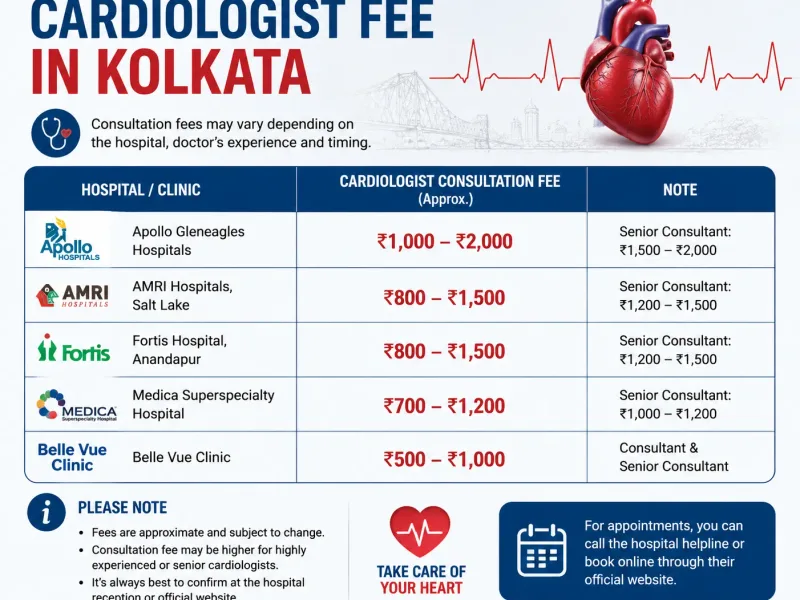
Learn about cardiologist fee in Kolkata, consultation charges, factors affecting costs, and tips to choose the right heart specialist.
May 29, 2026
A simple guide to the best shortness of breath specialist in Kolkata, including causes, symptoms, treatment options, and expert medical advice.
May 29, 2026

Find the best chest pain doctor in Kolkata. Learn causes, symptoms, tests, and treatment options from top heart specialists in simple English.
May 29, 2026