

Emergency & Help
24/7 Emergency & General Advisory
🚨 24/7 Medical Emergency
Non-Emergency Advisory
10:00 AM – 6:00 PM, Mon–Sat
For appointments & general queries.
24/7 Emergency & General Advisory
🚨 24/7 Medical Emergency
Non-Emergency Advisory
10:00 AM – 6:00 PM, Mon–Sat
For appointments & general queries.
Discover the vital role of Nurse Practitioners (NPs) in modern healthcare. Learn about their advanced training, responsibilities, and how they provide comprehensive patient care.
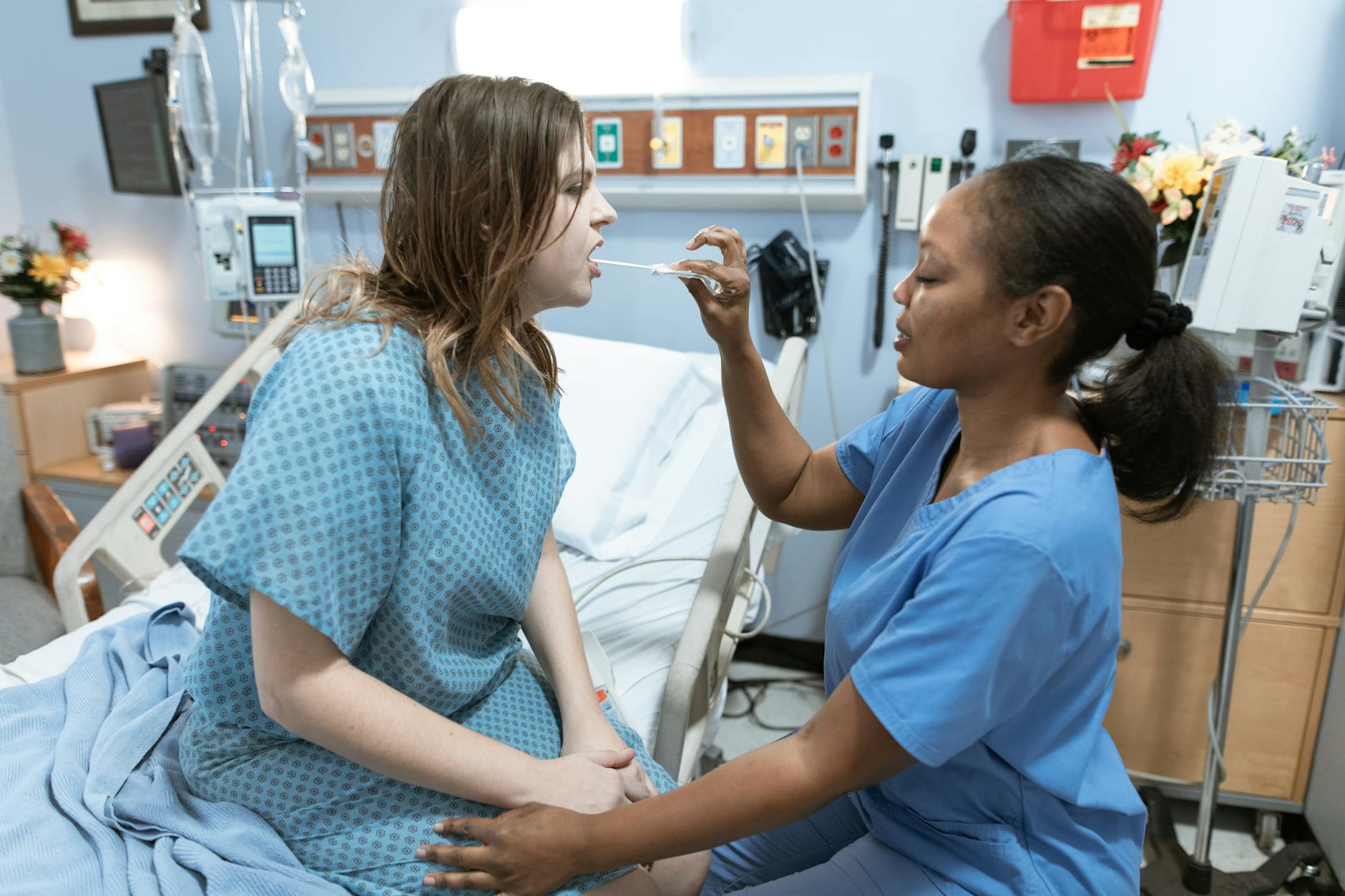
In the dynamic world of healthcare, you've likely encountered various medical professionals. Doctors, nurses, and technicians all play vital roles. But have you heard of a Nurse Practitioner (NP)? These advanced practice registered nurses are becoming increasingly important, offering comprehensive care and bridging gaps in patient access. Think of them as highly skilled clinicians with a unique blend of nursing compassion and medical expertise. They aren't just nurses with extra training; they are independent providers capable of managing many aspects of your health.
A Nurse Practitioner, or NP, is a registered nurse (RN) who has completed advanced academic education and clinical training. This advanced education equips them with the skills to assess patient needs, order and interpret diagnostic tests like X-rays and lab work, diagnose conditions, and crucially, prescribe medications and develop treatment plans. They can manage acute illnesses, chronic conditions, and provide preventative care. Essentially, they function similarly to physicians in many primary care settings, making them a cornerstone of modern healthcare, especially in areas facing doctor shortages.
The responsibilities of an NP are broad and can vary depending on their specialty and work setting. However, some common duties include:
The versatility of NPs means you can find them in a wide array of healthcare settings:
The journey to becoming a Nurse Practitioner is rigorous and requires significant dedication to education and clinical practice.
Your first step is to earn an RN license. This typically involves completing one of the following programs:
After completing your nursing program, you must pass the NCLEX-RN exam to become licensed as a registered nurse.
To practice as an NP, you need at least a Master of Science in Nursing (MSN) or a Doctor of Nursing Practice (DNP) degree. These graduate programs allow you to specialize in a particular area, such as:
Many nursing associations now recommend a DNP as the future standard for all nurse practitioners, signifying the highest level of practice expertise.
While in your graduate program, you'll gain extensive supervised clinical experience in your chosen specialty. This hands-on training is essential for developing your diagnostic and treatment skills.
After completing your degree, you must pass a national certification exam specific to your specialty (e.g., FNP-BC, PNP-BC). This certification is often required for state licensure as an NP.
Finally, you'll apply for licensure as an NP in the state where you wish to practice. Requirements vary by state but generally include holding an RN license, having a graduate degree, and passing the national certification exam.
The demand for healthcare services is growing, and the role of the Nurse Practitioner is expanding rapidly to meet this need. The U.S. Bureau of Labor Statistics projects a significant growth rate for NPs, far exceeding the average for all occupations. This means excellent job prospects and opportunities for career advancement. As healthcare systems evolve, NPs are poised to play an even more critical role in providing accessible, high-quality patient care.
Their unique combination of clinical expertise, compassionate care, and patient advocacy makes them invaluable members of the healthcare team. If you're seeking comprehensive medical care from a provider who listens, understands, and empowers you on your health journey, look for a Nurse Practitioner. They are at the forefront of patient-centered care, making a real difference in the lives of individuals and communities across India and beyond.
Yes, absolutely. Nurse Practitioners are authorized to prescribe medications, including controlled substances in many states, as part of their comprehensive scope of practice.
While all NPs are RNs, not all RNs are NPs. NPs have completed advanced graduate-level education and training, enabling them to diagnose conditions, manage patient care, and prescribe medications, which RNs typically do not do independently.
Nurse Practitioners provide a high standard of care comparable to physicians, particularly in primary care and many specialty areas. They are trained to diagnose and treat a wide range of conditions and focus on a holistic, patient-centered approach. For many healthcare needs, an NP is an excellent and often more accessible choice.
Salaries for Nurse Practitioners can vary significantly based on experience, specialty, location, and the healthcare setting. However, NPs generally earn competitive salaries, with median earnings often well over ₹70,000 to ₹1,00,000 per month in India, and significantly higher in developed countries like the US, where median annual salaries can exceed $100,000 USD.
Visit Hospital
Near You
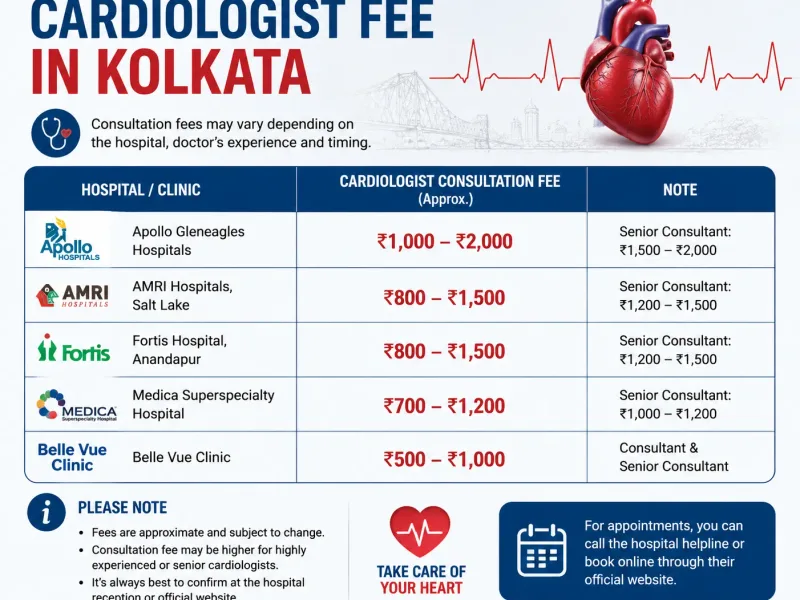
Learn about cardiologist fee in Kolkata, consultation charges, factors affecting costs, and tips to choose the right heart specialist.
May 29, 2026
A simple guide to the best shortness of breath specialist in Kolkata, including causes, symptoms, treatment options, and expert medical advice.
May 29, 2026

Find the best chest pain doctor in Kolkata. Learn causes, symptoms, tests, and treatment options from top heart specialists in simple English.
May 29, 2026