

Emergency & Help
24/7 Emergency & General Advisory
🚨 24/7 Medical Emergency
Non-Emergency Advisory
10:00 AM – 6:00 PM, Mon–Sat
For appointments & general queries.
24/7 Emergency & General Advisory
🚨 24/7 Medical Emergency
Non-Emergency Advisory
10:00 AM – 6:00 PM, Mon–Sat
For appointments & general queries.
Explore removable clear aligners: a discreet and convenient way to straighten teeth. Learn about their benefits, costs, and how they compare to traditional braces for Indian readers.

Are you dreaming of a straighter smile but hesitant about the thought of traditional, metal braces? You're not alone! Many people in India and around the world are seeking orthodontic solutions that are less visible and more convenient. Enter removable braces, a modern approach that uses clear plastic aligners to gently guide your teeth into their ideal position. These custom-made trays offer a discreet alternative to conventional braces, allowing you to eat, drink, and clean your teeth with ease. This guide explores everything you need to know about removable braces, from how they work and who can benefit, to their advantages, potential drawbacks, and how they stack up against traditional fixed braces. We'll cover what to expect during treatment, the costs involved, and what happens after your smile journey is complete. What Exactly Are Removable Braces? Removable braces, often referred to as clear aligners, are custom-designed trays made from a clear, medical-grade plastic. They fit snugly over your teeth, applying gentle, controlled pressure to gradually shift them into alignment. Unlike traditional braces that are cemented onto your teeth with brackets and wires, these aligners can be easily removed by the wearer. Your treatment plan will typically involve a series of these aligners, each designed to move your teeth a little further towards the desired position. You'll switch to a new set of aligners every one to two weeks, as directed by your orthodontist, as your teeth progressively realign over a period of approximately 12 to 18 months. How Do Removable Braces Work? The process begins with a thorough examination by an orthodontist. They will take X-rays, dental impressions, and possibly 3D scans of your teeth and jaw. This detailed information allows them to create a precise digital model of your mouth. Using this model, the orthodontist maps out a customized treatment plan, determining the exact sequence of tooth movements required to achieve your smile goals. Based on this plan, a series of custom-made aligners are manufactured. Each aligner in the series represents a specific stage of your treatment. When you wear an aligner, it exerts gentle pressure on certain teeth, encouraging them to move. As you progress through the series, each new aligner builds upon the previous one, continuing the gradual movement until your teeth reach their final, corrected positions. It’s a step-by-step process, with each aligner designed to achieve a specific micro-adjustment. Who Can Benefit from Removable Braces? Removable braces are an excellent option for both teenagers and adults seeking to correct a variety of orthodontic issues. They are particularly well-suited for: Mild to Moderate Crowding: When teeth are too close together, causing overlap. Gaps Between Teeth (Diastema): Spaces that appear between one or more teeth. Bite Misalignment: Issues like overbites (upper teeth sticking out too far), underbites (lower teeth sticking out too far), crossbites (upper and lower teeth not meeting properly), and open bites (teeth not meeting at the front). However, it's important to understand that while effective for many, removable braces might not be the ideal solution for complex orthodontic problems that require significant tooth movement or jaw restructuring. Your orthodontist will assess your specific needs to determine if clear aligners are the right choice for you. A Real-Life Scenario: Riya, a 28-year-old graphic designer, always felt self-conscious about the small gap between her front teeth. She avoided smiling widely in photos and often hesitated to speak up in meetings. Traditional braces seemed too prominent for her professional image, and she worried about the food restrictions. After consulting with her orthodontist, she opted for clear aligners. Within six months, the gap had significantly closed, and she was thrilled with the discreet nature of the treatment and the minimal disruption to her daily life. Advantages of Removable Braces The popularity of removable braces stems from several key benefits: Aesthetics: They are virtually invisible, making them a highly sought-after option for adults and teens who are concerned about appearance. Comfort: Made from smooth plastic, they generally cause less irritation to the gums and cheeks compared to the metal brackets and wires of traditional braces. Convenience: You can remove them for eating, drinking, brushing, and flossing. This makes maintaining oral hygiene much easier and allows you to enjoy all your favourite foods without worry. Predictable Results: The treatment is planned digitally, allowing you to see a virtual representation of your smile's transformation before you even begin. Shorter Treatment Time (Potentially): While variable, some patients find their treatment completed within the 12-18 month timeframe. Easier Oral Hygiene: Brushing and flossing are done as usual, without the need for special tools to navigate around brackets. Disadvantages and Considerations While removable braces offer many advantages, there are some points to keep in mind: Compliance is Key: You must wear the aligners for at least 20-22 hours a day for them to be effective. Forgetting to wear them or taking them out for extended periods can significantly delay treatment. This is often the biggest challenge for younger patients. Potential for Loss: Since they are removable, there's a risk of losing aligners, which can be costly to replace and disrupt the treatment schedule. Not for All Cases: Complex orthodontic issues requiring significant tooth rotation or large bite corrections may still necessitate traditional braces. Oral Hygiene Still Matters: While easier, you must clean your teeth thoroughly before reinserting aligners to prevent bacteria buildup and potential staining or decay. Temporary Lisp: Some users experience a slight lisp when first wearing new aligners, which usually subsides as they get accustomed to them. Removable Braces vs. Traditional Braces The primary difference lies in their appearance and removability. Traditional braces use metal or ceramic brackets attached to the teeth with wires that are adjusted by the orthodontist. They are fixed in place and very effective for complex cases. Removable braces, as discussed, are clear plastic trays that you can take out. This makes them more aesthetically pleasing and easier to manage for oral hygiene and eating. However, their success hinges entirely on your commitment to wearing them consistently. For very complex alignments or severe bite issues, traditional braces might offer more precise control and faster correction. The Treatment Journey: What to Expect 1. Consultation and Planning: Your orthodontist will assess your teeth, take records, and discuss your goals. They will then create a digital treatment plan, showing you how your teeth will move and what the final result might look like. 2. Receiving Your Aligners: You'll receive your first set of aligners, along with instructions on how to wear and care for them. You’ll also learn how to switch to the next set in the series. 3. Wearing the Aligners: Wear your aligners for 20-22 hours daily. Remove them only for eating, drinking (anything other than water), and brushing/flossing. Clean your aligners regularly. 4. Regular Check-ups: You'll visit your orthodontist periodically (usually every 6-8 weeks) for progress checks. They will ensure your teeth are moving as planned and provide your next set of aligners if needed. 5. Transitioning Through Sets: You'll switch to a new set of aligners every 1-2 weeks, as instructed by your orthodontist. Each new set will feel slightly different as it applies new pressure. 6. Completion and Retention: Once you've worn the final aligner in the series, your active treatment is complete. However, to maintain your new smile, you'll need to wear retainers, which are often clear trays similar to aligners, for a prescribed period, often full-time initially and then at night. Cost of Removable Braces in India The cost of removable braces can vary significantly based on several factors, including the complexity of your case, the brand of aligners used (e.g., Invisalign, ClearCorrect), and the orthodontist's fees. In India, you can expect the cost to range anywhere from ₹70,000 to ₹3,00,000 or more . Simpler cases requiring fewer aligners will naturally be at the lower end of the spectrum, while more complex treatments requiring extensive adjustments will be more expensive. It's essential to get a detailed quote from your orthodontist after your initial consultation. Maintaining Your Smile After Treatment The journey doesn't end when you take out your last aligner. Wearing retainers is non-negotiable for long-term success. Retainers prevent your teeth from shifting back to their original positions. Initially, you might need to wear them almost full-time, similar to aligners. Over time, your orthodontist will likely advise wearing them only at night. Consistent retainer use is the key to preserving the beautiful results you've worked hard to achieve. When to Consult an Orthodontist If you're considering orthodontic treatment, whether it's for aesthetic reasons or to correct a functional bite problem, the first step is always to consult a qualified orthodontist. They can: Diagnose the exact nature of your orthodontic issue. Explain all available treatment options, including removable braces, traditional braces, and others. Help you understand the pros and cons of each option in relation to your specific needs. Provide a clear treatment plan, timeline, and cost estimate. Don't hesitate to seek professional advice. A straighter, healthier smile is achievable for many, and an orthodontist is
In summary, timely diagnosis, evidence-based treatment, and prevention-focused care improve long-term health outcomes.
Visit Hospital
Near You
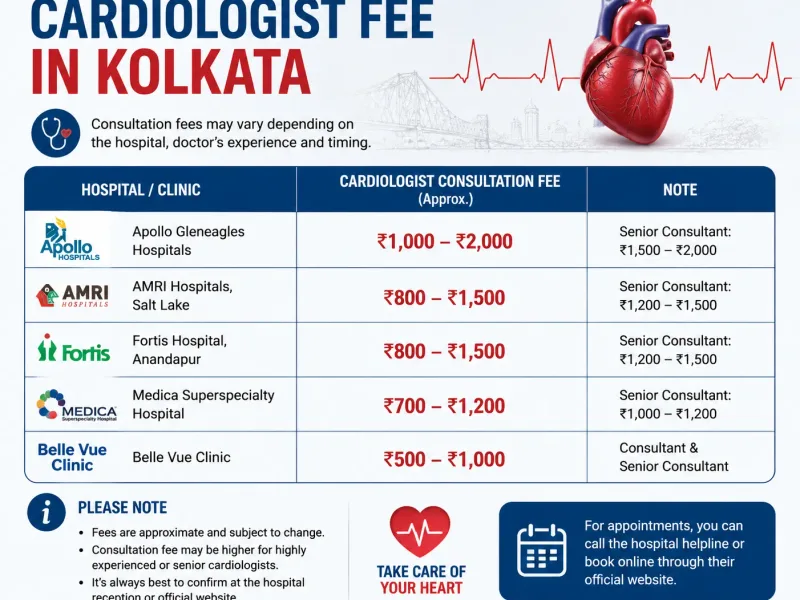
Learn about cardiologist fee in Kolkata, consultation charges, factors affecting costs, and tips to choose the right heart specialist.
May 29, 2026

A simple guide to the best shortness of breath specialist in Kolkata, including causes, symptoms, treatment options, and expert medical advice.
May 29, 2026

Find the best chest pain doctor in Kolkata. Learn causes, symptoms, tests, and treatment options from top heart specialists in simple English.
May 29, 2026