

Emergency & Help
24/7 Emergency & General Advisory
🚨 24/7 Medical Emergency
Non-Emergency Advisory
10:00 AM – 6:00 PM, Mon–Sat
For appointments & general queries.
24/7 Emergency & General Advisory
🚨 24/7 Medical Emergency
Non-Emergency Advisory
10:00 AM – 6:00 PM, Mon–Sat
For appointments & general queries.
Confused by hospital acronyms? Learn the difference between an ICU (Intensive Care Unit) and a CCU (Critical Care Unit or Cardiac Care Unit) and understand what kind of care each provides.

When a loved one is seriously ill, the terms used to describe hospital units can be confusing. You might hear about an ICU or a CCU, and wonder if they are the same thing. While there’s a lot of overlap, understanding the nuances can help you know what to expect. Both Intensive Care Units (ICUs) and Cardiac Care Units (CCUs) are specialized hospital areas designed for patients who need constant, close monitoring and advanced medical support. However, a CCU can sometimes be a more specific type of unit focused solely on heart conditions, whereas an ICU is generally for any critical illness or injury requiring intensive care.
An ICU stands for an Intensive Care Unit. This is a critical part of a hospital that provides highly specialized and intensive medical care. Patients admitted to the ICU are typically those who are critically ill or injured and require constant monitoring, life support, and rapid medical intervention. Think of it as the hospital's hub for life-threatening conditions.
You might find yourself or a family member in the ICU if you have experienced:
The primary goal in the ICU is to stabilize the patient, manage life-threatening conditions, and prevent further deterioration. The staff here are experts in managing complex medical situations and are equipped with advanced technology to support failing organs and vital functions.
A CCU can stand for two main things:
If your CCU is specialized for cardiac care, you would likely be admitted if you:
These units are staffed by cardiologists, cardiac nurses, and other specialists with deep expertise in cardiovascular health. They use advanced monitoring equipment to track heart rhythms, blood pressure, and other vital signs related to heart function.
Here’s a breakdown of how these units compare:
Real-life Scenario: Imagine two patients arriving at the emergency room. One has severe chest pain and difficulty breathing, and the doctor suspects a heart attack. They might be taken to the Cardiac Care Unit (CCU) for specialized heart monitoring and treatment. Another patient, who has suffered a major car accident with multiple internal injuries, needs immediate life support and organ support. This patient would likely be admitted to the Intensive Care Unit (ICU).
The decision to transfer a patient out of an ICU or CCU is a significant step in their recovery. It usually happens when the patient no longer requires 24-hour critical care or intensive monitoring. This could mean:
Once stable, patients are typically moved to a less intensive hospital ward, like a general medical or surgical unit, to continue their recovery. This transition allows beds in the ICU/CCU to be available for new patients who need that level of critical care.
During times of widespread health crises, like the COVID-19 pandemic, the role of ICUs and CCUs becomes even more pronounced. These units are vital for managing patients with severe respiratory distress, complex organ failures, and critical cardiovascular complications that often arise from such illnesses. The surge in critically ill patients can strain hospital resources, highlighting the importance of having well-equipped and staffed intensive and cardiac care units.
While you won't typically
Most people do not notice early warning signs right away. That is common. A simple symptom diary, basic routine checks, and timely follow-up visits can prevent small problems from becoming serious.
If you are already on treatment, stay consistent with medicines and lifestyle advice. If your symptoms change, do not guess. Check with a qualified doctor and update your plan early.
Write down symptoms, triggers, and timing for a few days.
Carry old prescriptions and test reports to your consultation.
Ask clearly about side effects, red-flag signs, and follow-up dates.
Seek urgent care for severe pain, breathing trouble, bleeding, fainting, or sudden worsening.
Visit Hospital
Near You
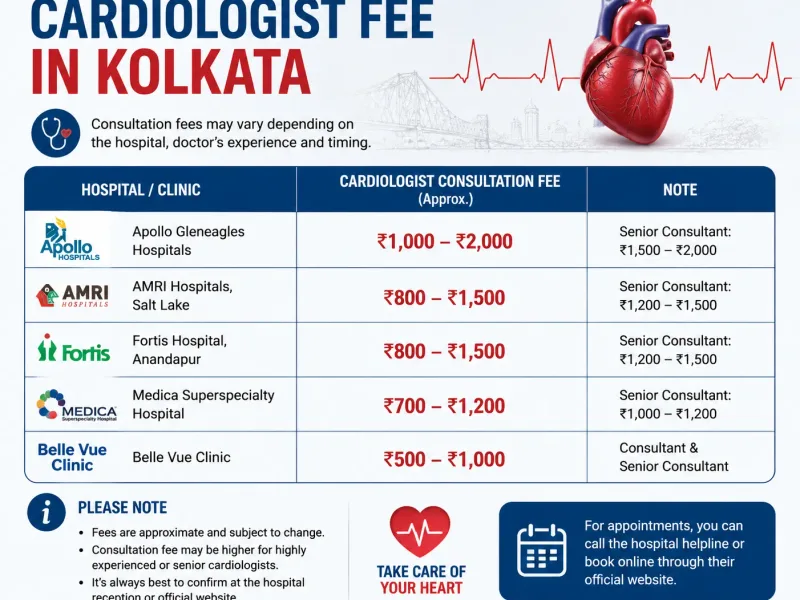
Learn about cardiologist fee in Kolkata, consultation charges, factors affecting costs, and tips to choose the right heart specialist.
May 29, 2026
A simple guide to the best shortness of breath specialist in Kolkata, including causes, symptoms, treatment options, and expert medical advice.
May 29, 2026

Find the best chest pain doctor in Kolkata. Learn causes, symptoms, tests, and treatment options from top heart specialists in simple English.
May 29, 2026