

Emergency & Help
24/7 Emergency & General Advisory
🚨 24/7 Medical Emergency
Non-Emergency Advisory
10:00 AM – 6:00 PM, Mon–Sat
For appointments & general queries.
24/7 Emergency & General Advisory
🚨 24/7 Medical Emergency
Non-Emergency Advisory
10:00 AM – 6:00 PM, Mon–Sat
For appointments & general queries.
A straightforward guide to Medicare's four parts: A (Hospital Insurance), B (Medical Insurance), C (Medicare Advantage), and D (Prescription Drug Coverage), explaining what each covers and their associated costs for Indian readers.

Navigating health insurance can feel like deciphering a secret code, especially when it comes to Medicare. If you're 65 or older, or have certain health conditions, understanding Medicare is key to getting the care you need. It's a federal health insurance program that offers coverage for a wide range of medical services. But Medicare isn't just one big plan; it's broken down into four distinct parts, each designed to cover different aspects of your healthcare journey.
Let's break down these four parts – Part A, Part B, Part C, and Part D – in a way that makes sense. We'll explore what each part covers, the costs involved, and how they work together to form your overall Medicare coverage. Think of this as your straightforward guide to making informed decisions about your health insurance.
Medicare is primarily for individuals aged 65 and older. However, it also extends to younger people with certain disabilities and those with End-Stage Renal Disease (ESRD). Its main goal is to provide financial assistance for healthcare costs, ensuring that essential medical services remain accessible.
The program is managed by the Centers for Medicare & Medicaid Services (CMS), a federal agency. While it's a federal program, private insurance companies often administer some parts of Medicare, particularly Medicare Advantage plans.
Medicare is divided into four parts, often referred to as Original Medicare (Parts A and B), Medicare Advantage (Part C), and Prescription Drug Coverage (Part D).
Think of Part A as your hospital coverage. It helps pay for the costs associated with inpatient care in a hospital, as well as care in a skilled nursing facility, hospice care, and some home healthcare services.
What Part A Covers:
Part A Costs:
The good news is that most people don't pay a monthly premium for Part A. This is usually because they or their spouse paid Medicare taxes while working for at least 10 years. If you don't qualify for premium-free Part A, you'll have a monthly premium. In 2025, this premium can be $285 or $518 per month, depending on your work history.
There's also a deductible for Part A. For 2025, the deductible is $1,676 for each benefit period. A benefit period begins the day you're admitted as an inpatient and ends when you haven't received any inpatient hospital or skilled nursing care for 60 days in a row. After you meet your deductible, Medicare covers the full cost of your hospital stay for the first 60 days. Beyond that, you'll have coinsurance costs:
Real-life scenario: Rani's father was recently hospitalized for pneumonia. After a few days in the hospital, he needed a few weeks of physical therapy in a skilled nursing facility to regain his strength. Rani was relieved that her father's Part A coverage helped significantly with the costs of both the hospital stay and the skilled nursing facility.
Part B is your medical insurance. It complements Part A by covering outpatient services, doctor's visits, preventive care, and medical supplies. If you're receiving care outside of a hospital inpatient setting, Part B is likely what covers it.
What Part B Covers:
Part B Costs:
Unlike Part A, most people pay a monthly premium for Part B. For 2025, the standard monthly premium is $174.70, but it can be higher if your income is above a certain level. You'll also have an annual deductible for Part B. In 2025, this deductible is $240.
Once you meet your deductible, you typically pay 20% of the Medicare-approved amount for most covered services. This is known as coinsurance. For example, if a doctor's visit costs $100 and you've met your deductible, you'll pay $20, and Medicare pays $80.
Some services, like certain preventive care screenings, might be covered at 100% with no out-of-pocket cost to you after you've paid your Part B deductible for the year.
When you combine Part A and Part B, you have what's known as Original Medicare. This is the traditional fee-for-service Medicare program. It offers flexibility in choosing your doctors and hospitals, as most providers who accept Medicare will accept Original Medicare.
Original Medicare covers a broad range of healthcare needs, but it doesn't cover everything. Notably, it doesn't typically cover routine dental care, eye exams, eyeglasses, or hearing aids. It also doesn't include prescription drug coverage, which is where Part D comes in.
Medicare Advantage, also known as Part C, is an alternative way to get your Medicare coverage. These plans are offered by private insurance companies approved by Medicare.
What Part C Covers:
Medicare Advantage plans must cover all the same benefits as Original Medicare (Parts A and B), with a few exceptions. This means they cover hospital stays, doctor visits, preventive services, and more.
A key difference is that many Part C plans offer additional benefits not typically covered by Original Medicare. These can include:
Part C Costs:
With a Part C plan, you'll still pay your Part B premium. You may also pay a separate premium for the Part C plan itself, though many plans have a $0 monthly premium. Costs vary widely depending on the plan and the insurance provider.
Part C plans often have different cost-sharing structures than Original Medicare. They may have lower deductibles, copayments, or coinsurance for certain services, but they usually have an annual out-of-pocket maximum, which Original Medicare does not have.
Important Considerations for Part C:
Real-life scenario: Suresh was looking for a Medicare plan that included dental coverage. He found a Medicare Advantage plan in his area that offered comprehensive dental benefits alongside his medical coverage, saving him from needing a separate dental insurance policy.
Part D plans help cover the costs of prescription drugs. These plans are also offered by private insurance companies that have been approved by Medicare.
What Part D Covers:
Part D plans cover a formulary, which is a list of prescription drugs the plan covers. The formulary is typically divided into tiers, with generic drugs usually in lower tiers (meaning lower costs) and brand-name or specialty drugs in higher tiers.
Part D Costs:
Part D plans have monthly premiums, which vary widely based on the plan and the drugs covered. There's also an annual deductible, which can be up to a certain limit set by Medicare each year. After you meet the deductible, you'll typically pay a copayment or coinsurance for your prescriptions.
A unique aspect of Part D is the coverage gap, often called the
Overall, early action and medically verified advice remain the safest approach.
Visit Hospital
Near You
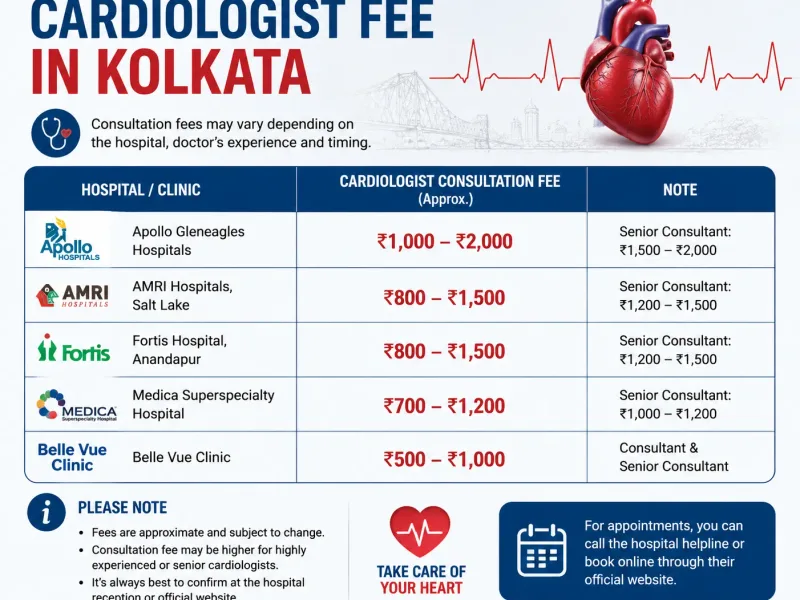
Learn about cardiologist fee in Kolkata, consultation charges, factors affecting costs, and tips to choose the right heart specialist.
May 29, 2026
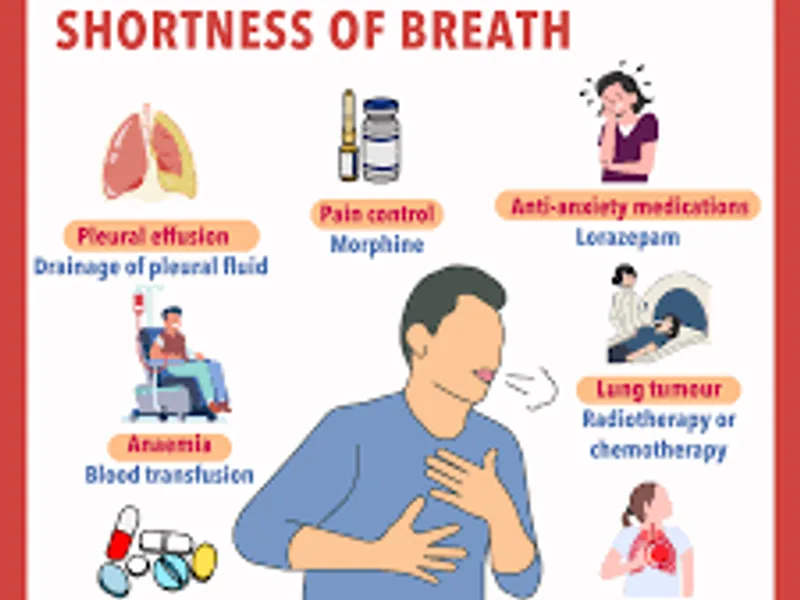
A simple guide to the best shortness of breath specialist in Kolkata, including causes, symptoms, treatment options, and expert medical advice.
May 29, 2026

Find the best chest pain doctor in Kolkata. Learn causes, symptoms, tests, and treatment options from top heart specialists in simple English.
May 29, 2026