

Emergency & Help
24/7 Emergency & General Advisory
🚨 24/7 Medical Emergency
Non-Emergency Advisory
10:00 AM – 6:00 PM, Mon–Sat
For appointments & general queries.
24/7 Emergency & General Advisory
🚨 24/7 Medical Emergency
Non-Emergency Advisory
10:00 AM – 6:00 PM, Mon–Sat
For appointments & general queries.
Understand how Medicare covers hospital beds for home use, including eligibility, costs, and the process for obtaining one with a doctor's prescription.

When a serious health condition requires a hospital bed, the thought of managing the costs can add to your worries. For many individuals in India, particularly seniors or those with chronic illnesses, understanding healthcare coverage is paramount. This article aims to demystify how Medicare, a widely recognized health insurance program in some countries (though specific to the US context, the principles of medical necessity and insurance coverage are universal and informative), covers hospital beds for home use. We'll explore what Medicare covers, how much it pays, and what you need to do to qualify. While the specifics of Medicare are for US citizens, the underlying principles of medical necessity and insurance support for essential medical equipment are valuable for anyone navigating healthcare costs. The goal is to provide clear, actionable information that empowers you to make informed decisions about your healthcare needs and understand the financial support available for essential medical equipment like hospital beds. What is a Hospital Bed for Home Use? A hospital bed for home use isn't just any bed. It's a specialized piece of equipment designed to provide comfort, support, and safety for individuals with specific medical needs. These beds often come with features that standard home beds lack: Adjustable Height: Allows caregivers to position the bed at an optimal height for easier transfers and care. Head and Foot Elevation: Helps patients find comfortable positions for resting, eating, or managing conditions like swelling or breathing difficulties. Side Rails: Provide safety by preventing falls and can assist patients in repositioning themselves. Specialized Mattresses: Some beds come with pressure-relieving mattresses to prevent bedsores, which are a common concern for individuals who spend long periods in bed. These features are not luxuries; they are often essential for managing a medical condition, improving quality of life, and ensuring patient safety at home. Why Might a Doctor Order a Hospital Bed? A doctor's order for a hospital bed is based on medical necessity. It's not a matter of preference but a clinical decision to address specific health challenges. Common reasons include: Severe Pain: When a patient experiences significant pain that can only be alleviated by adjusting the bed's position. Breathing Difficulties: Elevating the head can make breathing easier for individuals with respiratory conditions like COPD or heart failure. Swelling (Edema): Raising the legs can help reduce swelling in the lower extremities, often associated with heart disease, kidney problems, or venous insufficiency. Mobility Issues: For individuals who have difficulty moving in or out of bed, adjustable height and side rails can greatly improve safety and independence. Preventing Bedsores: Patients who are immobile or spend most of their time in bed are at high risk of developing pressure ulcers. Hospital beds with specialized mattresses and positioning capabilities can help mitigate this risk. Post-Surgery Recovery: Certain surgical recoveries might require specific positioning to promote healing and reduce strain. Chronic Conditions: Managing chronic illnesses like severe arthritis, neurological disorders, or advanced heart disease often necessitates the support a hospital bed provides. Think about Mrs. Sharma, a 75-year-old woman recovering from hip surgery. Her doctor recommends a hospital bed at home because she needs to keep her leg elevated to reduce swelling and has difficulty moving safely on her own. The adjustable features will make it easier for her family to assist with her care. How Medicare Covers Hospital Beds Medicare, a program primarily for individuals aged 65 and older or those with specific disabilities in the US, covers hospital beds for home use under Part B . Part B covers outpatient care, durable medical equipment (DME), and preventive services. For Medicare to cover a hospital bed, several conditions must be met: Medical Necessity: The bed must be medically necessary to treat your specific condition or illness. Doctor's Order: Your doctor must prescribe the bed and provide a written order detailing your condition and why the bed is needed. This documentation is critical. Doctor Participation: Your doctor must participate in Medicare. Supplier Participation: The company providing the bed must also participate in Medicare. Home Use: The bed must be for use in your home. Coverage Details: Purchase or Rental: Medicare covers both renting and purchasing a hospital bed, depending on the type of bed ordered and the supplier's policies. Often, you might rent a bed initially, and if continued need is established, the option to purchase may arise. Cost Sharing: Once the annual Part B deductible is met (which was $257 in 2024), Medicare Part B typically pays 80% of the Medicare-approved amount for the hospital bed. You are responsible for the remaining 20% coinsurance. Deductible and Coinsurance Example: If a hospital bed costs $1,000 and you've met your deductible, Medicare would pay 80% ($800), and you would pay the remaining 20% ($200). If you rent a bed for $300 per month, Medicare would cover $240, and your out-of-pocket cost would be $60 per month. Repairs: If you rent the bed, the supplier is generally responsible for repair costs for the first 13 months of continuous use. After this period, ownership typically transfers to you, and you may be responsible for future repairs. What Medicare Parts Cover Hospital Beds? Medicare Part B is the primary part that covers hospital beds for home use, as they are classified as Durable Medical Equipment (DME). It's essential to ensure your doctor and the equipment supplier are Medicare-participating providers. Medicare Advantage (Part C) Plans: If you have a Medicare Advantage plan, these plans are offered by private insurance companies approved by Medicare. They must provide at least the same coverage as Original Medicare (Parts A and B). Therefore, a Medicare Advantage plan should cover hospital beds if they are medically necessary and prescribed by your doctor, following the same general guidelines. Some plans might offer additional benefits or have different cost-sharing arrangements, so it's always wise to check your specific plan details. Medigap (Medicare Supplement Insurance) Plans: Medigap policies can help cover some of the out-of-pocket costs that Original Medicare doesn't cover, such as the 20% coinsurance for hospital beds. If you have a Medigap plan, it can significantly reduce your total expenses for a hospital bed. What Types of Hospital Beds Does Medicare Cover? Medicare covers standard adjustable hospital beds. It may also cover certain medically necessary upgrades or accessories, such as: Trapeze Bars: These attach to the bed and help patients pull themselves up or reposition, aiding independence and reducing caregiver strain. Specialized Mattresses: If your condition requires it (e.g., to prevent pressure ulcers), Medicare may cover specialized mattresses, including air-fluidized or gel options. The key is that the equipment must be deemed necessary by your doctor to treat your specific condition. Your doctor will specify the type of bed and any accessories needed in the prescription. How to Get a Hospital Bed Covered by Medicare Navigating insurance can be complex, but following these steps can help ensure a smoother process: Consult Your Doctor: Discuss your need for a hospital bed with your physician. They will assess your condition and determine if a hospital bed is medically necessary. Obtain a Prescription: If deemed necessary, your doctor will write a detailed prescription. This prescription must clearly state your medical condition and explain exactly how the hospital bed will help manage it. Work with a Medicare-Participating Supplier: Your doctor or healthcare provider can often recommend reputable suppliers who participate in Medicare. Ensure the supplier you choose is also enrolled in Medicare. Submit Documentation: The supplier will typically handle the paperwork and submit the claim to Medicare. However, it’s good practice to understand the process and keep copies of all documentation. Understand Your Costs: Be aware of your Part B deductible and the 20% coinsurance. If you have a Medicare Advantage or Medigap plan, understand how it applies to your out-of-pocket expenses. A Real-Life Scenario: Mr. Rao, who has advanced congestive heart failure, finds it increasingly difficult to breathe when lying flat. His cardiologist prescribes an adjustable hospital bed to help him sleep in a semi-upright position. Mr. Rao discusses this with his doctor, who provides the necessary prescription. The doctor's office helps Mr. Rao find a local DME supplier that accepts Medicare. The supplier verifies Mr. Rao's Medicare coverage and arranges for the bed's delivery and setup, ensuring all paperwork is filed correctly. When to Consult a Doctor You should consult your doctor about a hospital bed if you experience any of the following: Persistent pain that is not relieved by standard positioning. Significant difficulty moving in or out of your current bed. Trouble breathing when lying down. Development of pressure sores or high risk of developing them. Severe swelling in your legs or feet that is not managed by elevation. You are recovering from surgery that requires specific, prolonged positioning. Your current bed makes it difficult for caregivers to provide necessary assistance safely. Your doctor is your primary resource for determining medical necessity and initiating the process for obtaining covered medical equipment. Frequently Asked Questions (FAQ) Does Medicare cover adjustable hospital beds? Yes, Medicare Part B covers adjustable hospital
In summary, timely diagnosis, evidence-based treatment, and prevention-focused care improve long-term health outcomes.
Visit Hospital
Near You
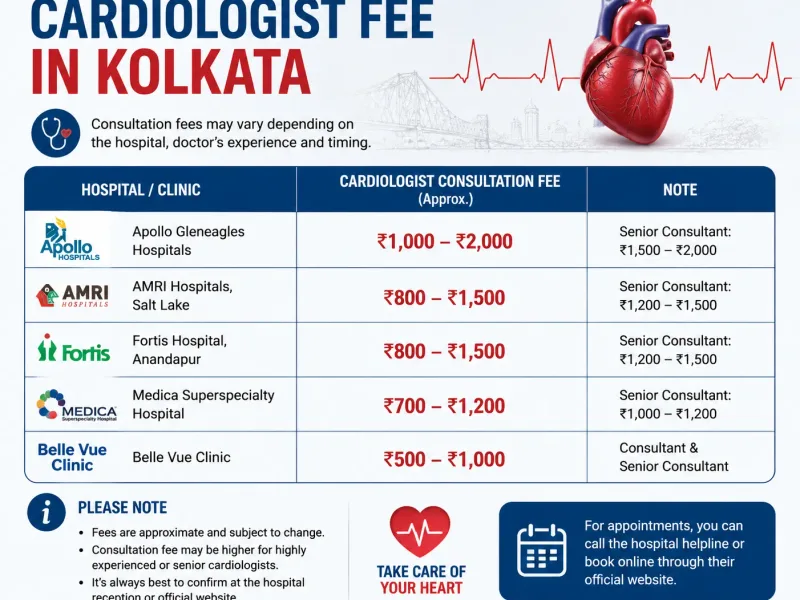
Learn about cardiologist fee in Kolkata, consultation charges, factors affecting costs, and tips to choose the right heart specialist.
May 29, 2026

A simple guide to the best shortness of breath specialist in Kolkata, including causes, symptoms, treatment options, and expert medical advice.
May 29, 2026

Find the best chest pain doctor in Kolkata. Learn causes, symptoms, tests, and treatment options from top heart specialists in simple English.
May 29, 2026