

Emergency & Help
24/7 Emergency & General Advisory
🚨 24/7 Medical Emergency
Non-Emergency Advisory
10:00 AM – 6:00 PM, Mon–Sat
For appointments & general queries.
24/7 Emergency & General Advisory
🚨 24/7 Medical Emergency
Non-Emergency Advisory
10:00 AM – 6:00 PM, Mon–Sat
For appointments & general queries.
Explore Priority Health's Medicare Supplement (Medigap) plans for Michigan residents in 2025. Understand coverage options like Plans A, C, D, F, G, and N, plus extra benefits and enrollment tips.

Navigating Medicare can feel like a maze, especially when you're trying to figure out the best way to cover your healthcare costs in retirement. If you're a Michigan resident looking at your options, Priority Health offers a range of Medicare Supplement plans, also known as Medigap plans. These plans work alongside your Original Medicare (Parts A and B) to help fill in the gaps, like deductibles, copayments, and coinsurance. Let’s break down what Priority Health offers for 2025 and how these plans can benefit you. What Exactly Are Medigap Plans? Think of Original Medicare as the foundation of your health coverage. Part A covers hospital stays, and Part B covers medical services like doctor visits and outpatient care. However, Original Medicare doesn't cover everything. This is where Medigap plans step in. They are standardized plans, meaning a Plan G from Priority Health offers the same basic benefits as a Plan G from any other insurance company. The main difference you'll see is in the price and any extra perks the company might offer. These plans help with out-of-pocket costs that Original Medicare leaves behind. This can include: Medicare Part A and Part B deductibles Copayments and coinsurance for hospital and medical services Blood transfusions Skilled nursing facility care Emergency care during foreign travel It’s important to remember that Medigap plans are different from Medicare Advantage (Part C) plans. Medigap plans supplement Original Medicare, while Medicare Advantage plans replace it, offering benefits through a private insurance company. Priority Health's Medigap Offerings for 2025 Priority Health provides a selection of Medigap plans to Michigan residents. They offer six of the ten standardized Medigap plans: A, C, D, F, G, and N. Not all plans are available in every area, so it’s always best to check with Priority Health directly for your specific location. Key Plans and Their Coverage: Medicare Supplement Plan A: Basic Support Plan A is the most basic Medigap plan. It typically covers: Part A coinsurance and hospital costs Part B coinsurance and copayments 3 pints of blood Hospice care coinsurance or copayment Skilled nursing facility care coinsurance It does not cover the Part A or Part B deductibles. Medicare Supplement Plan C: Comprehensive Coverage (Limited Availability) Plan C is one of the more comprehensive plans, but it has a significant restriction: it is only available to individuals who were eligible for Medicare before January 1, 2020. If you became eligible for Medicare on or after this date, you cannot enroll in Plan C. For those eligible, Plan C covers: All benefits of Plan A Medicare Part B deductible Medical services while traveling outside the U.S. (foreign travel emergency) Medicare Supplement Plan D: Enhanced Benefits Plan D offers robust coverage, similar to Plan C but without the Part B deductible coverage. It covers: All benefits of Plan A Part B excess charges Medical services while traveling outside the U.S. (foreign travel emergency) Plan D is available to all eligible Medicare beneficiaries. Medicare Supplement Plan F: Premium Comprehensive Coverage (Limited Availability) Like Plan C, Plan F is also only available to individuals who were eligible for Medicare before January 1, 2020. It is one of the most comprehensive plans available. Plan F covers: All benefits of Plan C Part B excess charges If you were eligible for Medicare before January 1, 2020, Plan F offers a high level of protection against out-of-pocket costs. Medicare Supplement Plan G: A Popular Choice Plan G has become increasingly popular, especially since Plan F’s availability was restricted. It offers nearly identical coverage to Plan F but does not cover the Part B deductible. For most people eligible for Medicare after January 1, 2020, Plan G is the most comprehensive option available. Plan G covers: All benefits of Plan A Part B coinsurance and copayments Part B excess charges Skilled nursing facility care coinsurance Part A hospice care coinsurance or copayment The first 3 pints of blood Foreign travel emergency care (up to 80% of the cost) The only cost you'll typically pay out-of-pocket with Plan G is the Part B deductible, which is a set amount determined by Medicare each year. Once you meet that deductible, your plan covers the rest for approved services. Medicare Supplement Plan N: Cost-Saving Option Plan N offers a good balance of coverage and cost savings. It covers most of the same things as Plan G, but with some key differences in copayments for certain services. Plan N covers: All benefits of Plan A Part B coinsurance and copayments (except for specific copays at doctor visits and emergency rooms) Skilled nursing facility care coinsurance Part A hospice care coinsurance or copayment The first 3 pints of blood Foreign travel emergency care (up to 80% of the cost) With Plan N, you’ll have copayments of up to $20 for doctor office visits and up to $50 for emergency room visits that don't result in admission. These copays apply after you've met your Part B deductible (if applicable to your plan choice). Extra Benefits with Priority Health Medigap Plans Beyond the standard Medigap coverage, Priority Health sweetens the deal with some valuable extra benefits for all their Medigap plan members: Hearing Services Discounts: Access discounts on hearing aids and services through TruHearing. Vision Services Discounts: Save on eye exams, glasses, and contact lenses with EyeMed. Emergency Travel Assistance: Benefit from global emergency travel support provided by Assist America. Household Discount: If multiple members of your household enroll in Priority Health plans, you might be eligible for a 12% discount on your monthly premiums. Understanding Premiums and Costs The cost of Medigap plans, or premiums, can vary based on several factors, including the plan you choose, your age, where you live, and whether you smoke. For example, Priority Health might show sample premiums for a 65-year-old man who doesn’t smoke. It's essential to get a personalized quote from Priority Health to understand the exact cost for your situation. Remember, while the coverage for each standardized plan is the same across insurers, the prices are not. Shopping around and comparing quotes is a smart move. Who Should Consider Priority Health Medigap Plans? If you are a Michigan resident who is enrolled in Medicare Parts A and B and want predictable out-of-pocket costs, Priority Health's Medigap plans could be a great fit. They are particularly beneficial if you: Value predictability in your healthcare expenses. See a doctor or specialist frequently. Want coverage for services Original Medicare doesn't fully cover, like foreign travel emergencies. Are looking for additional discounts on hearing, vision, or household premiums. When to Enroll in a Medigap Plan Your Medigap Open Enrollment Period is the best time to sign up. This is a six-month period that starts the first day of the month you are age 65 or older and enrolled in Medicare Part B. During this period, you can buy any Medigap policy, and the insurance company cannot deny you coverage or charge you more due to your health. If you miss this window, you may have to wait for another enrollment period or face higher premiums or denial of coverage, especially if you have pre-existing health conditions. For example, if Mr. Sharma, a 70-year-old Michigan resident, decided to switch from his current Medicare Advantage plan to a Medigap plan outside his open enrollment period and had a recent heart condition, he might be charged a higher premium or even be denied coverage by some insurers. The Bottom Line Priority Health offers a solid lineup of Medigap plans for Michigan residents, providing valuable coverage to supplement Original Medicare. Understanding the different plan benefits, especially the availability restrictions for Plans C and F, and considering the extra perks like discounts and travel assistance, can help you make an informed decision. Always compare your options and get personalized quotes to ensure you choose the plan that best suits your healthcare needs and budget. Frequently Asked Questions (FAQ) Are Medigap plans the same as Medicare Advantage plans? No. Medigap plans supplement Original Medicare (Parts A and B), helping to cover out-of-pocket costs. Medicare Advantage plans (Part C) replace Original Medicare and are offered by private insurance companies, often including extra benefits like prescription drug coverage. Can I have both a Medigap plan and a Medicare Advantage plan? No, you cannot have both a Medigap policy and a Medicare Advantage plan at the same time. If you enroll in a Medicare Advantage plan, you must drop your Medigap policy. Do Medigap plans cover prescription drugs? Standardized Medigap plans do not cover prescription drugs. You would need to enroll in a separate Medicare Part D prescription drug plan if you have Original Medicare and a Medigap policy. What is the Part B deductible, and do all Medigap plans cover it? The Part B deductible is an amount you must pay out-of-pocket for outpatient medical services before Medicare starts to pay. Medigap Plans C and F cover the Part B deductible, but these plans are only available to those eligible for Medicare before January 1, 2020. Other
In summary, timely diagnosis, evidence-based treatment, and prevention-focused care improve long-term health outcomes.
Visit Hospital
Near You
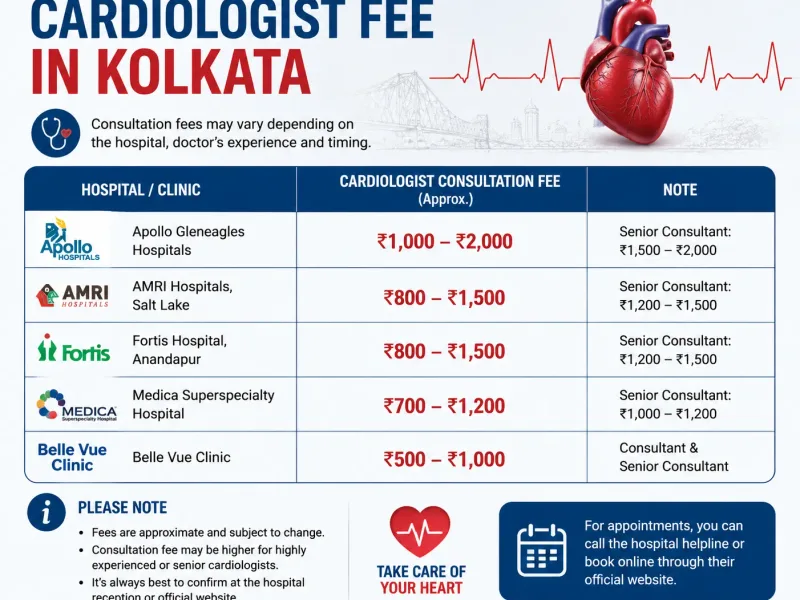
Learn about cardiologist fee in Kolkata, consultation charges, factors affecting costs, and tips to choose the right heart specialist.
May 29, 2026

A simple guide to the best shortness of breath specialist in Kolkata, including causes, symptoms, treatment options, and expert medical advice.
May 29, 2026

Find the best chest pain doctor in Kolkata. Learn causes, symptoms, tests, and treatment options from top heart specialists in simple English.
May 29, 2026