

Emergency & Help
24/7 Emergency & General Advisory
🚨 24/7 Medical Emergency
Non-Emergency Advisory
10:00 AM – 6:00 PM, Mon–Sat
For appointments & general queries.
24/7 Emergency & General Advisory
🚨 24/7 Medical Emergency
Non-Emergency Advisory
10:00 AM – 6:00 PM, Mon–Sat
For appointments & general queries.
Understand your Medicare Part D deductible. Learn what it is, how much it can cost, and how it impacts your prescription drug expenses. Discover tips and resources for managing costs.

Medicare Part D is a vital program that helps millions of Americans manage their prescription drug costs. But understanding the different components, especially the deductible, can feel a bit overwhelming. What exactly is a deductible, and how does it impact your out-of-pocket expenses? This guide breaks down the Medicare Part D deductible in simple terms, helping you make informed decisions about your prescription drug coverage.
Think of the deductible as the amount you pay for your prescription drugs before your Medicare Part D plan starts to contribute. Each year, you'll pay for your medications up to this deductible amount. Once you've met it, your plan will begin to share the costs through copayments or coinsurance.
The exact deductible amount can vary significantly. It's not a one-size-fits-all figure. Several factors influence this cost:
It's essential to check the specifics of any Part D plan you are considering. Don't assume all plans work the same way when it comes to deductibles.
Your deductible is just one piece of the puzzle when it comes to Part D costs. Even after you meet your deductible, you'll still have other expenses:
The structure of copayments versus coinsurance, and the amounts involved, depend on your plan's formulary – essentially, the list of covered drugs and their associated costs. Drugs are often placed into tiers, with lower-cost generics typically in lower tiers (meaning lower out-of-pocket costs for you) and more expensive brand-name or specialty drugs in higher tiers.
Historically, Part D plans had a coverage gap, often called the “donut hole.” This was a period where your plan’s coverage significantly decreased after you and your plan had spent a certain amount on drugs. You would then pay a higher percentage for your medications until you reached a catastrophic coverage threshold. While the donut hole has been significantly changed and largely closed for most beneficiaries, it's still a concept worth understanding as it relates to how your drug costs are managed throughout the year. Once you hit a certain out-of-pocket spending limit, catastrophic coverage kicks in, meaning your plan covers most of your drug costs for the rest of the year, and you won't pay anything more for covered prescriptions.
If you're struggling to afford your prescription medications, you're not alone, and there is help available. Medicare offers a program called Extra Help specifically designed for beneficiaries who have limited income and resources.
How Extra Help Works:
Additionally, some individuals may also be eligible for Medicaid coverage, which can provide further assistance with healthcare costs, including prescription drugs. You can determine your Medicaid eligibility by visiting your local Social Security office.
Beyond official assistance programs, here are some practical strategies you can use:
Navigating Medicare and its various parts can be complex. If you find yourself confused about your Part D deductible, premiums, or other costs, don't hesitate to seek help:
Making informed choices about your Medicare Part D coverage can lead to significant savings and ensure you receive the medications you need without undue financial stress. Take the time to understand your deductible and other costs, and utilize the resources available to you.
No, not everyone does. Some Part D plans offer a $0 deductible, meaning your plan starts helping with costs right away. However, many plans do have a deductible, which you must meet before your plan begins to cover a larger portion of your prescription costs.
Yes, the deductible amount can change annually. Medicare adjusts the maximum deductible limits each year, and individual plans may also update their deductibles based on various factors.
If you have difficulty affording your deductible or other prescription costs, you should explore programs like Extra Help or Medicaid. Contacting your insurance provider or visiting your local Social Security office can provide guidance on available assistance.
No, they are different. The premium is the monthly amount you pay to maintain your Part D coverage. The deductible is the amount you pay for your prescriptions each year before your plan starts sharing the costs.
You can find the deductible information for your specific Part D plan in your plan's Summary of Benefits or Evidence of Coverage document. You can also find this information on your insurance provider's website or by calling their customer service line.
Visit Hospital
Near You
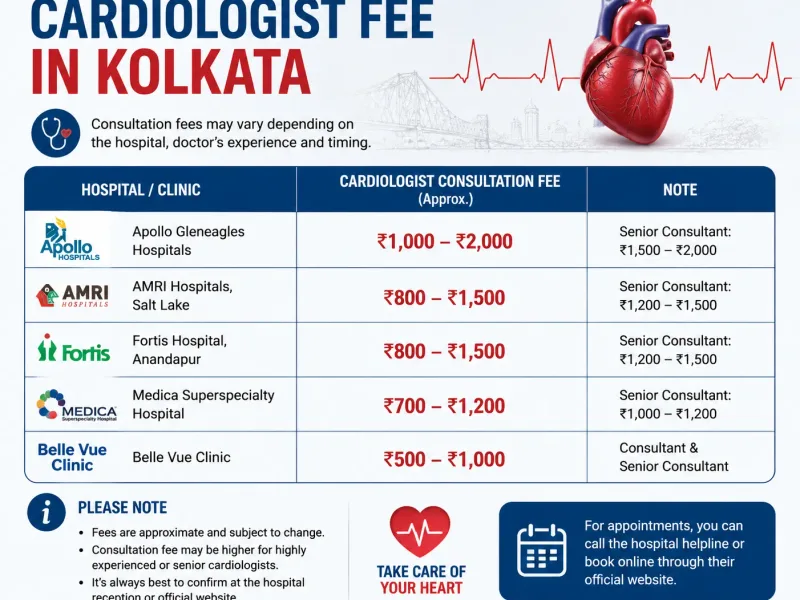
Learn about cardiologist fee in Kolkata, consultation charges, factors affecting costs, and tips to choose the right heart specialist.
May 29, 2026
A simple guide to the best shortness of breath specialist in Kolkata, including causes, symptoms, treatment options, and expert medical advice.
May 29, 2026

Find the best chest pain doctor in Kolkata. Learn causes, symptoms, tests, and treatment options from top heart specialists in simple English.
May 29, 2026