

Emergency & Help
24/7 Emergency & General Advisory
🚨 24/7 Medical Emergency
Non-Emergency Advisory
10:00 AM – 6:00 PM, Mon–Sat
For appointments & general queries.
24/7 Emergency & General Advisory
🚨 24/7 Medical Emergency
Non-Emergency Advisory
10:00 AM – 6:00 PM, Mon–Sat
For appointments & general queries.
Learn the key differences between dental veneers and crowns, including their purpose, procedure, pros, cons, and costs, to help you choose the right restoration for your smile.

When you look in the mirror, do you notice chips, cracks, gaps, or discolored teeth that make you hesitate to smile? Many people in India face similar concerns, wishing for a brighter, more uniform smile. Fortunately, modern dentistry offers two excellent solutions: dental veneers and dental crowns. While both can dramatically improve the appearance and function of your teeth, they are distinct procedures with different applications, benefits, and considerations. Understanding the differences is key to making an informed decision with your dentist.
Think of a veneer as a thin, custom-made shell that fits precisely over the front surface of your tooth. These shells are typically crafted from porcelain or composite resin and are designed to mimic the natural look of your teeth. A standard veneer is about 1 millimeter (mm) thick. The primary goal of a veneer is to enhance your tooth's appearance, masking imperfections like stains, chips, slight misalignments, or small gaps.
Getting veneers involves a process that prepares your tooth for the veneer. Your dentist will carefully remove a small amount of enamel from the front of the tooth – usually around half a millimeter. This step creates a slightly roughened surface, ensuring the veneer bonds securely. In some cases, especially with newer veneer types, less enamel removal might be necessary. You might feel a slight discomfort during this preparation, so a local anesthetic is often used.
For a veneer to adhere properly, your tooth needs sufficient natural enamel. After the enamel is prepared, your dentist takes a digital scan or an impression of your tooth. This information is sent to a dental lab to create your custom veneer. If significant tooth preparation occurred, a temporary veneer might be placed while you wait for the permanent one. Once ready, the permanent veneer is cemented onto your tooth and hardened with a special light. While veneers are stable, dentists sometimes recommend a night guard if you grind your teeth, to protect your new smile.
A dental crown, often called a "cap," is a more extensive restoration. Unlike veneers, which cover only the front, a crown encases the entire visible portion of your tooth. Crowns are generally about 2 mm thick and can be made from various materials, including all-porcelain, porcelain fused to metal (PFM), or entirely metal alloys.
Crowns are used not only for cosmetic reasons but also for functional restoration. They are essential when a tooth is significantly damaged, decayed, or weakened. A crown can:
Getting a crown typically involves more tooth preparation than veneers. Your dentist will file down or grind away a larger portion of your tooth to make space for the crown. If the tooth has significant decay, that decay must be removed first. Sometimes, the tooth needs to be built up with a filling material before the crown can be placed, especially if there's not enough natural tooth structure remaining.
Similar to veneers, an impression or digital scan of the prepared tooth is taken. A temporary crown is usually cemented in place while the permanent one is fabricated in a lab. When you return, the temporary crown is removed, and the permanent crown is fitted and cemented. The result is a tooth that looks and functions like a natural, healthy tooth.
Here’s a simplified breakdown of how they compare:
| Feature | Veneers | Crowns |
|---|---|---|
| Coverage | Front surface only | Entire tooth |
| Tooth Preparation | Minimal enamel removal (approx. 0.5 mm) | Significant tooth reduction |
| Purpose | Primarily cosmetic enhancement | Restoration, protection, and cosmetic improvement |
| Durability | Good; porcelain lasts longer than composite | Very durable; depends on material |
| Invasiveness | Less invasive | More invasive |
| Cost (per tooth, approx.) | ₹6,000 - ₹20,000 (composite) ₹75,000 - ₹2,00,000 (porcelain) |
₹80,000 - ₹2,80,000 (PFM, porcelain) (Excludes core buildup, root canal) |
Note: Costs are approximate and can vary significantly based on location, dentist's expertise, and material used.
Pros:
Cons:
Pros:
Cons:
The decision between veneers and crowns hinges on your specific dental needs and aesthetic goals. Your dentist will be your best guide.
Consider veneers if:
Consider crowns if:
A Real-Life Scenario:
Mrs. Sharma noticed a large chip on her front tooth after an accidental fall. The chip was noticeable and made her feel self-conscious during client meetings. She also had a small gap between her two front teeth that she’d always disliked. Her dentist discussed both options. For the chipped tooth, a crown offered the best protection and restored its strength. For the gap and slight discoloration on the adjacent tooth, veneers provided a beautiful, less invasive cosmetic fix, creating a harmonious and confident smile.
It's essential to have a thorough dental examination to determine the best course of action. You should consult your dentist if you:
Your dentist will assess the health of your teeth and gums, discuss your aesthetic desires, and recommend the most appropriate treatment plan. Don't hesitate to ask questions about the procedure, costs, and expected outcomes.
A1: Most patients experience minimal discomfort. Local anesthesia is typically used during the tooth preparation phase for both veneers and crowns to ensure comfort. Some temporary sensitivity after the procedure is possible.
A2: Porcelain veneers can last 10-15 years or more with good oral hygiene. Composite veneers typically last 5-7 years. Dental crowns, made from durable materials, can last 15-20 years or even longer with proper care and regular dental check-ups.
A3: Generally, you cannot place veneers over crowns. Veneers are bonded to natural tooth structure. If you have crowns and wish to improve their appearance, you might consider replacing the crowns with newer, more aesthetically pleasing ones.
A4: Veneers are considered irreversible because a small amount of enamel is removed. Crowns are also irreversible as they require significant tooth reduction.
A5: Care is similar to natural teeth. Brush twice daily with fluoride toothpaste, floss daily, and visit your dentist for regular check-ups and cleanings. Avoid biting hard objects and consider a night guard if you grind your teeth.
Visit Hospital
Near You
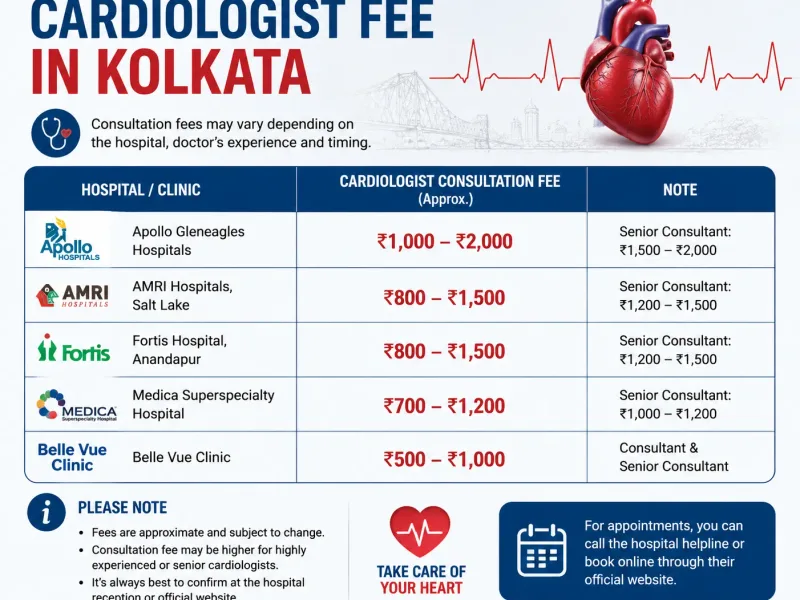
Learn about cardiologist fee in Kolkata, consultation charges, factors affecting costs, and tips to choose the right heart specialist.
May 29, 2026

A simple guide to the best shortness of breath specialist in Kolkata, including causes, symptoms, treatment options, and expert medical advice.
May 29, 2026

Find the best chest pain doctor in Kolkata. Learn causes, symptoms, tests, and treatment options from top heart specialists in simple English.
May 29, 2026