

Emergency & Help
24/7 Emergency & General Advisory
🚨 24/7 Medical Emergency
Non-Emergency Advisory
10:00 AM – 6:00 PM, Mon–Sat
For appointments & general queries.
24/7 Emergency & General Advisory
🚨 24/7 Medical Emergency
Non-Emergency Advisory
10:00 AM – 6:00 PM, Mon–Sat
For appointments & general queries.
Discover the differences between calisthenics and weightlifting. Learn which strength training method is best for your fitness goals, whether you aim for muscle gain, fat loss, or overall strength.
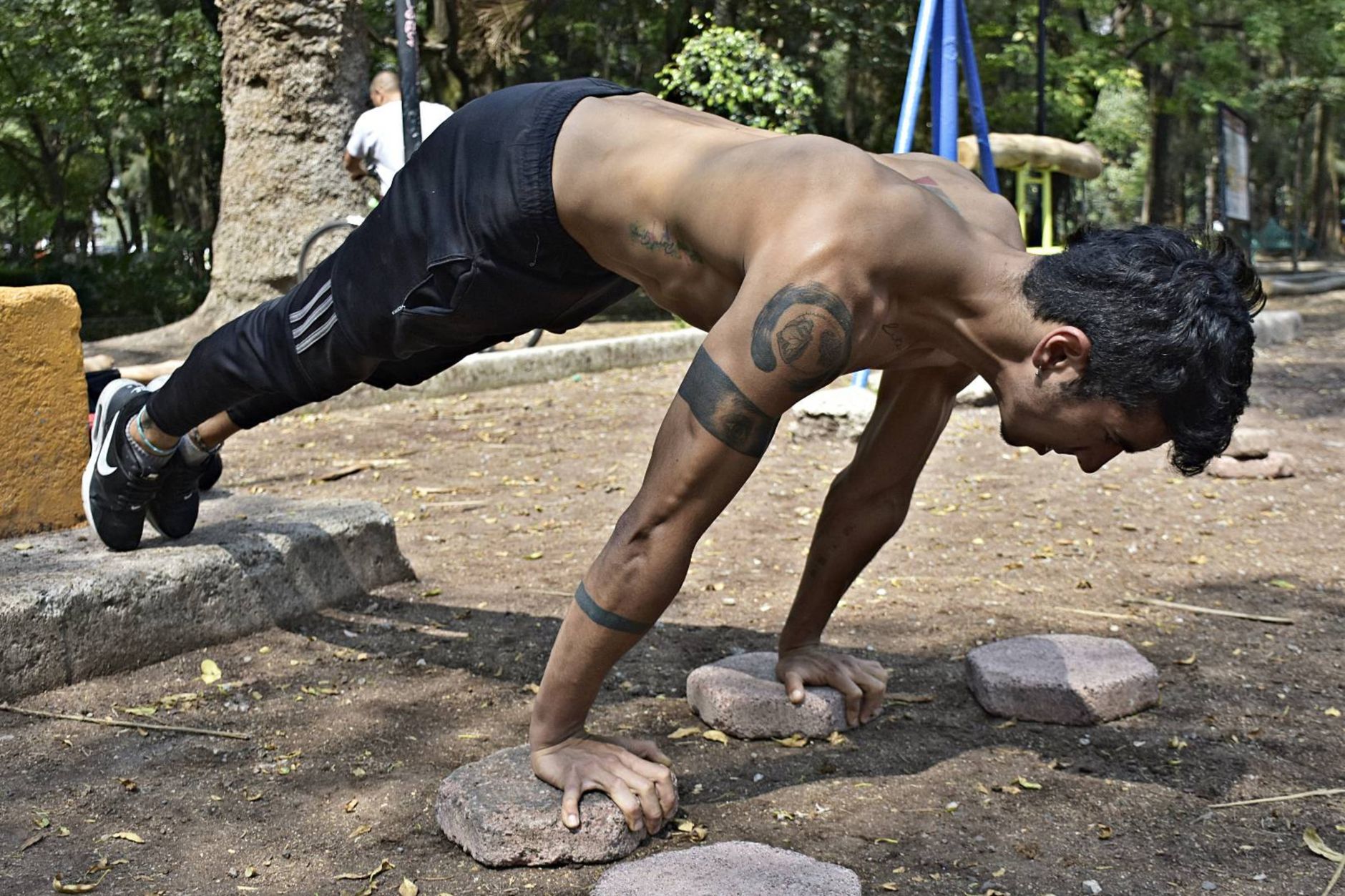
Embarking on a fitness journey often brings up a common question: should you focus on calisthenics or weightlifting? Both are powerful forms of strength training, but they offer distinct benefits and cater to different fitness goals. Understanding the differences can help you make an informed choice that aligns with what you want to achieve, whether it's building lean muscle, increasing overall strength, or shedding those extra pounds. Let's explore these two popular training methods to see which one might be your perfect match.
Calisthenics is a type of strength training that uses your own bodyweight as resistance. Think of exercises like push-ups, pull-ups, squats, and lunges. The beauty of calisthenics lies in its accessibility; you don't need fancy equipment or a gym membership to get started. All you need is enough space to move your body effectively. While some exercises, like pull-ups, might benefit from a pull-up bar, many can be performed anywhere, making it incredibly convenient and budget-friendly.
Modifying calisthenic exercises requires a bit of creativity and body awareness. For instance, to make a push-up easier, you can perform it on your knees. To increase the challenge, you could try a one-arm push-up. This adaptability ensures you can always progress.
Weightlifting, on the other hand, involves using external weights as resistance. This can include dumbbells, barbells, kettlebells, or weight machines. The principle is simple: you repeatedly lift or move a weight, challenging your muscles to adapt and grow stronger. It's a direct way to overload specific muscle groups and drive muscle growth (hypertrophy).
Weightlifting allows for precise control over the resistance. If a set of bicep curls feels too easy, you simply grab a heavier dumbbell. This makes tracking progress and ensuring continuous challenge quite simple.
When it comes to building raw strength, especially in specific muscle groups, weightlifting generally has an edge. The ability to progressively overload muscles with external weights is highly effective for stimulating muscle growth and increasing maximal strength. While calisthenics certainly builds strength, especially for compound movements and overall functional strength, weightlifting provides a more direct path to increasing the size and strength of individual muscles.
Imagine trying to increase the size of your biceps. While you can do variations of curls with resistance bands or even by pressing your arms against a wall in calisthenics, lifting progressively heavier dumbbells or barbells will likely yield faster and more significant results for hypertrophy.
For calorie burning and potential weight loss, calisthenics often comes out on top. Exercises that involve large body movements and engage multiple muscle groups simultaneously, like burpees or high-intensity calisthenics circuits, demand a lot of energy. This increased energy expenditure translates to a higher calorie burn during and after the workout. Calisthenics can be easily integrated into High-Intensity Interval Training (HIIT) or circuit training, further amplifying the caloric burn and metabolic effects.
Consider a scenario: you're short on time and want a workout that torches calories. A 20-minute intense calisthenics circuit involving jump squats, push-ups, mountain climbers, and burpees will likely burn more calories than a 20-minute session of isolated bicep curls with moderate weights.
Meet Priya, a young professional in Mumbai who wants to get fitter. She has limited time and prefers working out at home. Her goal is to feel more energetic and look toned. On the other hand, Ravi, a student in Delhi, wants to build significant muscle mass and increase his overall strength for a bodybuilding competition. He has access to a gym and can dedicate more time to his workouts.
For Priya, calisthenics might be the ideal choice. It requires no equipment, can be done in her small apartment, and the compound movements will give her a full-body workout, boosting her energy and helping her achieve a toned look efficiently. For Ravi, weightlifting would be more suitable. The ability to progressively increase weight and focus on hypertrophy through exercises like squats, deadlifts, and bench presses aligns perfectly with his goal of building muscle mass and maximal strength.
Why choose just one? Many fitness enthusiasts find that combining calisthenics and weightlifting offers the most comprehensive approach to fitness. You can use weightlifting to build a strong foundation and develop specific muscle groups, then incorporate calisthenics to improve functional strength, flexibility, and cardiovascular fitness. For example, you might dedicate certain days to heavy weightlifting and other days to bodyweight training or use calisthenics as a warm-up or cool-down.
Before starting any new exercise program, especially if you have pre-existing health conditions, it's wise to consult your doctor. They can advise on the safest approach for your individual health status. Additionally, a certified personal trainer or fitness coach can help you:
Don't hesitate to seek professional guidance. Investing in a few sessions with a trainer can save you from potential injuries and ensure you're on the right track to achieving your fitness aspirations.
Yes, you can build muscle with calisthenics, especially if you focus on progressive overload by increasing reps, sets, decreasing rest times, or performing more challenging variations of exercises. However, for significant muscle hypertrophy (growth), weightlifting often provides a more direct and efficient pathway.
When performed with proper form and technique, weightlifting is generally safe for joints and can even strengthen them. However, poor form, lifting too much weight too soon, or neglecting warm-ups and cool-downs can increase the risk of injury. Consulting a trainer for proper form is essential.
For most adults, aiming for strength training 2-3 times per week, with at least one rest day between working the same muscle groups, is recommended. This allows your muscles time to recover and rebuild.
Both can be suitable for beginners, but calisthenics might be slightly more forgiving initially due to the absence of external weights, reducing the risk of injury from dropping weights. However, learning proper squat and deadlift form with light weights under supervision can also be a great starting point for weightlifting.
Visit Hospital
Near You
Find trusted general surgery care in Budge Budge. Explore leading hospitals for effective treatments and expert surgical teams.
May 19, 2026
Find advanced COPD treatment in Kolkata at Ruby General Hospital. Our pulmonology experts offer personalized care and effective therapies.
May 19, 2026

Discover metabolic conditioning (metcon), an efficient workout style that boosts fitness by combining moderate and high-intensity exercises. Learn how it works, its benefits, and how to get started safely.
April 1, 2026