

Full-Fat Dairy Comeback: What the Evidence Says
Full-fat dairy is back in the nutrition debate. Learn what current evidence says about milk, yogurt, cheese, saturated fat and heart health.
Why full-fat dairy is back in the conversation
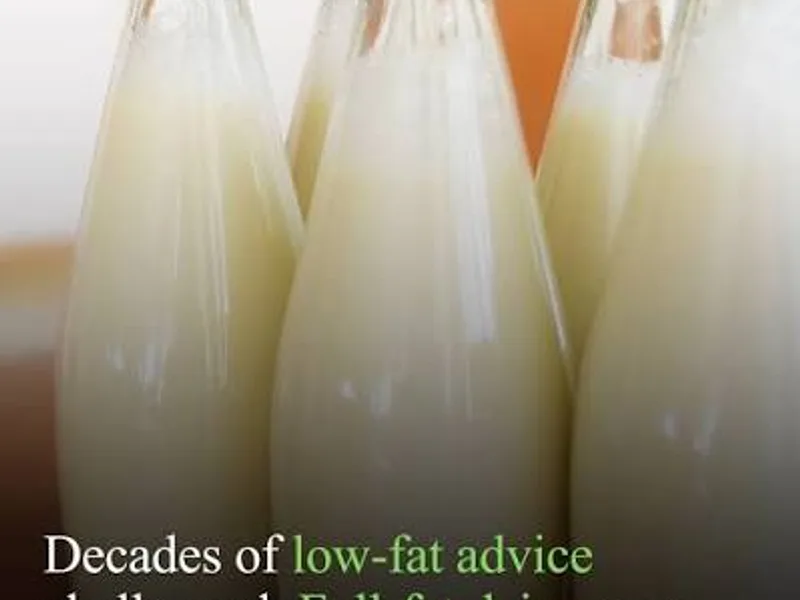
Full-fat dairy has gone from dietary villain to subject of renewed debate. Social media posts increasingly suggest that whole milk, full-fat yogurt and traditional cheese were unfairly blamed for heart problems.
The reality is quieter. Nutrition research has become more interested in the whole food rather than looking at one nutrient in isolation. That has made the old “fat-free is always better” message harder to defend as a universal rule.
Still, the comeback should not be mistaken for proof that full-fat dairy is healthier for everyone.
[Understanding Cholesterol Levels] remains a useful starting point because LDL cholesterol, blood pressure, diabetes and family history all influence cardiovascular risk.
Why did doctors once recommend low-fat dairy?
The original concern was largely about saturated fat. Full-fat milk, butter, cream and many cheeses contain more saturated fat than their reduced-fat versions, and saturated fat can raise LDL cholesterol.
That relationship has not disappeared simply because the dairy debate has become more nuanced. The American Heart Association continues to recommend choosing low-fat or fat-free dairy as part of a heart-healthy eating pattern.
[Sip Smart: Best Milks for Lowering Cholesterol] explains why milk choice can matter when someone is specifically trying to manage cholesterol.
The important detail is what replaces the dairy fat. Removing fat from a diet does not automatically make the diet healthier if it is replaced with refined carbohydrates, sugary foods or heavily processed snacks.
[Eating for a Healthy Heart] looks at the wider dietary pattern rather than treating one food as the sole cause of high cholesterol.
What changed in the dairy debate?
Researchers began asking a more practical question: does eating dairy as a whole food have the same health effect as eating an equivalent amount of isolated saturated fat?
The answer appears to be more complicated than a simple yes or no. Milk, yogurt and cheese contain protein, calcium and other nutrients. Fermented foods such as yogurt also have a different nutritional structure from butter or cream.
Some observational studies have not found the expected increase in cardiovascular risk from all types of dairy consumption. But observational research has limits. It can identify associations, not prove that full-fat dairy prevents heart disease.
That distinction matters, especially when a headline turns “not clearly harmful” into “proven beneficial.”
Is full-fat milk actually healthier?
There is no strong reason to describe full-fat milk as a miracle food. It contains useful nutrients, but it also contains more calories and saturated fat than skim or low-fat milk.
For someone with elevated LDL cholesterol, reducing saturated-fat intake can still be a sensible dietary step. [Cholesterol Control: Natural Remedies and Lifestyle Tips] highlights limiting saturated fats, including those found in full-fat dairy, while increasing fibre-rich foods and healthier unsaturated fats.
For a healthy adult without a specific medical restriction, however, a modest serving of full-fat milk does not need to become a source of anxiety.
The rest of the plate matters more than the internet argument over one glass of milk.
Yogurt may be a different story
Yogurt deserves separate attention because fermentation changes the food's characteristics. Plain yogurt can provide protein, calcium and beneficial bacterial cultures, depending on the product.
The bigger problem can be what gets added afterward. A flavoured yogurt loaded with added sugar is not nutritionally equivalent to plain curd simply because both are sold as yogurt.
[Calcium-Rich Foods for Indian Diets] covers milk, yogurt, paneer and other familiar Indian sources of calcium.
[11 Nutrient-Dense Foods for a Healthy Indian Diet] also places plain dahi among nutrient-dense foods rather than treating dairy fat as the only issue.
What about cheese and paneer?
Cheese is where the “full-fat dairy comeback” needs more restraint. Many cheeses are concentrated sources of saturated fat and sodium, so portion size and the rest of the diet become important.
Paneer is especially relevant in Indian diets because it is a convenient vegetarian source of protein and calcium. But full-fat paneer can contribute a substantial amount of dietary fat, depending on how it is prepared.
[Paneer: Health Benefits, Uses & Side Effects] discusses the nutritional profile of paneer and how its fat content can vary with the milk used.
[Protein Power: Indian Protein Foods] also highlights paneer and yogurt as protein-rich foods.
What happens if you have high cholesterol?
This is where individual health history should take priority over food trends.
Someone with high LDL cholesterol, previous heart disease or several cardiovascular risk factors may be advised to limit saturated fat. In that situation, replacing some full-fat dairy with lower-fat options may be more useful than following a social-media claim about the supposed benefits of dairy fat.
In clinical practice, this is often missed because people focus on one “healthy” food while overlooking the overall dietary pattern. A person may switch to expensive specialty foods while still eating large amounts of butter, fried snacks and processed foods.
[Master Your Plate: Heart-Healthy Foods] offers a broader approach based on whole grains, vegetables, healthy fats and appropriate protein sources.
Full-fat dairy and weight management
Full-fat dairy is more energy-dense because fat contains more calories than protein or carbohydrate. That does not make it automatically fattening, but portions can matter.
A bowl of plain full-fat yogurt may be satisfying for one person, while another may find it easy to consume large amounts without noticing the calorie load.
[Understanding Daily Calorie Needs for Weight Management] explains why calorie needs vary between individuals.
[Smart Snacking: Low-Carb Nutrient-Rich Options] provides further context on choosing foods that offer nutrition and satiety.
The Indian diet changes the conversation
Dairy rarely appears alone in an Indian meal. Milk may come with tea, curd with rice, paneer with gravy, and ghee with roti or dal.
That combination matters. A diet already high in saturated fat can look very different from one where a small amount of full-fat dairy is paired with vegetables, legumes, whole grains, nuts and fruit.
[Eat Up: Simple Strategies for Healthy Eating in India] discusses practical ways to build healthier meals around familiar Indian foods.
[Heart-Healthy Recipes and Nutrition] similarly focuses on the overall food pattern rather than one ingredient.
So, should you switch back to full-fat dairy?
Not automatically. The “comeback” is better understood as a correction to overly simplistic nutrition messaging.
For some people, full-fat dairy can fit comfortably into a balanced diet. For people trying to lower LDL cholesterol or manage established cardiovascular disease, lower-fat dairy may still be the more appropriate everyday choice.
[A Cardiologist Explains Diet and Heart Health] discusses how dietary fat, fibre and other food choices affect cardiovascular health.
People managing diabetes should also consider the wider meal rather than choosing dairy based only on its fat percentage. [Eating Well With Diabetes] explains how protein, fibre and healthy fats can fit into diabetes-friendly meals.
There is no need to turn full-fat dairy into either a villain or a superfood.


