

Gallstone Surgery Without Pain: Is It Really Needed?
Found gallstones on a scan but feel fine? You may not need surgery. Most silent gallstones never cause trouble, and doctors usually advise watching and waiting. This guide explains what silent gallstones are, how likely they are to cause problems, and the few cases where doctors still suggest removi
Gallstone Surgery Without Pain: Is It Really Needed?
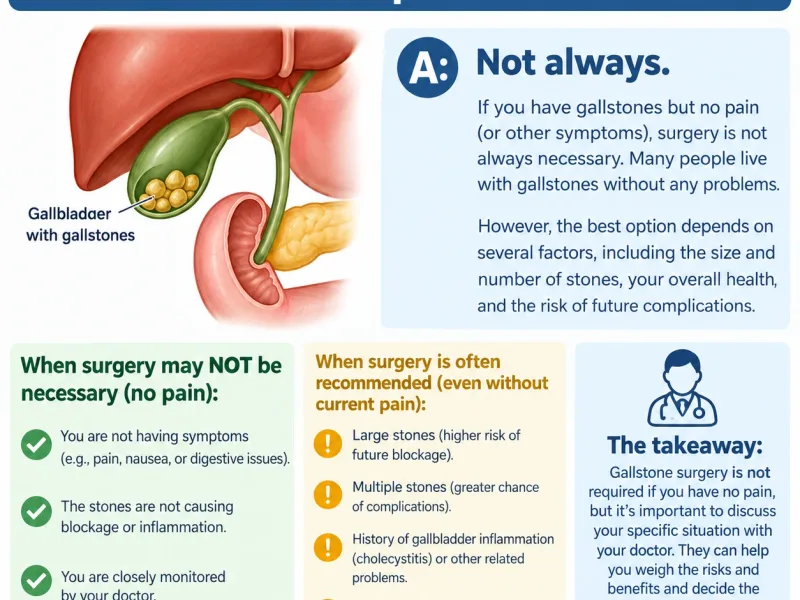
Surgery is usually kept for people who have symptoms or a higher risk of complications. If gallstones cause no pain or other symptoms, doctors usually recommend watching and waiting rather than surgery. Silent gallstones are often found by chance on a scan, and many people never develop problems. Hence surgery is not always required.
What Are Silent Gallstones?
Silent gallstones are hardened deposits in the gallbladder that cause no pain, nausea, or other symptoms. They are often discovered during an ultrasound or CT scan done for another reason. Because they cause no trouble, they generally do not need treatment unless your doctor finds any specific risk.
The gallbladder is a small pouch under the liver. It stores bile, a fluid that helps your body digest fat. Stones form when substances in bile, mostly cholesterol, harden into small lumps. They can be as tiny as a grain of sand or as large as a golf ball.
The National Institute of Diabetes and Digestive and Kidney Diseases (NIDDK) notes that many people with gallstones have no symptoms. Doctors call these "silent" stones.
Why Doctors Usually Do Not Operate on Silent Stones
Surgery to remove the gallbladder is called cholecystectomy. But any operation carries some risk, such as bleeding, infection, or injury to nearby structures.
If a stone is causing no harm, the risk of surgery may be higher than the risk of leaving it alone. That is why guidelines from the European Association for the Study of the Liver (EASL) advise against routine surgery for people with silent gallstones.
How Likely Are Silent Gallstones to Cause Problems?
Some will, but most will not. Research summarised in EASL guidance suggests that around 2 to 4 percent of people with silent stones start to have symptoms each year. The risk tends to fall as time passes without any trouble.
Serious complications, such as an infected gallbladder or inflamed pancreas, are much less common. They usually come after warning symptoms, not out of nowhere.
When Surgery May Be Advised Even Without Pain
There are a few situations where a doctor may suggest removal even if you feel fine. These are exceptions, not the rule. Your surgeon will weigh them against your age, health, and personal risk.
Porcelain Gallbladder
This is a gallbladder whose wall has become hardened with calcium. It has been linked with a higher risk of gallbladder cancer, so surgeons often recommend removal. Newer studies suggest the risk may be lower than once thought, but many doctors still prefer surgery.
Very Large Stones
Some guidelines mention stones larger than about 3 centimeters as a reason to consider surgery. This point is debated, and not every doctor agrees. It is worth discussing with a specialist if your stone is large.
Gallbladder Polyps
Polyps are small growths on the gallbladder wall. They are not stones, but they often appear on the same scan. Polyps about 1 centimeter or larger are usually taken more seriously because of a small cancer risk.
Certain Medical Conditions
People with some blood disorders, such as sickle cell disease, are more prone to gallstone complications. A doctor may discuss preventive surgery in these cases. The same is true before some organ transplants.
The Risks of Waiting
Waiting is safe for most people, but it is not risk-free. If a stone blocks a bile duct, it can cause sudden severe pain, infection, or swelling of the pancreas. These problems can need emergency care.
Emergency surgery is often riskier than planned surgery. That is one reason your doctor may talk through the trade-offs with you, especially if you live far from a hospital or have other health conditions.
What "Watch and Wait" Looks Like
Watching and waiting does not mean ignoring the problem. It means staying informed and acting early if things change.
Learn the warning signs listed below.
Keep any scan reports safe so a new doctor can see your history.
Ask your doctor how often you should be reviewed.
Tell your doctor if new symptoms appear, even mild ones.
Warning Signs to Watch For
Sudden pain in the upper right or middle abdomen that lasts more than a few hours is the classic sign. It may spread to the back or right shoulder. Nausea and vomiting often go with it.
Get urgent medical help if you have fever, chills, yellow skin or eyes, dark urine, or pale stools. These can point to a blocked duct or infection. Do not wait at home.
Can Lifestyle Changes Help?
No diet can promise to keep silent stones quiet. Still, some habits may lower your overall gallstone risk. Aim for a healthy weight, eat plenty of fruits, vegetables, and fiber, and stay active.
Be careful with crash diets. Very fast weight loss is known to trigger gallstone problems. If you want to lose weight, ask your doctor for a steady plan.
Some people try herbal remedies or "gallbladder flushes" they read about online. There is no reliable proof that these dissolve stones, and some can be harmful. Speak to a doctor before trying them.
What About Life After Gallbladder Removal?
If surgery is ever needed, most people do well. Your liver keeps making bile, and it flows directly into the intestine. Recovery from keyhole (laparoscopic) surgery is often quick, with many people back to normal routines within days to a couple of weeks.
Some people notice looser stools or bloating after fatty meals. This usually settles with time and small food changes.
Frequently Asked Questions
Can gallstones go away on their own?
Gallstones rarely dissolve or disappear by themselves. Small stones may pass out of the gallbladder without being noticed, but most stay put. Medicines that dissolve stones exist, yet they work slowly and only on certain types. Stones often come back after stopping treatment, so doctors seldom rely on them.
What are the warning signs that silent gallstones have become a problem?
Sudden pain in the upper right or middle abdomen lasting more than a few hours is the classic sign. Nausea, vomiting, fever, chills, or yellowing of the skin and eyes can signal a blockage or infection. These symptoms need prompt medical care, not waiting at home.
Is it safe to live with gallstones for years?
For most people, yes. Silent stones usually cause no harm, and many people live with them for life. The chance of problems is low each year but never zero. Regular check-ins with your doctor, and knowing the warning signs, help you act early if things change.
Can I live normally after gallbladder removal?
Yes. The liver still makes bile, which flows straight to the intestine. Most people return to normal life within days to weeks after keyhole surgery. Some notice looser stools or bloating, especially after fatty meals, and this often settles with time and small dietary adjustments. Talk to your doctor about what to expect.
Can diet prevent silent gallstones from causing symptoms?
No diet can guarantee that. Still, a balanced diet with plenty of fiber, fruits, and vegetables, and a healthy weight may lower risk. Avoid crash diets and very rapid weight loss, which can trigger stone problems. Ask your doctor before making big changes.