Why Researchers Study the Adolescent Brain Specifically
Adolescence is a period of major brain reorganization, not just a phase of moodiness and growth spurts. Grey matter, the tissue responsible for processing information, actually thins out during the teen years as the brain prunes unused connections. White matter, which handles communication between brain regions, keeps building well into someone's twenties.
This is exactly why researchers focus imaging studies on this age group rather than treating findings from adult cannabis research as automatically transferable. A substance interacting with a brain still undergoing structural pruning is a different scientific question than the same substance interacting with a finished structure.
Neuroimaging tools like MRI (magnetic resonance imaging, a scan that shows brain structure without radiation) and fMRI (functional MRI, which tracks blood flow to see which regions activate during tasks) let scientists look at this process directly rather than relying only on behavioral testing.
What These Studies Have Actually Found
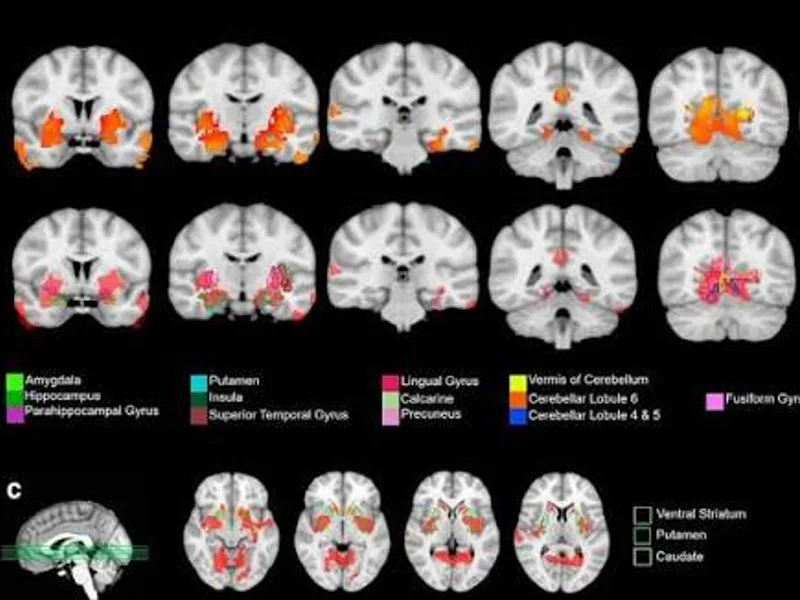
A number of adolescent marijuana brain studies have reported differences in regions tied to memory, decision-making, and reward processing among teens who use cannabis regularly compared to those who don't. The hippocampus, involved in forming new memories, and the prefrontal cortex, involved in planning and impulse control, come up frequently in this research.
Some studies report subtle differences in the volume or shape of these structures. Others focus on connectivity, meaning how well different brain regions communicate with each other, rather than raw size. The findings aren't uniform across every study, which is worth saying plainly rather than glossing over.
In clinical practice, this nuance often gets flattened because people want a simple headline: "cannabis shrinks teen brains" or "cannabis is harmless." Neither framing reflects what the actual imaging literature shows, which is a pattern of associations that vary by study design, sample size, and how researchers controlled for other factors.
The Correlation Versus Causation Problem
Here's the part that gets skipped in a lot of pop-science coverage. Most of these studies are observational, meaning researchers compare brain scans between teens who use cannabis and teens who don't, rather than randomly assigning some teens to use cannabis and others not to, which would obviously be unethical.
That design limitation matters. Teens who use cannabis regularly often differ from non-users in other ways too, including mental health history, family environment, and other substance use, any of which could independently affect brain development. Good studies try to control for these variables statistically, but no study eliminates the possibility entirely.
Longitudinal studies, which scan the same teenagers repeatedly over years, help address this by showing whether brain differences existed before cannabis use started or developed afterward. This design gets closer to answering the causation question, though even the best longitudinal work in this field is still ongoing and doesn't yet offer a fully settled answer.
What's Genuinely Uncertain Right Now
It's tempting to want a definitive verdict, but honest reporting on this topic has to sit with some uncertainty. Whether observed brain differences translate into meaningful, lasting effects on someone's daily functioning is still being studied, and results vary depending on how "meaningful" gets defined.
Dose and frequency matter enormously in this research, and studies that lump together occasional users with daily heavy users tend to produce muddier results than studies that separate these groups. If a headline about "teen brain study" doesn't specify usage patterns, that's usually a sign the nuance got lost somewhere between the journal and the article.
Reversibility is another open question. Some imaging studies suggest certain differences may narrow after periods of abstinence. Others haven't followed participants long enough to say for sure. Anyone claiming certainty in either direction, permanent damage or full reversal, is overstating what the current body of research supports.
Why This Matters Beyond the Lab
None of this is purely academic. If a family is trying to make a decision about a teenager's cannabis use, understanding that the science shows real associations but incomplete causal proof should shape how that conversation goes.
It's reasonable to take the research seriously without treating it as a closed case. A pediatrician can help translate general research findings into something relevant to an individual teenager's situation, which a scan of headlines never really can.
If memory or cognitive concerns are actually showing up day to day, that's a different, more immediate question than the research debate itself. A neurologist can evaluate specific cognitive concerns directly rather than relying on population-level study data to answer an individual question.
Ruling Out Other Explanations First
Brain imaging studies control for confounding factors statistically, but real life doesn't come with a control group. Sleep deprivation, untreated ADHD, and mood disorders can all produce cognitive symptoms that look similar to what's described in cannabis research, which makes individual evaluation important rather than assuming cannabis explains everything.
It's worth reading about how ADHD evaluations typically work before assuming a teenager's attention or memory issues trace back to substance use alone. Mood conditions deserve the same caution, and understanding how conditions like bipolar disorder are properly diagnosed shows how much more goes into a real evaluation than a single scan or symptom checklist.
A general physician is a sensible starting point for ruling out non-substance explanations before assuming the research on cannabis applies directly to one specific teenager's situation.
Getting a Real Evaluation, Not Just Reading Studies
Research findings describe group averages, not individual guarantees. If there's genuine concern about a teenager's cognitive function, an actual clinical evaluation matters more than any study abstract.
A psychiatrist can assess for mental health conditions that frequently overlap with substance use, and coordinate care if cannabis use turns out to be part of a larger picture rather than the sole issue. For structured support around reducing or quitting use, a quit smoking and substance cessation specialist offers a practical starting point.
If a formal cognitive assessment is recommended, a diagnostic center can coordinate the relevant testing, and a hospital directory is useful if more structured or inpatient support becomes necessary. Families who'd rather start with a lower-pressure setting can look into home visit doctor services instead of a first clinic visit.
Sleep and diet also affect cognitive performance independently of substance use, and it's genuinely worth reading about how sleep and neurological health are connected since disrupted sleep is common in teens regardless of cannabis use. A dietitian can help build eating habits that support concentration and mood during any evaluation or recovery period.
Where to Find Qualified Help
Acting on research findings requires access to the right professionals, not just information. Doctar's psychiatrist listings and general doctor search allow filtering by experience, language, and consultation fee before booking.
This broader overview on finding the right mental health doctor is a reasonable place to start if you're unsure which specialist fits your situation, and this piece on attention-seeking behavior patterns can help separate typical teen behavior from something worth a closer look. For urgent situations, such as a severe reaction or acute distress, emergency services or an ambulance shouldn't be a last resort.
This kind of support exists across the country, not just in one city. Whether you're in Delhi, Mumbai, Bangalore, Chennai, or Kolkata, Doctar's nationwide directory can help locate someone qualified nearby, and the about page explains how doctor verification works on the platform. For further reading on related adolescent health topics, Doctar's health blog has additional coverage worth browsing.