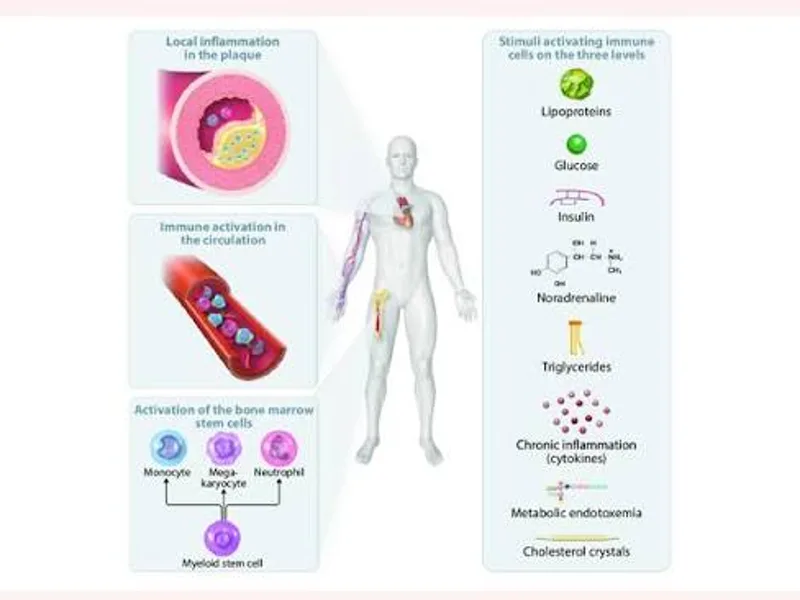
Atherosclerosis is not simply a plumbing problem caused by cholesterol. The disease is more complicated, and inflammation appears to play a meaningful role in how artery plaque develops and, in some cases, becomes dangerous.
That shift is behind the growing ASCVD inflammation rethink. ASCVD, or atherosclerotic cardiovascular disease, includes conditions such as heart attack and ischemic stroke caused by plaque buildup in arteries.
For decades, doctors have focused heavily on LDL cholesterol, often called “bad” cholesterol. That focus has not disappeared. Lowering LDL remains a major part of cardiovascular prevention. But researchers now have a clearer picture of what happens inside an artery after plaque begins to form.
What is the connection between inflammation and ASCVD?
The inner lining of an artery can become affected by factors such as high LDL cholesterol, high blood pressure, smoking and metabolic problems. The immune system responds to these changes, sending inflammatory cells into the artery wall.
Those cells can contribute to the development and progression of atherosclerotic plaque. Over time, the plaque may develop a fragile outer layer. If that layer ruptures, the body's clotting system can form a blood clot that blocks blood flow.
That is where inflammation becomes especially interesting. It may not simply help create plaque; it can also influence whether established plaque remains relatively stable or becomes more prone to rupture.
Cholesterol still matters
The inflammation rethink should not be misunderstood as an argument against cholesterol treatment.
LDL cholesterol has a well-established causal role in atherosclerosis. Large bodies of clinical evidence show that lowering LDL reduces cardiovascular risk. In other words, the newer inflammation research adds to the picture rather than replacing what is already known.
Think of ASCVD as a process with several interacting drivers. Cholesterol can contribute to plaque formation, while inflammation can affect the biological environment inside the artery.
This is also why people should be cautious with headlines suggesting that inflammation is the “new cholesterol.” It isn't.
Why inflammation can be difficult to spot
One challenge is that inflammation is not always something a person can feel. Someone may have significant cardiovascular risk without chest pain, fever or another obvious sign of an inflammatory process.
In clinical practice, this is often missed because cardiovascular risk is understandably discussed through familiar numbers such as blood pressure and cholesterol. Those numbers matter, but they are only part of the overall risk picture.
Researchers have studied inflammatory markers, including high-sensitivity C-reactive protein (hs-CRP), to better understand residual cardiovascular risk. An elevated inflammatory marker does not, by itself, diagnose ASCVD or prove that inflammation is causing an individual's heart problem.
That distinction matters. Medical tests need to be interpreted alongside the person's history, examination and other risk factors.
What changed the thinking?
Clinical research involving anti-inflammatory treatment helped strengthen the idea that inflammation can be more than a bystander in cardiovascular disease.
One landmark line of research tested whether reducing inflammation could lower cardiovascular events even when traditional lipid management was already being addressed. Results supported the biological importance of inflammation, although the benefits and risks of individual anti-inflammatory therapies differ and such medicines are not routine treatment for everyone with cardiovascular risk.
The broader lesson is more useful than any single drug: ASCVD involves both lipid-driven and immune-driven processes.
Researchers are still trying to determine which patients have inflammation that is particularly relevant to their cardiovascular risk and how best to target it without creating unacceptable side effects.
What does this mean for everyday prevention?
The practical message remains surprisingly familiar.
People should continue to pay attention to established cardiovascular risk factors, including high LDL cholesterol, high blood pressure, diabetes, smoking, physical inactivity and excess body weight where relevant.
A heart-healthy eating pattern, regular physical activity, avoiding tobacco and taking prescribed cardiovascular medicines as directed can all be part of risk reduction.
People with diabetes may need coordinated care because blood sugar problems can increase cardiovascular risk. A [General Physician near you] can be a starting point for assessing several common risk factors, while a [Cardiologist in Kolkata] can provide specialist cardiovascular evaluation when appropriate.
For people with metabolic or hormonal conditions, an [Endocrinologist in Kolkata] may also be involved in care. Cardiovascular prevention is rarely about one laboratory result in isolation.
Is inflammation testing useful for everyone?
Not necessarily.
Inflammatory markers such as hs-CRP can provide additional information in selected situations, but testing is not a substitute for assessing established cardiovascular risk factors. A result can be affected by other conditions, including infections and inflammatory illnesses.
This is one area where online advice can become misleading. A single “inflammation” number should not be treated as a personal prediction of whether someone will have a heart attack.
If cardiovascular risk is a concern, discussing the complete picture with a qualified clinician is more useful than ordering isolated tests based on a social-media claim.
The next phase of ASCVD research
The field is moving toward a more individualized view of cardiovascular disease.
Researchers are studying which inflammatory pathways matter most, whether specific biomarkers can identify people who remain at elevated risk despite good LDL control, and how therapies can reduce harmful inflammation without suppressing useful immune responses.
That last point is important. Inflammation is not inherently bad. It is part of the body's defense system. The challenge is understanding when chronic or poorly controlled inflammation becomes harmful inside blood vessels.
The future of ASCVD treatment may therefore involve a combination of approaches rather than a single target: controlling LDL cholesterol, managing blood pressure and blood sugar, reducing tobacco exposure, addressing lifestyle factors and, for selected patients, considering therapies that influence inflammatory pathways.