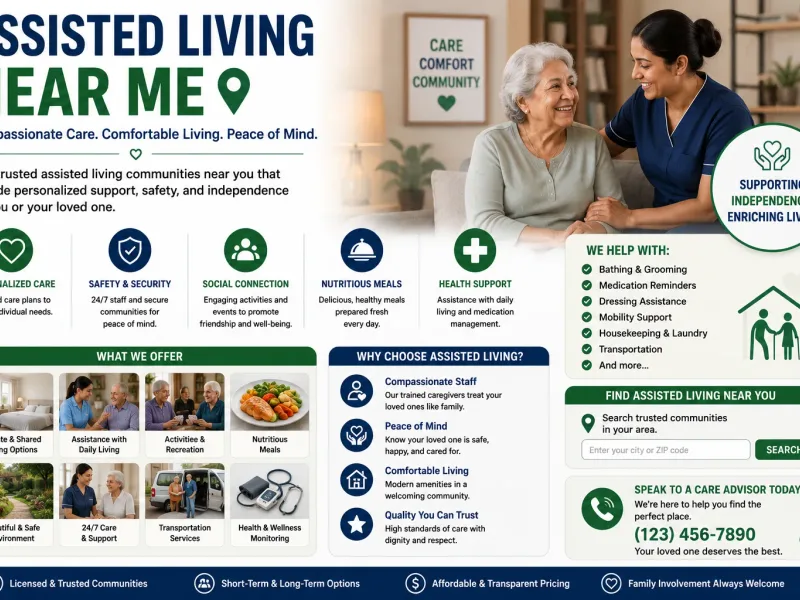
Assisted Living Near Me: A Practical Search Guide
Most people don't search "assisted living near me" out of curiosity. They search it after a fall, a missed medication, or a phone call that made them realize a parent isn't managing alone anymore. That urgency is normal. It's also exactly why so many families end up choosing the first place that answers the phone, instead of the place that's actually right.
This guide is meant to slow that down a little.
What Assisted Living Actually Means
Assisted living sits between fully independent living and a nursing home. Residents usually have their own room or small apartment, but get help with daily tasks — bathing, dressing, medication reminders, meals. It is not the same as a nursing home, which provides round-the-clock medical care for people with serious health conditions.
In India, the term gets used loosely. Some "assisted living" facilities are closer to hostels for seniors with minimal staff. Others have a nurse on site and doctors on call. Ask directly what level of care is actually provided — don't assume the name on the gate tells you.
Signs It Might Be Time to Look
A single fall doesn't always mean it's time. But a pattern usually does.
Watch for repeated missed medications, unexplained weight loss, unpaid bills piling up, or a house that's noticeably less clean than it used to be. Isolation matters too — someone who's stopped seeing friends or leaving the house is at higher risk than the numbers alone suggest.
In clinical practice, this is often missed because families judge a parent's condition by phone calls, where confusion and fatigue are easy to hide. A short in-person visit tends to reveal far more than a week of "I'm fine" on the phone.
How to Actually Search
Skip the ads first. Start by searching verified doctors near you who can do a proper geriatric assessment — this gives you a clearer, more honest read on what level of care is actually needed before you tour a single facility. A general physician is a reasonable starting point if there's no existing specialist involved.
From there, check hospitals near you with a geriatric or elder-care department, since many assisted living facilities have informal referral relationships with specific hospitals worth knowing about. You can also browse hospitals across your city directly if you want to compare a few before deciding.
If the honest answer is "not yet, but soon," it's worth exploring support at home first. A home visit doctor, a nurse for daily care, or a physiotherapist for mobility work can buy meaningful time and dignity before a move becomes necessary. A compounder can also help at home with injections and routine checks, which matters more than people expect once daily medication becomes complicated.
Questions Worth Asking on a Tour
Don't just ask about amenities. Ask what happens during a medical emergency — is there an ambulance on call, or is that the family's job? Ask which emergency services they actually use, not just claim to use.
Ask how medication is tracked, and by whom. Ask whether diagnostic tests can be done on site or require a separate trip. Ask what the pharmacy arrangement looks like — some facilities mark up medicines significantly, and it's a fair thing to ask about upfront.
Also worth checking: access to specialists. Does the facility have a working relationship with a cardiologist, an orthopedist, a gastroenterologist, an endocrinologist for diabetes and thyroid management, or a pulmonologist for breathing issues? These come up more often than people expect once a resident is in their 70s or 80s. A dermatologist matters too — skin issues in older adults are common and easy to overlook. A dietitian on staff or on call is a genuinely good sign, since malnutrition in assisted living is under-discussed.
The Cost Question Nobody Loves Discussing
Prices vary wildly by city and by what's actually included. Some quotes cover room and basic meals only; medical visits, physiotherapy, and diagnostics get billed separately and add up fast. Ask for a full written breakdown, not a verbal estimate. If a facility is reluctant to put pricing in writing, that's worth noting on its own.
It's also fair to ask what happens if care needs increase — will they keep the resident, or is there a point where they'd ask the family to move them elsewhere? Facilities don't always volunteer this.
When Home Care Might Come First
Not every family needs to move a parent into assisted living right away. If the main issues are mobility and medication, a combination of home visit doctors, a nurse, and a physiotherapist can work well for months or longer. Regular eye tests matter here too — vision problems are a leading, and fixable, cause of falls at home.
It's a fair question to ask yourself honestly: is this about what's best for them, or what's easiest for the family right now? Both can be true. Neither answer is shameful.
A Practical Checklist Before You Decide
Get a proper medical assessment first, not a guess
Tour at least two facilities, not just one
Ask about emergency response and specialist access directly
Get pricing in writing, including extras
Consider home-based care as a real option, not a fallback
You can also read more on the Doctar health blog or learn about how the platform works if you want to understand who's behind the doctor and facility listings before trusting them. Facilities and doctors are searchable across cities in India if your search isn't limited to one location, and general enquiries can go through contact if you get stuck.
Takeaway: Don't search for assisted living in a panic and settle for the first available bed. Get a real medical assessment, tour more than one place, ask uncomfortable questions about cost and emergencies, and seriously weigh home care as an actual option — not just a delay tactic.