Autism is not something parents cause, and noticing developmental differences is not a reason for blame. The more useful response is simpler: notice the pattern, ask questions and seek an appropriate assessment when concerns persist.
Autism spectrum disorder (ASD) is a neurodevelopmental condition that can affect communication, social interaction, behaviour and the way a person experiences sensory information. It is called a spectrum because autistic people can have very different strengths, challenges and support needs.
For families, the first signs can be confusing. A toddler may talk later than expected, avoid certain sounds or textures, prefer repetitive play, or seem less interested in sharing attention with others. None of these signs, by itself, proves autism.
Why early autism awareness matters
Early identification gives families more time to understand a child's needs. It can also open the door to communication support, occupational therapy, educational assistance and other services when they are appropriate.
This does not mean every child with a developmental difference needs an autism diagnosis. A child who speaks late, for example, may have an isolated language delay, hearing difficulty or another developmental issue. Doctar's guide to speech and language delays at age two and guide to speech delays at age three explain why speech concerns deserve a broader developmental look.
In clinical practice, this is often missed because a parent is told to “wait and see” when the real issue is a pattern across several areas of development. Waiting may sometimes be reasonable, but persistent concerns deserve a proper discussion rather than reassurance based on a single milestone.
What early signs can look like
Autism does not have one defining behaviour. Some children show clear differences in infancy or toddlerhood, while others become easier to identify as social and communication demands increase.
Communication and social interaction
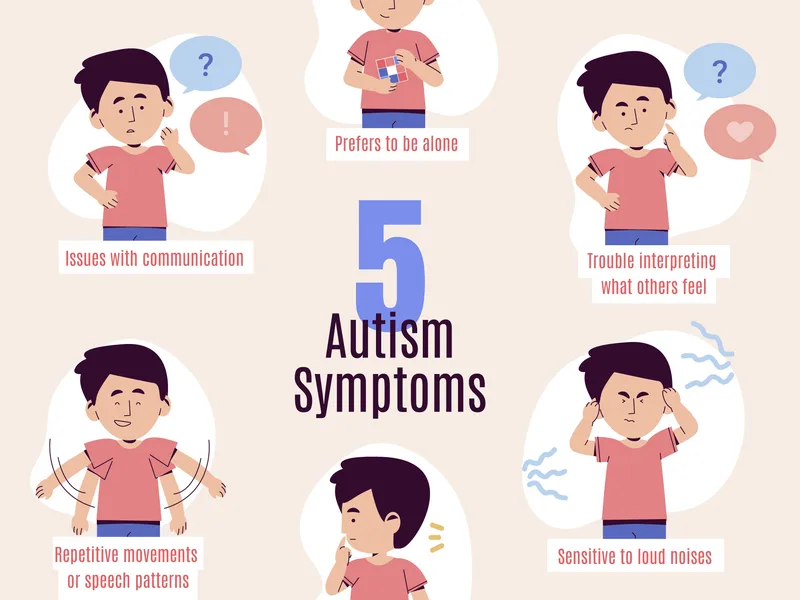
A child may not consistently respond to their name, use fewer gestures such as pointing or waving, or show less interest in sharing an experience with another person. Some children have delayed speech, while others develop speech on time but have difficulty using language in back-and-forth conversation.
Parents can learn more about early communication through Doctar's guide to early signs of autism in babies.
Language development also varies widely. Doctar's guide to two-word or “telegraphic” speech explains an important stage in toddler communication, while its guide to telegraphic speech in toddlers looks at ways parents can encourage communication.
Repetitive behaviour and strong preferences
Some autistic children repeat movements, words or phrases. Others become very focused on particular interests or become unusually distressed when a familiar routine changes.
Sensory differences can also be part of the picture. A child may react strongly to certain sounds, lights, clothing textures, smells or foods, while another child may seem less sensitive to sensory input.
These behaviours should be considered in context. Toddlers commonly repeat actions, develop favourite toys and dislike changes. What matters is the overall pattern and its effect on communication, learning, relationships and daily life.
A speech delay does not automatically mean autism
This distinction matters because autism awareness should not become autism labelling.
A child can have a speech or language delay without being autistic. Hearing impairment, developmental differences, prematurity, oral-motor problems and other medical or neurological conditions can affect communication.
Doctar's speech-development guide for two-year-olds explains why parents should consider more than vocabulary alone. Its guide to first words and sentences also looks at communication as a broader developmental process.
Hearing is particularly easy to overlook. Doctar's guide to congenital CMV and hearing loss in children explains why hearing assessment can be relevant when a child has communication difficulties.
How autism is diagnosed
There is no single blood test or brain scan that confirms autism. Diagnosis is based mainly on a detailed assessment of development and behaviour, along with information from parents or caregivers and, when appropriate, teachers and other professionals.
A developmental paediatrician may be involved, along with professionals such as a child psychologist, neurologist, speech-language therapist or occupational therapist. The exact team depends on the child's age, symptoms and local services.
Doctar's guide to autism diagnosis and support in India explains the multidisciplinary approach. Its general autism diagnosis and support guide also describes how specialists assess communication, behaviour and sensory differences.
Parents can prepare by writing down what they have noticed, when it started and whether it occurs at home, school or elsewhere. Videos of everyday behaviour can sometimes help a clinician understand concerns that may not appear during a short appointment.
What happens after an autism diagnosis?
A diagnosis should answer more than “Does my child have autism?” It should help clarify what the child needs.
Some children may benefit from speech and language therapy. Others may need occupational therapy to address sensory processing, fine motor skills or daily activities. Behavioural and educational supports can also be considered according to the child's individual needs.
Doctar's guide to pediatric neurological disorders discusses speech, occupational and behavioural therapies used in developmental care.
Families may also find Doctar's resource guide for developmental disabilities in India useful when looking for specialists, therapy services, educational support and government resources.
Support should focus on the child, not just the label
Autism is lifelong, but that does not mean a child's abilities and independence are fixed. Skills can develop over time, and support needs can change.
A useful care plan should consider communication, learning, sleep, behaviour, sensory needs, physical health and family circumstances. Doctar's guide to nonspeaking autism highlights an important point: not speaking does not mean a person has nothing to communicate.
Communication can include gestures, pictures, writing, sign language or assistive communication technology, depending on the individual.
Look at the whole developmental picture
Parents sometimes become focused on one concern, such as speech, while other developmental areas receive less attention.
Motor development matters too. Doctar's guide to gross motor skills in children explains how sitting, walking, running and other large movements develop.
Vision can also influence how children interact with their surroundings. Doctar's guide to infant vision milestones explains how visual development changes during infancy.
Sleep deserves attention as well. Sleep difficulties can affect behaviour and family life, whether or not a child is autistic. Doctar's guide to healthy sleep for children covers routines and common sleep concerns.
Doctar also has practical information on baby sleep schedules, nine-month sleep changes, 18-month sleep changes, and sleep patterns around three months.
These topics are not autism tests. They are reminders that child development is interconnected.
Autism can occur alongside other developmental conditions
Autistic children may also have other developmental or neurological conditions. That is why a good assessment should not stop once autism is identified.
For example, Doctar's guide to autism and cerebral palsy discusses how two distinct neurodevelopmental conditions can occur together.
Learning difficulties can also emerge later as school demands change. Doctar's guide to learning disabilities explains why persistent difficulties with reading, writing, mathematics, attention or organisation may need assessment.
ADHD is another condition that may overlap with developmental concerns. Doctar's guide to ADHD diagnosis explains who may be involved in assessment, while its guide to ADHD and co-occurring conditions discusses why symptoms can sometimes overlap.
The point is not to collect labels. It is to understand the child accurately enough to provide useful support.
What parents should do if they are concerned
If you are worried about your child's development, start with the child's paediatrician or another qualified healthcare professional. Bring specific examples rather than simply saying that the child is “behind.”
Mention loss of previously acquired skills, limited gestures, unusual social interaction, repetitive behaviours, sensory difficulties, speech or language concerns, and problems with daily activities. A clinician can decide whether developmental screening, hearing assessment or a more detailed evaluation is appropriate.
Doctar's developmental-disability resource guide provides additional information for Indian families seeking professional and educational support.
Parents should also be cautious about online autism “tests.” A questionnaire may help someone describe concerns, but it cannot replace a qualified developmental assessment.