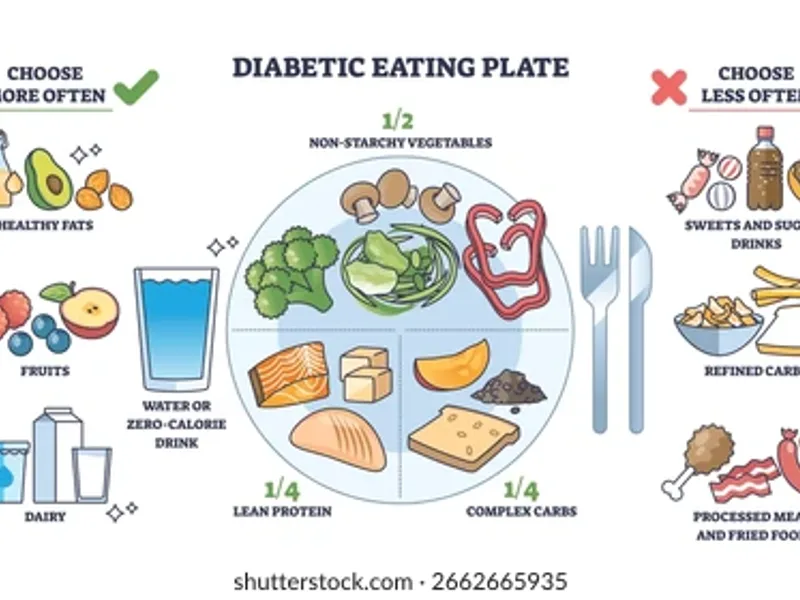
There's no single best diet for diabetes — the most effective approach is a personalized meal plan built around non-starchy vegetables, lean protein, and consistent carbohydrate intake. <cite index="57-1">A good meal plan includes more non-starchy vegetables like broccoli, spinach, and green beans, fewer added sugars and refined grains such as white bread, rice, and pasta, and focuses on whole foods over highly processed ones.</cite> Two tools make building that plan easier: the plate method and carb counting.
[REVIEWER: add clinical insight here — e.g., how you help patients move past the idea of a single "diabetic diet" toward a sustainable personal plan]
<cite index="52-1">There's no one-size-fits-all answer for how much a person with diabetes can eat and stay in their target blood sugar range — it depends on age, weight, activity level, and other individual factors.</cite> That's part of why the CDC steers people away from restrictive labels and generic "diabetic food" products, and toward flexible tools that adapt to a person's actual eating habits, culture, and preferences.
<cite index="57-1">A meal plan matters because it acts as a guide for when, what, and how much to eat, helping ensure adequate nutrition while keeping blood sugar levels on target — and a good plan takes into account a person's goals, tastes, lifestyle, and medications.</cite>
The Diabetes Plate Method
The plate method is the simplest starting point, and it requires no calculating or weighing food. <cite index="56-1">To use it, divide a nine-inch plate in half, then split one of those halves in half again, leaving three sections.</cite> <cite index="56-1">Half of the plate is filled with non-starchy vegetables — most vegetables except potatoes, green peas, corn, and winter squash — using fresh, frozen, or canned options.</cite> <cite index="56-1">One remaining quarter goes to lean protein, whether animal-based or plant-based, and the last quarter goes to carbohydrate foods.</cite>
It's worth noting that the plate method's food groups don't map exactly onto everyday categories. <cite index="56-1">Grains and starchy vegetables like potatoes, corn, green peas, and winter squash all count as "carbohydrates" in this system, not vegetables — and plant-based proteins like beans, lentils, nuts, and seeds also carry carbohydrates that need to be accounted for.</cite>
Making small, gradual adjustments works better than trying to overhaul a plate all at once. If a plate is currently half rice and a quarter vegetables, the practical next step is simply shifting that balance a little at a time — more vegetables, less rice — rather than aiming for perfection immediately.
Carb Counting: A More Precise Option
For people who want (or need) more precision — particularly those adjusting mealtime insulin doses — carb counting offers a more detailed alternative. <cite index="52-1">Carbs are measured in grams, and for diabetes meal planning, one carb serving is roughly 15 grams — which doesn't always match up with what most people think of as a normal food serving. A small baked potato, for instance, is often treated as a single serving of food but actually contains about 30 grams of carbs, counting as two carb servings.</cite>
Consistency matters more than restriction here. <cite index="52-1">Eating roughly the same amount of carbs at each meal helps keep blood sugar levels steadier throughout the day,</cite> and for those using an insulin pump or taking multiple daily injections, mealtime insulin can be matched directly to carb intake rather than following a fixed carb target.
Fiber plays a distinct role worth understanding. <cite index="52-1">Sugars and starches raise blood sugar, but fiber — the part of plant foods that isn't digested — does not,</cite> which is part of why whole foods rich in fiber tend to have a gentler effect on blood sugar than their refined counterparts.
How Fast Different Carbs Affect Blood Sugar
Not all carbohydrates act the same way in the body. <cite index="57-1">How quickly carbs raise blood sugar depends on the food itself and what it's eaten alongside — drinking fruit juice, for example, raises blood sugar faster than eating a piece of whole fruit, and pairing carbs with protein, fat, or fiber slows down how quickly blood sugar rises.</cite> This is a useful, low-effort lever: the same carbohydrate can have a different impact on blood sugar depending on what's on the rest of the plate.
Building a Meal Plan That Actually Fits Your Life
The most sustainable "best diet" is one built with professional guidance rather than assembled from generic advice. <cite index="57-1">Working with a doctor or registered dietitian helps determine a realistic carb target and translate it into an actual eating pattern,</cite> and <cite index="52-1">a referral to diabetes self-management education and support (DSMES) connects people with a diabetes educator who can build a meal plan suited to their specific life, rather than a one-size-fits-all template.</cite>
[REVIEWER: add clinical insight here — e.g., how a dietitian-built plan tends to differ in practice from generic diet advice patients bring in, or common questions patients have about eating out or cultural foods]
Practical Takeaway
The best diet for diabetes isn't a specific named diet — it's a flexible, personalized plan built around more non-starchy vegetables, fewer refined carbs and added sugars, and consistent meal timing. The plate method offers a simple visual starting point, and carb counting adds precision for those who need it, especially alongside insulin. Either tool works best when built with a doctor or dietitian rather than pieced together from generic online advice.
Frequently Asked Questions
Is there one best diet for everyone with diabetes? No. The right approach depends on a person's age, weight, activity level, medications, and preferences, which is why a personalized plan built with a doctor or dietitian works better than a generic diet. The plate method and carb counting are flexible tools that adapt to individual needs rather than fixed diets.
What is the diabetes plate method? It's a visual meal-planning tool using a nine-inch plate divided into three sections: half non-starchy vegetables, one quarter lean protein, and one quarter carbohydrate foods. It requires no calculating or weighing, making it a simpler entry point than carb counting.
How many carbs should someone with diabetes eat per meal? There's no universal number — it depends on individual factors like activity level, weight, and medication. A diabetes educator or dietitian can help set a personalized carb target, generally counted in servings of about 15 grams each.
Do people with diabetes need to avoid all sugar and carbs? No. Carbohydrates raise blood sugar, but they don't need to be eliminated — the focus is on consistency, portion size, and pairing carbs with protein, fat, or fiber to slow their effect on blood sugar. Highly refined carbs and added sugars are generally minimized rather than banned outright.
Does fiber affect blood sugar the same way as other carbs? No. Fiber is the part of plant foods that isn't digested, so unlike sugars and starches, it doesn't raise blood sugar. This is one reason whole foods high in fiber tend to have a gentler effect on blood sugar than refined versions of the same food.