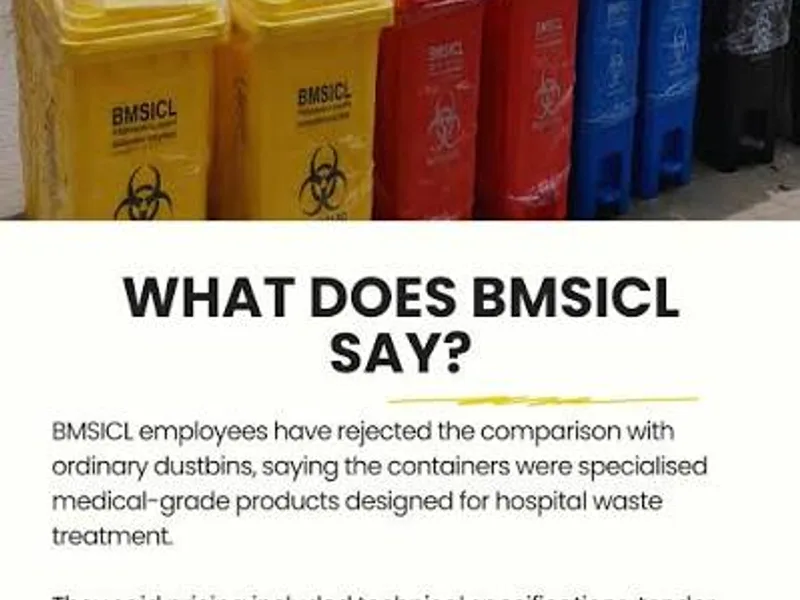
A procurement dispute over biomedical waste treatment facilities in Bihar has turned into a wider question about how safely the state's hospitals handle infectious waste.
The controversy is not simply about which company should win a contract. It concerns the infrastructure used to collect, transport, treat and dispose of waste generated by hospitals, clinics, laboratories and other healthcare facilities.
The Patna High Court has been monitoring Bihar's compliance with the Bio-Medical Waste Management Rules, 2016, while separate litigation has challenged aspects of the tender process for Common Bio-Medical Waste Treatment Facilities, or CBWTFs.
For patients looking for information about local healthcare facilities, DOCTAR's hospital directory can also help them identify hospitals and healthcare centres in different parts of India.
Why biomedical waste procurement matters
Medical waste is not ordinary household garbage. Used needles, contaminated dressings, laboratory material and other clinical waste can carry infection risks if they are improperly segregated, transported or treated.
The Comptroller and Auditor General of India (CAG) has previously flagged weaknesses in biomedical waste management in Bihar's test-checked district hospitals, including inadequate segregation and shortcomings in pre-treatment of certain laboratory and microbiological waste.
For readers trying to understand how hospitals function, DOCTAR's guide to government hospitals in Begusarai provides useful background on public hospitals, OPDs, emergency care and diagnostic services.
In clinical practice, this is often missed because waste management happens away from the patient's bedside. Yet the safety chain does not end when a nurse puts contaminated material into a waste container.
What triggered the Bihar tender controversy?
The dispute developed around plans to establish and operate CBWTFs in several Bihar locations.
Court records show that the Bihar State Pollution Control Board had assessed a need for additional facilities and that an e-tender was issued in December 2022 covering multiple locations. The proposed facilities included Patna, Gopalganj, Madhubani, Purnia, Sasaram, Muzaffarpur and Bhagalpur.
The procurement process subsequently became legally contested. One important issue was whether the Bihar State Pollution Control Board (BSPCB) or the Bihar Medical Services and Infrastructure Corporation Limited (BMSICL) was the appropriate authority for particular aspects of the procurement.
The Patna High Court recorded this question in earlier proceedings after noting an overlap between an earlier BMSICL tender and the later BSPCB process. That earlier tender was eventually cancelled, with the court leaving room for future challenges concerning the authority responsible for such tenders.
Readers interested in healthcare infrastructure can compare this with DOCTAR's top hospitals in Patna guide, which discusses hospital infrastructure, accreditation and specialist services.
Why was the original tender cancelled?
The cancellation became another contentious point.
In a February 2026 order, the Patna High Court recorded that the earlier tender had been cancelled after discrepancies were found in the bid submitted by one participant. A fresh tender process had then been initiated.
The later litigation examined whether cancelling the entire procurement process was justified and whether the subsequent tender process was conducted fairly.
A May 2025 Patna High Court judgment dealt with challenges brought by companies involved in the CBWTF tender. The proceedings show that bidders had been technically qualified for different locations and had submitted financial bids covering services such as collection, transportation, treatment and disposal of biomedical waste.
That distinction matters. A tender dispute is not, by itself, proof of corruption. The available court records establish procurement disagreements and legal challenges; they should not be presented as a finding that hospital officials or bidders committed wrongdoing unless a competent authority establishes it.
Six additional facilities were identified
The court was also told that a gap analysis had been conducted comparing biomedical waste generated with waste treatment capacity.
In May 2025, the court recorded the BSPCB's assessment that six additional CBWTFs would be required in Muzaffarpur, Bhagalpur, Sasaram, Gopalganj, Purnia and Madhubani.
This is particularly relevant because DOCTAR has local healthcare resources covering several of these areas, including guides to government hospitals in Muzaffarpur, super-speciality hospitals in Muzaffarpur, and government hospitals in Bhagalpur.
The significance is straightforward: treatment capacity has to keep pace with the waste produced by healthcare facilities. Building a facility on paper is not enough. It must be operational, properly authorised and connected to hospitals that actually use the system.
Court scrutiny has continued
The matter has not ended with the tender documents.
In February 2026, the Patna High Court directed the BSPCB's Member Secretary to provide details and documentary evidence concerning steps taken to implement the Bio-Medical Waste Management Rules, 2016.
A June 15, 2026 order shows that the court was still examining compliance. The BSPCB told the court that 169 healthcare facilities had complied with directions relating to biomedical waste disposal and undertook to provide further information on compliant and non-compliant units and action taken against those not complying. The case was listed for July 13, 2026.
DOCTAR's top 24-hour hospitals in Bhagalpur and top government hospitals in Bhagalpur provide additional context on the healthcare facilities serving that region.
What the procurement process actually covers
A CBWTF is not simply a waste collection truck.
The system can involve segregation at the healthcare facility, collection, transportation, treatment and final disposal. The Bio-Medical Waste Management Rules place responsibilities on healthcare establishments and treatment-facility operators to ensure biomedical waste is handled without adverse effects on human health or the environment.
Bihar's own biomedical waste action plan has also identified procurement and allocation of treatment equipment, consumables and funding as part of strengthening biomedical waste management in government healthcare facilities.
For readers researching hospital services in Bihar, DOCTAR also offers guides to AIIMS Patna, top general physicians in Patna, and top medical clinics in Patna.
What patients should understand
Patients generally cannot verify a hospital's waste contract themselves, and they should not be expected to.
What matters is whether the healthcare facility follows proper segregation, stores waste safely, uses an authorised treatment and disposal system, and complies with applicable pollution-control requirements.
People comparing healthcare facilities can use DOCTAR's hospital listings and doctor listings as starting points, while independently checking the hospital's current services and regulatory status where necessary.
This is also relevant outside Patna. DOCTAR has local information on Sheikhpura government hospital, Bagaha government hospital, and government hospitals in Chhapra.
The wider healthcare infrastructure question
Biomedical waste is one part of a much larger hospital safety system.
Hospitals also depend on functioning laboratories, diagnostic equipment, emergency departments, infection-control systems and appropriately trained staff. DOCTAR's guides to pathology labs in Patna and OPD doctors in Begusarai illustrate how different parts of the healthcare system connect.
The procurement controversy therefore deserves attention beyond the companies involved in the tenders. Delays in creating treatment capacity can become a public-health concern if healthcare facilities lack reliable arrangements for safe disposal.
There is also a transparency issue. Public procurement involving environmental and healthcare safety should be easy to follow: who issued the tender, what the eligibility criteria were, which bids qualified, why a tender was cancelled, and what happened next.
What happens next?
The BSPCB's tender records show procurement notices for CBWTFs at several Bihar locations, while the Patna High Court has continued to seek information on compliance with biomedical waste rules.
The practical question is no longer simply whether Bihar needs more treatment facilities. It is whether the facilities are selected through a transparent process, become operational within a reasonable period, and are actually used by healthcare establishments in compliance with the rules.
For patients seeking local care, DOCTAR's resources on Muzaffarpur clinics, lung disease hospitals in Muzaffarpur, government hospitals in Begusarai, cancer hospitals in Gaya, gastro hospitals in Bhagalpur, and maternity hospitals in Bhagalpur can help with broader healthcare navigation.