What the New Research Actually Found
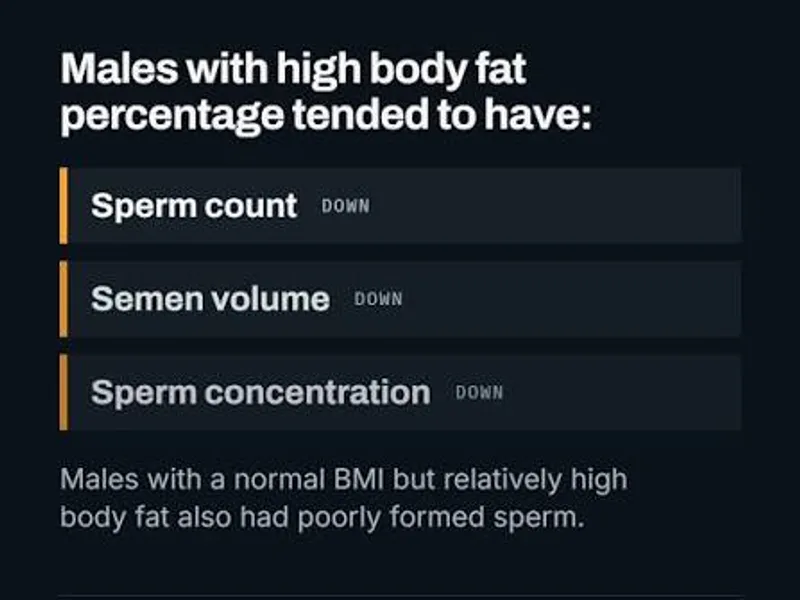
A study out of Aarhus University in Denmark looked at something most fertility research hadn't isolated cleanly before: body fat percentage, not just body weight or BMI. Researchers found men with very high body fat percentages had roughly 15% lower sperm counts compared to men with a normal body fat percentage. That's not a trivial difference for anyone trying to conceive.
The same men also showed lower sex hormone-binding globulin, a protein that helps regulate how much active testosterone circulates in the blood, along with lower testosterone itself and shifted patterns of other reproductive hormones. The researchers were fairly direct about the takeaway: assessing body fat percentage, not just BMI, might help identify men at fertility risk who'd otherwise look completely fine on a standard weight chart.
Why Body Fat Percentage Beats BMI as a Marker
Here's the thing about BMI that frustrates a lot of clinicians, myself included when I've seen it used as the only screening tool. It's a ratio of weight to height, and it can't tell the difference between a muscular man and one carrying excess fat at the same number on the scale. Two men with an identical BMI can have very different fat distributions and very different hormone profiles.
Other research backs this up from a different angle. A broader systematic review looking at obesity and metabolic health found that fat distribution, particularly around the abdomen, matters more for sperm quality than total body weight alone. Some studies even found central obesity behaved differently than generalized obesity in terms of sperm parameters, which tells you this relationship isn't as simple as "more fat equals worse fertility" across the board. It's messier than that, and any article claiming otherwise is oversimplifying real science.
The Hormone Mechanism: Aromatase and Estrogen
So why would body fat affect sperm production at all? The short answer involves an enzyme called aromatase, which fat tissue produces in larger amounts as body fat increases. Aromatase converts testosterone into estrogen. More fat tissue generally means more conversion, which means less testosterone circulating to support sperm production and more estrogen doing the opposite job it's meant to do in male reproductive biology.
Fat tissue also isn't just sitting there passively. It releases inflammatory chemicals that can affect the cells in the testes responsible for making testosterone. Chronic low-grade inflammation, the kind that doesn't cause obvious symptoms but quietly runs in the background for years, has been linked in animal and human studies to reduced sperm motility and increased DNA damage in sperm cells. None of this is exotic biology. It's a fairly well-established hormonal feedback loop that just doesn't get talked about outside of endocrinology circles very often.
What This Means If You're Trying to Conceive
In clinical practice, this is often the piece that gets missed during a basic fertility workup: a man can have a "normal" BMI and still have elevated body fat, and unless someone actually measures body composition, that risk factor goes unnoticed. If you and a partner have been trying to conceive without success, and a semen analysis has come back with lower-than-expected numbers, body fat percentage is worth asking your doctor about directly rather than assuming BMI alone rules it out.
This is also where seeing the right specialist matters. A urologist is generally the right starting point for male fertility concerns, and many also work as andrologists with specific training in this area, as covered by urologist listings in Kanchipuram. If hormone imbalance is suspected, medications like the ones discussed in Arimidex and reproductive health sometimes come up in treatment conversations, though that's a decision for a specialist to make, not something to self-manage. Doctar's explainer on estrogen's role in the male body is a useful plain-language companion to this topic if the hormone side of things feels confusing.
Weight Loss and Reversibility
The more encouraging part of this research area is that the changes linked to higher body fat appear to be at least partly reversible. Studies on weight loss and male fertility have shown improvements in semen parameters and hormone levels after significant, sustained weight loss, though results vary by individual and by how much weight is lost.
Doctar's practical guides on walking an hour a day and how walking compares to cycling are reasonable starting points if fertility is part of your motivation for losing weight, since both cover realistic, sustainable approaches rather than crash diets. Pairing that with everyday eating and movement habits tends to work better long-term than an aggressive short-term plan, and if diabetes or blood sugar issues are also in the picture, Doctar's guide on managing diabetes affordably is worth reading too, since insulin resistance and reproductive hormone disruption often travel together.
Structured support helps here more than people expect. A weight management centre, a registered dietitian, a nutritionist, or a local nutrition and wellness centre can build a plan around your actual numbers rather than guesswork. Pacing exercise matters too, since overtraining brings its own hormonal costs, and Doctar's piece on how often you should really do cardio alongside gentler low heart rate training is a more sustainable approach than pushing hard every single day. A lower resting heart rate over time is a reasonable sign that overall cardiovascular and metabolic health, both tied to hormone regulation, are improving. Small habits like a consistent morning walk or walking after meals add up more than people give them credit for.
Practical Steps and When to See a Doctor
Broader male sexual health also deserves honest attention here, since it often overlaps with the same hormonal picture. Doctar's guides on PDE5 inhibitors for erectile dysfunction, penis pumps as a treatment option, and post-surgical sexual health topics like life after prostate removal and prostate removal and sexual health are worth a look if broader reproductive or sexual health questions come up alongside fertility concerns. For men considering more advanced interventions, understanding coverage questions like what Medicare covers for penile implants can help set realistic expectations early. Building general core strength through resistance training, discussed in Doctar's piece on core strength and visible abs, also supports the kind of body composition change that appears to matter most here.
If you're using a fitness or health-tracking app to stay accountable during a weight loss effort, Doctar's honest review of the BetterMe app is worth a read before committing to one. And if cardiovascular risk factors are part of the picture, checking in with a cardiologist rounds out a fairly complete preventive approach.