What a Calorie Deficit Actually Means
A calorie deficit happens when you consistently eat fewer calories than your body uses in a day. That's the whole concept, really. No secret formula, no trending supplement, just energy in versus energy out.
But here's where most people trip up. The body isn't a simple calculator. It's a living system that adjusts, resists, and sometimes fights back against sudden changes. That's why two people on paper doing "the same deficit" can get very different results.
In clinical practice, this is often missed because patients focus entirely on the number on the app and ignore everything else, sleep, stress, hormones, medication side effects, that quietly shapes how that number plays out in the body. A dietitian or endocrinologist usually looks at the full picture, not just intake.
All Calories Are Treated Equally by the Body
A calorie is a unit of energy, technically true. But 300 calories of sugary soda and 300 calories of grilled fish and vegetables do not behave the same way once they're inside you.
Protein takes more energy to digest than fat or refined carbs, a process called the thermic effect of food. Fibre-rich meals slow digestion and keep you fuller longer, which affects how much you eat later in the day. So while the calorie count matters, food quality shapes whether that deficit is easy or miserable to stick to.
If you're unsure how to structure meals around this, a dietitian consultation is worth the visit rather than guessing from an app.
A Bigger Deficit Means Faster, Better Results
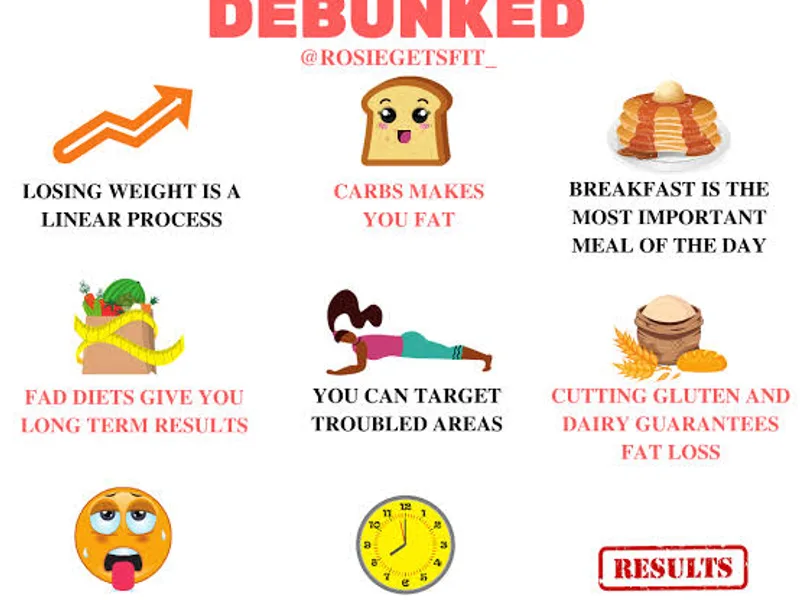
Cutting calories aggressively feels productive. Short term, the scale often agrees. Long term, it usually backfires.
Very low calorie intake can slow your metabolism, increase muscle loss instead of fat loss, and trigger intense hunger that leads to bingeing. It can also affect your heart rhythm and blood pressure in some cases, which is not something to brush off. Anyone with an existing heart condition should check with a cardiologist before attempting an extreme cut.
A moderate, sustainable deficit, one you can actually live with for months, tends to outperform crash diets over time. Slow is frustrating. It's also what tends to stick.
Exercise Alone Can Create the Deficit You Need
Exercise is genuinely good for you, for your heart, mood, and long-term health. But relying on workouts alone to "burn off" a deficit is where a lot of people get stuck.
Most people overestimate how many calories a workout burns and then eat back more than they burned, sometimes without realising it. A 45-minute gym session might burn a few hundred calories; a couple of snacks can undo that in minutes. This isn't a reason to skip exercise. It's a reason to stop treating it as your only lever.
If joint pain or old injuries are stopping you from moving comfortably, a physiotherapist can help you build a routine that doesn't set you back further.
Your Metabolism Stays the Same No Matter What
This one gets debated a lot, and the honest answer is nuanced. Metabolism does adapt to sustained calorie restriction, a process sometimes called adaptive thermogenesis. Your body becomes somewhat more efficient at running on less.
This doesn't mean weight loss becomes impossible. It means progress can slow even when you're doing everything "right," and that plateau is normal, not failure. Thyroid issues, PCOS, and certain medications can also change how your body handles a deficit, which is why unexplained stalls are worth discussing with an endocrinologist rather than just cutting calories further.
Everyone Needs the Same Deficit
Generic calorie targets like "eat 1,200 calories a day" ignore age, muscle mass, activity level, hormonal status, and health history. A 25-year-old training three times a week and a 55-year-old managing thyroid medication are not the same case, even if an app gives them the same number.
Women managing PCOS or perimenopause often find that standard advice simply doesn't apply the same way. It's reasonable to ask a gynecologist whether hormonal factors are part of the picture before assuming it's purely a diet problem.
When Weight Loss Resistance Isn't About Willpower
Sometimes the deficit is real and the scale still won't move, or moves the wrong way. That's frustrating, and it's also a signal worth taking seriously rather than pushing through with more restriction.
Thyroid disorders, insulin resistance, certain medications, and sleep disorders can all interfere with expected weight changes. Basic bloodwork through a diagnostic centre can rule out or confirm some of these before you spend months second-guessing your own effort. A general physician is a reasonable first stop if something feels off.
Crash dieting can also show up on the outside, hair thinning and dull skin are common complaints after extreme restriction, so if that's happening, it's worth a conversation with a dermatologist alongside fixing the diet itself.
Getting It Right
A calorie deficit works. That part of the science is solid. What trips people up is expecting it to behave the same way for everyone, ignoring food quality, cutting too hard too fast, and assuming exercise alone will carry the weight loss.
If you've been stuck despite doing "everything right," don't just add more restriction. Get checked. Book a dietitian for a plan that fits your actual life, see an endocrinologist if your energy or weight patterns feel off, and loop in your general physician for baseline bloodwork. Small, honest adjustments beat another aggressive crash diet almost every time.