There's something almost strange about the idea that cancer cells might be hurting themselves while trying to grow. But that's roughly what a new study out of the Hebrew University of Jerusalem suggests, and it offers a genuinely new explanation for something researchers have puzzled over for years: why cancer keeps evolving, sometimes becoming harder to treat the longer it's around.
The study, published in Science Advances, was led by PhD student Osama Hidmi under Prof. Rami Aqeilan. It focuses on a mechanism most people have never heard of, and it's worth breaking down slowly rather than skimming past the jargon.
What Are Super-Enhancers, and Why Do They Matter Here
Every cell has regions of DNA that act like volume switches, turning nearby genes up or down. Super-enhancers are the most powerful version of those switches, capable of driving certain genes into extremely high activity. In cancer cells, these super-enhancers often get pointed at growth-related genes, pushing them to work harder than a normal cell ever would.
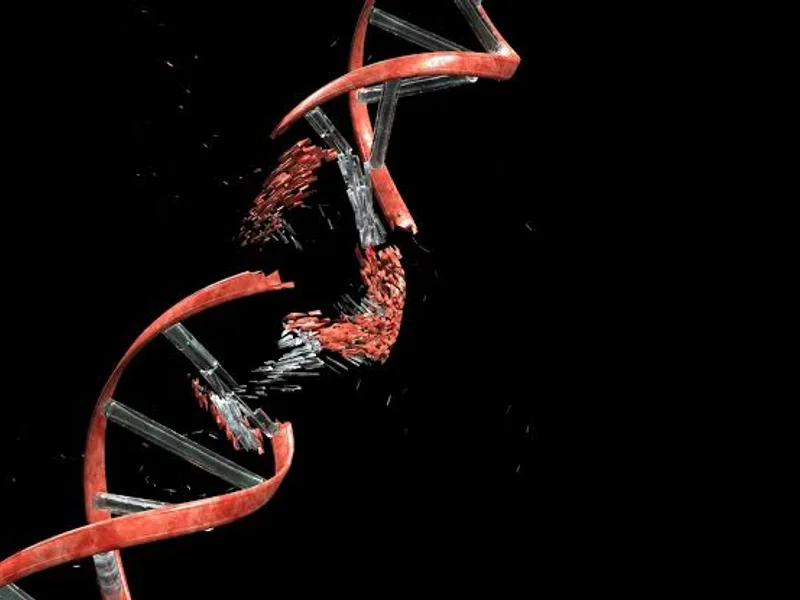
That intense activity has a cost. The researchers found that forcing genes to run at this pace puts real physical strain on the DNA in those regions, and that strain can lead to breaks, literal snaps in the genetic material. This isn't a hypothetical stretch either, since DNA damage from cellular stress is a known biological phenomenon. What's new here is tying it specifically to the super-enhancer activity that drives cancer growth.
The Repeated Repair Problem
Cells aren't defenseless against DNA breaks. They have repair systems built to fix this kind of damage, and cancer cells lean on those systems constantly, given how often this self-inflicted strain occurs. The researchers tracked the natural alarm signal cells use to flag damage and call in repair machinery, and found that these break-and-repair cycles happen repeatedly in the same high-activity regions.
Here's the catch. Repair isn't always perfect. Every so often, the repair process introduces a small error rather than restoring the DNA exactly as it was. Do that enough times in the same spot, and errors start to accumulate as genuine mutations. Prof. Aqeilan summed up the significance plainly, describing how this high-output activity strains the DNA and creates what the team calls break hotspots that the cell keeps having to repair, a cycle that helps tumors survive short-term but raises the risk of mutations that fuel the cancer's evolution.
In clinical practice, this is often the piece patients find hardest to square with what they thought they understood: that a tumor doesn't stay the same disease from diagnosis through treatment, it keeps changing, sometimes becoming resistant to therapies that worked initially. This research offers one mechanism for how and why that ongoing change happens, rather than treating genetic instability as just background noise.
Why This Matters Beyond the Lab
This finding reframes genetic instability, the tendency of cancer cells to accumulate mutations over time, as something that can emerge directly from the biology of rapid tumor growth itself, rather than purely from outside damage like radiation or chemical exposure. That's a meaningful shift in how researchers think about where cancer's evolving traits actually come from.
Some of those accumulated mutations can help tumors do things that make them harder to treat: spread to new locations, survive under stressful conditions the way tumor cells often do during and after chemotherapy, or become less responsive to treatments that initially worked. Understanding where that instability originates matters for the long-term project of predicting and eventually countering it.
A Possible Future Treatment Target, Not a Current One
The researchers themselves frame this discovery as pointing toward a potential therapeutic angle, since a mechanism a tumor depends on to survive is also, in principle, a weakness that could be targeted. That's genuinely promising as a research direction. It is not, however, an existing treatment, a diagnostic test, or something that changes how any cancer is currently managed.
This is worth being direct about, since findings like this tend to get compressed into more optimistic headlines than the research itself supports. Diagnosis and treatment decisions still rest on established tools, imaging methods like MRI scans, tumor staging, and treatment plans built around a patient's specific cancer type, whether that's breast cancer subtypes, cervical cancer, or others. This study doesn't change any of that groundwork.
What This Doesn't Mean
It's worth naming a few things this study is not. It's not a new screening test. It's not evidence that a specific food, habit, or exposure causes this DNA-breaking process, since the mechanism described is intrinsic to how cancer cells grow, not something triggered from outside. And it's not a reason for anyone currently in treatment to ask about a new drug that doesn't exist yet.
What it is, is a genuinely interesting piece of basic science that helps explain a pattern oncologists have long observed clinically: that cancer often changes character over the course of treatment. Having a plausible mechanism behind that pattern is valuable, even before it translates into anything a patient encounters directly.
Related Reading on DOCTAR
Useful DOCTAR Tools