What Is HPV, and Why Does It Matter for Oral Cancer?
HPV, or human papillomavirus, is most commonly associated with cervical cancer. But its role in oral and throat cancers — technically called head and neck squamous cell carcinoma, or HNSCC — is something that still doesn't get enough public attention.
One-third of males globally are HPV-positive, and one-fifth carry high-risk HPV-16, which is transmitted through oral sex. In clinical practice, this is often missed because many patients — and even some healthcare providers — don't immediately connect a virus they associate with gynecological health to cancers forming in the throat and mouth.
Higher levels of oral HPV, along with two specific bacteria called Porphyromonas gingivalis and Fusobacterium nucleatum, are linked to worse survival outcomes in patients with HNSCC. These aren't fringe findings. The connection between these microbes and cancer progression has been building in the research literature for years.
If you've noticed mouth symptoms and aren't sure what they mean, speaking to a specialist is the right first step. You can search for an ENT specialist or oral medicine doctor near you on Doctar.
The Bean Gum That's Getting Researchers Excited
The gum in question is made from lablab beans and contains a naturally occurring antiviral protein called FRIL. The research team, led by Dr. Henry Daniell, had used earlier versions in prior work. This study pushed it further.
Researchers evaluated the gum for its effect on microbial loads in oral samples from patients with HNSCC, targeting HPV, P. gingivalis, and F. nucleatum — all implicated in tumour progression and poorer clinical outcomes in head and neck cancers.
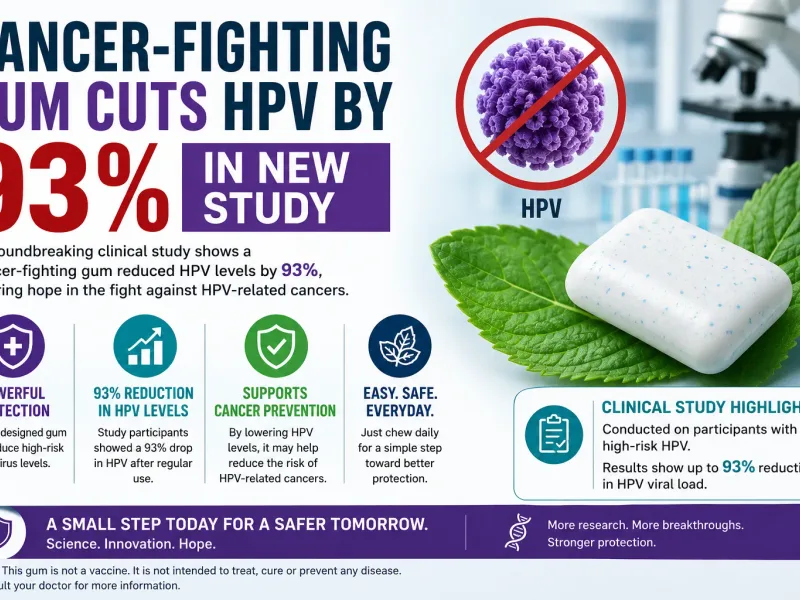
HPV ELISA testing detected viruses in 100% of saliva samples and 75% of oral-rinse samples from the 44 patients studied. Bean-lectin gum aggregated 93% of HPV in saliva and 80% in oral-rinse samples.
Then comes the really striking result. When the researchers added a second ingredient — protegrin, an antimicrobial peptide — a single dose reduced P. gingivalis and Fusobacterium nucleatum by more than 99% in saliva and oral-rinse samples. Investigators reported levels fell to almost zero in tested specimens.
Almost zero. From a single dose.
Concerned about your oral health or potential cancer symptoms? Book an appointment with a doctor on Doctar — early consultation always makes a difference.
Why "Not Killing the Good Bacteria" Is Actually the Key Finding
Most people have heard the phrase "good bacteria" — the friendly microbes that keep us healthy. In the mouth, that balance matters enormously. Many antimicrobial treatments are blunt instruments that disrupt the whole ecosystem.
This gum wasn't. Protegrin remained active against anaerobic P. gingivalis and Fusobacterium nucleatum but did not kill capsule-forming bacteria including Streptococci, suggesting selective preservation of beneficial flora.
That selectivity is what makes this research stand out from a purely scientific standpoint. It's the difference between a targeted drug and a carpet bomb. Whether that selectivity holds in full clinical trials is still to be seen, but the early signal is encouraging.
If you're managing an existing cancer diagnosis and want specialist guidance, find oncology-linked hospitals near you through Doctar.
How Does the Gum Actually Work?
The science here is genuinely interesting, even if it sounds like it belongs in science fiction.
The effect of the FRIL protein is attributed to its binding of viral glycoproteins — essentially the surface proteins on the HPV virus — which promotes aggregation. Aggregation means the virus particles clump together, reducing their ability to enter host cells. The virus doesn't get a foothold. It gets stuck.
Think of it like a net that catches the virus before it can infect the cells lining your mouth and throat.
The protegrin component works differently — it punches holes in the outer membranes of the harmful bacteria, killing them directly. But because the cancer-linked bacteria have different membrane structures from the beneficial ones, the peptide spares the good guys.
Understanding cancer biology is complex, and you shouldn't have to navigate it alone. Talk to a general physician or oncologist via Doctar if you have questions about your own risk.
What the Study Can and Can't Tell Us
This research is genuinely exciting. It's also, to be clear, still in early stages. The study is classified as ex vivo — meaning it was conducted on saliva and oral rinse samples collected from patients, not in a living, breathing human body during active treatment.
Future studies should assess durability, safety, dosing frequency, and effects on cancer outcomes. We don't yet know how long the effect lasts, whether it changes tumour progression, or how it would perform as a standalone versus adjunct therapy. These are significant gaps.
What we do know is that cell culture studies showed 1000-fold higher levels of P. gingivalis and Fusobacterium nucleatum in cancer patients' saliva than in non-cancer control participants. That tells you how dramatically the microbial environment shifts in people with HNSCC — and why targeting it matters.
The gum is not commercially available. It is not a treatment you can access today. Anyone selling something claiming to do what this research describes should be approached with significant scepticism.
If you are living with a head and neck cancer diagnosis, consult a verified oncology specialist through Doctar rather than relying on unverified products.
The Bigger Picture: Oral Bacteria, Gum Disease, and Cancer Risk
One thread that often gets lost in coverage of this research is the broader connection between oral health and cancer risk.
Emerging evidence suggests a possible association between periodontal bacteria and oral carcinogenesis. P. gingivalis may be an important potential target for future strategies aimed at treating oral cancer. Periodontal disease — the serious form of gum disease — isn't just a dental problem. It's increasingly being studied as a cancer risk factor.
Periodontitis is associated with a two- to fivefold higher risk of developing certain cancers, particularly where P. gingivalis and F. nucleatum are involved.
This is why dentists are not peripheral to cancer care. Regular dental checkups, proper oral hygiene, and treatment of gum disease may have implications well beyond your teeth. Find a dentist near you on Doctar — it's a basic step with potentially significant long-term value.
For those with a family history of head and neck cancer or known HPV exposure, speaking to a specialist proactively is advisable. Search for ear, nose, and throat (ENT) specialists on Doctar.
Who Is This Research Most Relevant To?
This research is particularly relevant to three groups of people.
First, patients already diagnosed with HNSCC — for them, the hope is that a future adjunct therapy could reduce the microbial burden that worsens survival outcomes. Second, people with high-risk HPV exposure or a history of heavy tobacco or alcohol use, who face elevated oral cancer risk. Third, anyone interested in the emerging science connecting the oral microbiome to cancer — a field that's moving fast.
If you fall into any of these categories, book a consultation with a general physician through Doctar to discuss your personal risk profile. For diagnostics — including any oral health investigations — find diagnostic centres near you on Doctar.
Need an ambulance or emergency care quickly? Doctar's emergency services are searchable 24/7.