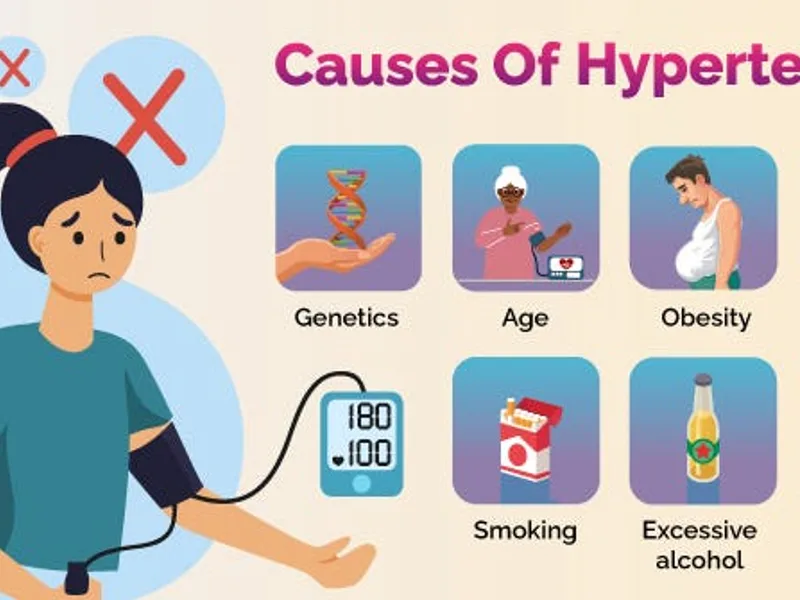
Most hypertension — the large majority of cases — is called primary (or essential) hypertension, meaning there's no single identifiable cause; it develops gradually from a combination of genetics, age, and lifestyle factors. A smaller share, roughly 5% to 10% of cases, is secondary hypertension, caused by a specific underlying condition such as kidney disease, a hormone disorder, or certain medications, and it tends to appear more suddenly and severely than primary hypertension.
[REVIEWER: add clinical insight here — e.g., what prompts you to investigate a secondary cause versus treating a case as primary hypertension]
Primary hypertension: the common but harder-to-pin-down type
For most adults with high blood pressure, Mayo Clinic notes there's no single identifiable cause — this is called primary or essential hypertension. Instead, it develops from an accumulation of factors working together over time: how the body handles sodium, how blood vessels respond to hormones, genetic tendencies inherited from family, and the cumulative effect of lifestyle choices made over years.
A review published in Mayo Clinic Proceedings lists the factors generally recognized as influencing blood pressure or contributing to primary hypertension: heredity, age, race, sex, body weight, sodium intake, alcohol consumption, heart rate, prior high blood pressure, blood glucose levels, and uric acid levels. No single factor from that list fully explains any one person's hypertension — it's the combination and degree that matters.
The risk factors behind primary hypertension
Age. The risk of high blood pressure increases with age. Mayo Clinic notes that until about age 64, high blood pressure is more common in men, while women become more likely to develop it after age 65 — a pattern tied partly to hormonal changes around menopause.
Race. High blood pressure is particularly common among Black people, according to Mayo Clinic, and it tends to develop at an earlier age in Black people than in white people — a disparity researchers attribute to a mix of genetic, social, and environmental factors.
Family history. A family history of hypertension raises individual risk, reflecting the genetic component of blood pressure regulation, though genetics alone rarely determines the outcome.
Body weight. Carrying excess weight increases the workload on the cardiovascular system and is one of the most consistently cited modifiable risk factors for primary hypertension.
Sodium intake and diet. Higher sodium consumption is linked to higher blood pressure in many people, which is part of why dietary sodium reduction is a standard first-line recommendation for prevention and management.
Alcohol and tobacco use. Both are established risk factors for developing hypertension and for making existing hypertension harder to control.
Physical inactivity. A sedentary lifestyle is associated with higher blood pressure, while regular physical activity is one of the more effective lifestyle changes for lowering it.
Secondary hypertension: when there's an identifiable cause
Secondary hypertension differs from primary hypertension in an important way: there's a specific underlying condition driving it. Mayo Clinic describes it as tending to appear suddenly and often causing higher blood pressure than primary hypertension does. Because there's an identifiable cause, secondary hypertension can sometimes be significantly improved or even resolved by treating that underlying condition.
Kidney-related conditions are among the most common drivers of secondary hypertension. These include diabetic nephropathy, where diabetes damages the kidneys' filtering system; polycystic kidney disease, an inherited condition where cysts interfere with kidney function; glomerular disease, which affects the kidneys' filtering units; and renovascular hypertension, caused by narrowing of the arteries supplying the kidneys.
Hormone-related conditions are another major category. Cushing syndrome, caused by excess cortisol from either medication or a tumor, can raise blood pressure. Aldosteronism, where the adrenal glands overproduce the hormone aldosterone, causes the kidneys to retain excess salt and water while losing potassium — both of which push blood pressure up. Pheochromocytoma, a rare adrenal tumor, produces excess adrenaline and noradrenaline, which can cause either sustained high blood pressure or sudden spikes. Thyroid problems — both an underactive and an overactive thyroid — can also contribute to secondary hypertension.
[REVIEWER: add clinical insight here — e.g., red flags in a patient's history that prompt you to screen for one of these secondary causes]
Beyond kidney and hormone conditions, other documented contributors to secondary hypertension include congenital heart defects, obstructive sleep apnea, and illegal drug use. Certain medications — including some corticosteroids, decongestants, and hormonal birth control — can also raise blood pressure in some people.
A note on "white coat" blood pressure
Not every high reading reflects true hypertension. Mayo Clinic notes that for some people, the anxiety of a medical appointment alone causes blood pressure to spike — a phenomenon called white coat hypertension. This is one reason clinicians often confirm a hypertension diagnosis with multiple readings over time, sometimes including home monitoring, rather than acting on a single office reading.
Why the distinction matters for treatment
Whether hypertension is primary or secondary changes the treatment approach. Primary hypertension is generally managed through a combination of lifestyle changes and, when needed, medication aimed at controlling blood pressure directly, since there's no single cause to eliminate. Secondary hypertension treatment focuses first on the underlying condition — Mayo Clinic notes that properly treating the cause can often control both the hypertension and the condition driving it, reducing the risk of complications like heart disease, kidney failure, and stroke.
This is part of why doctors sometimes investigate for a secondary cause, especially when high blood pressure appears suddenly, is unusually severe, develops at a younger age than typical, or doesn't respond well to standard treatment.
A practical takeaway
If you've been told you have high blood pressure, it's worth asking your doctor directly whether it looks like primary or secondary hypertension, since that shapes what comes next. For most people, the answer will be primary hypertension, and the most useful next step is addressing the modifiable factors — weight, sodium intake, activity level, alcohol, and tobacco — rather than searching for a single cause that may not exist.
FAQ
What is the main cause of hypertension? For most people, there's no single identifiable cause — this is called primary or essential hypertension, and it develops from a combination of genetics, age, weight, diet, and lifestyle factors working together over time, according to Mayo Clinic.
What's the difference between primary and secondary hypertension? Primary hypertension has no single identifiable cause and develops gradually. Secondary hypertension is caused by a specific underlying condition — such as kidney disease or a hormone disorder — and tends to appear more suddenly and severely, often improving once the underlying condition is treated.
Can kidney problems cause high blood pressure? Yes. Several kidney conditions, including diabetic nephropathy, polycystic kidney disease, and narrowing of the arteries supplying the kidneys, are established causes of secondary hypertension, according to Mayo Clinic.
Is high blood pressure hereditary? Family history is one recognized risk factor for primary hypertension, reflecting a genetic component to blood pressure regulation. However, genetics alone doesn't determine whether someone develops hypertension — lifestyle and other factors also play a major role.
Can medications cause high blood pressure? Yes, certain medications, including some corticosteroids and decongestants, can raise blood pressure in some people and are recognized causes of secondary hypertension. Anyone concerned about a medication's effect on blood pressure should discuss it with their doctor.