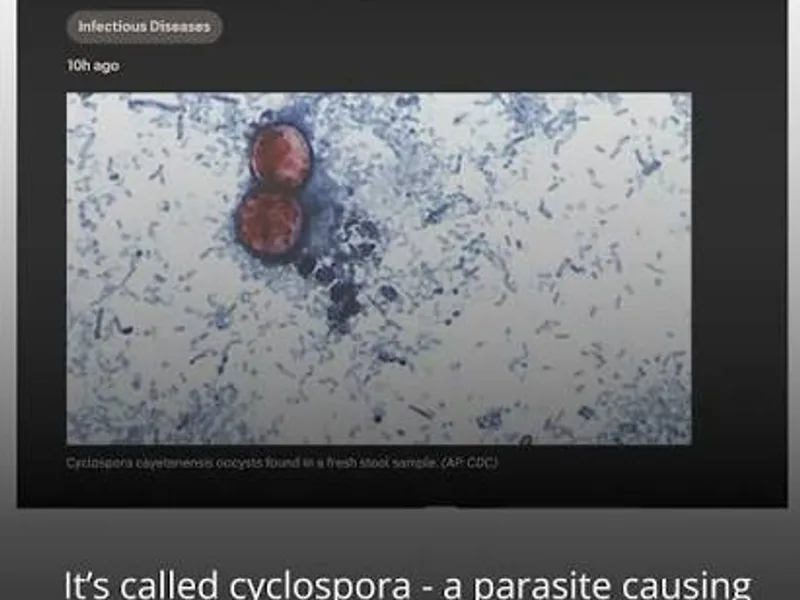
A Parasite Most People Have Never Heard Of
Ask someone to name a foodborne illness and they'll say salmonella, maybe E. coli. Cyclospora rarely makes the list. That's changing this year.
Cyclosporiasis is an intestinal infection caused by a microscopic parasite called Cyclospora cayetanensis. It spreads when people eat food or drink water contaminated with the parasite's cysts, usually through fresh produce that's been washed with contaminated water or handled by an infected person. It's not spread person-to-person the way a cold or flu is, which is a detail that gets lost in the panic.
What's Actually Happening in 2026
US health officials are tracking a multistate outbreak tied to iceberg lettuce, and it's a big one. As of early August, thousands of cases had been reported across 15 states, with hundreds of hospitalizations and, tragically, two deaths reported in Michigan. Investigators traced the contamination to iceberg lettuce processed by Taylor Farms de Mexico, and a good chunk of the reported cases involve people who ate at Taco Bell locations before the source was pinned down. A recall went out in mid-July.
Here's the uncomfortable part: cyclosporiasis is chronically under-tested. Most labs don't run for it unless a doctor specifically requests it. So the real case count is almost certainly higher than what's officially logged — that's not speculation, it's something CDC itself has said plainly in its outbreak updates.
Symptoms: Why This One Fools People
The textbook symptom is watery diarrhea, sometimes explosive, sometimes just relentless. But cyclosporiasis has an unusual signature: it can relapse. Someone feels better for a few days, then symptoms come roaring back. That remitting-relapsing pattern can stretch on for weeks if the infection goes untreated.
Other symptoms tend to ride along:
Loss of appetite and noticeable weight loss
Bloating and gas
Nausea, occasionally vomiting
Fatigue that feels disproportionate to the GI symptoms
Low-grade fever, though this is less common
Symptoms typically start about a week after exposure, though it can range from two days to two weeks. That lag is exactly why a lot of people never connect their symptoms back to a specific meal.
In clinical practice, this is often missed early because cyclosporiasis looks like a dozen other stomach bugs on the surface. A doctor who doesn't specifically think "could this be Cyclospora?" and order the right stool test can easily land on a generic diagnosis of gastroenteritis, hand out general advice, and send the patient home — while the parasite keeps cycling through relapses for another two or three weeks.
Did You Know?
Chemically sanitizing or disinfecting produce doesn't reliably kill Cyclospora. Washing under running water helps, but it isn't a guarantee — which is part of why outbreaks like this one keep tracing back to pre-washed, packaged salad greens rather than home kitchens.
Who's at Higher Risk
Anyone can get infected, but a few groups deserve extra caution:
Young children and older adults, who dehydrate faster from prolonged diarrhea.
Pregnant women, for whom dehydration and weight loss carry added risk.
People who are immunocompromised, who may have a harder time clearing the infection and can experience more prolonged illness.
If someone in one of these groups develops persistent watery diarrhea, it's not a "wait it out" situation.
Diagnosis and Treatment
Diagnosing cyclosporiasis isn't as simple as it sounds. It requires a stool sample examined under a microscope for the parasite's oocysts, and because shedding can be inconsistent day to day, doctors sometimes need more than one sample to catch it. Some labs use special staining techniques or PCR testing to improve accuracy.
Treatment usually involves a specific antibiotic combination, prescribed and dosed by a doctor based on the individual case — this isn't something to self-treat with leftover antibiotics at home. People with sulfa allergies need an alternative regimen, which is another reason a proper diagnosis matters instead of guessing. Alongside medication, staying hydrated and replacing lost electrolytes matters just as much as the prescription itself.
When to See a Doctor
Don't wait out watery diarrhea that lasts more than a few days, especially if it's accompanied by weight loss or fatigue that isn't improving. If you've recently eaten packaged iceberg lettuce, salad mixes, or ate at a restaurant using recalled produce, mention that specifically to whoever you see — it genuinely changes what a doctor will test for. A general physician is a reasonable first stop for adults with these symptoms, and cases that persist or affect the gut over a longer stretch are often better handled by a gastroenterologist. For children showing these symptoms, a pediatrician should be the first call, given how quickly kids can dehydrate.
You can browse and book verified doctors directly on Doctar if you need to find someone nearby.