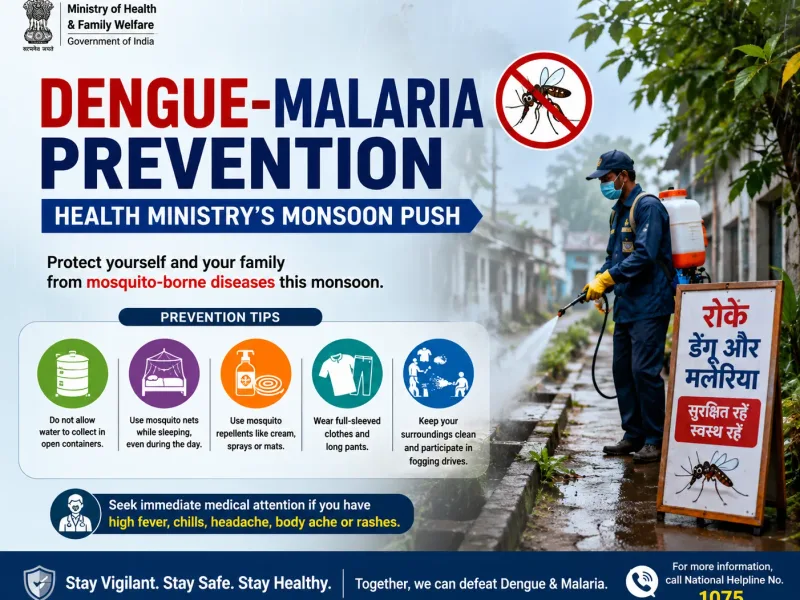
The rains are back, and so is the yearly scramble against mosquitoes. Every monsoon, hospitals across India brace for a rise in dengue and malaria cases, and this year the Union Ministry of Health and Family Welfare has moved early. Officials chaired a high-level review meeting to check how ready states are, and the message was blunt: don't wait for case numbers to spike before acting.
If you've lived through even one bad dengue season in your city, you know why this matters. A mild fever can turn serious within 48 hours. That window is exactly what this campaign is trying to protect.
What the Health Ministry Actually Announced
The review focused on a few practical things rather than vague promises. States were told to strengthen disease surveillance so outbreaks get flagged early, not after wards are already full. Hospitals were instructed to keep adequate stock of medicines, diagnostic kits, blood components, and beds ready — because dengue in particular can cause a sudden drop in platelet count that needs quick lab confirmation and, sometimes, transfusion support.
There was also a push for community-level action: clearing stagnant water, fogging drives, and involving resident welfare associations, schools, and local bodies in keeping neighbourhoods mosquito-free. None of this is new territory, but repeating it every year is the point — mosquito control fails the moment people get complacent.
On malaria specifically, India has actually made solid progress. Government data shows malaria cases and deaths have fallen sharply over the past decade, and a good number of districts have gone multiple years without reporting a single case. Dengue hasn't seen the same consistent decline, partly because there's no widely used vaccine here and partly because urban water storage habits keep giving the Aedes mosquito places to breed.
If you're tracking how your own city is doing this season, it's worth checking case trends and hospital preparedness reports through local health news coverage before assuming your area is unaffected.
Why Monsoon Makes Everything Worse
It isn't the rain itself that's the problem — it's what the rain leaves behind. Clogged drains, waterlogged construction sites, flowerpots, tyres, coolers left uncleaned for a week. All of it becomes a mosquito nursery. Add humidity and warmer nights, and you get faster mosquito breeding cycles.
In clinical practice, this is often missed because families assume "it's just monsoon fever" and self-medicate with paracetamol for three or four days before getting a blood test done. By the time they walk into a clinic or visit a hospital near them, the disease has often progressed further than it needed to.
This is especially risky for infants, elderly parents, and pregnant women, who tend to deteriorate faster. If you're expecting and running a fever this monsoon, don't sit on it — get seen by a gynecologist alongside your general physician, since dengue and malaria in pregnancy need closer monitoring.
Dengue or Malaria — How Do You Tell the Difference?
Honestly, at home, you often can't. Both start with sudden high fever, body aches, and fatigue. That's exactly why a blood test matters more than guesswork.
Dengue tends to bring severe joint and muscle pain (sometimes called "breakbone fever" for a reason), pain behind the eyes, skin rashes, and in some cases bleeding gums or easy bruising as platelet counts fall.
Malaria classically causes fever that comes in cycles — chills followed by high fever followed by sweating — along with headache and nausea. Not every case follows the textbook pattern, though, which is one more reason lab testing through a nearby diagnostic centre is worth the half-day it takes.
If a child in the house is unwell, don't guess. A visit to a pediatrician is far safer than assuming it'll pass. Persistent stomach upset alongside fever sometimes gets misread as a stomach bug too — if that happens, a gastroenterologist can rule out complications rather than everyone guessing at home.
Warning Signs That Need Same-Day Medical Attention
Most dengue and malaria cases recover fully with rest, fluids, and monitoring. But a few signs mean you shouldn't wait for a follow-up appointment:
Persistent vomiting or inability to keep fluids down
Bleeding from gums, nose, or in urine/stool
Severe abdominal pain
Difficulty breathing or unusual drowsiness
Fever that drops suddenly but the person feels worse, not better
That last one catches people off guard. A falling temperature isn't always good news in dengue — it can mark the start of the critical phase. If any of this shows up, get to a hospital or call for emergency services immediately rather than waiting till morning. If transport is a problem, look up an ambulance near you instead of driving yourself in a panic.
Practical Prevention Steps for This Monsoon
None of this is glamorous advice, but it works when done consistently.
Empty and scrub water containers, coolers, and plant trays at least once a week
Use mosquito nets and repellents, especially during early morning and dusk when Aedes mosquitoes are most active
Keep windows screened and drains clear near your home
Wear full sleeves if you're in a high-transmission area
Get tested early rather than waiting out a fever at home
If you or a family member has fever with any of the symptoms above, book a consultation with a general physician near you rather than relying on home remedies alone. For elderly patients or those who can't travel easily, a home visit doctor or a nurse for home care can help monitor recovery safely. Families managing recovery at home sometimes also need help with wound care, injections, or basic monitoring — a compounder or physiotherapist can support that phase once the acute illness has passed.
For medicine and ORS solutions during recovery, a pharmacy near you can deliver essentials quickly, and mosquito repellents or basic surgical supplies are also available through medical and surgical products online. If dietary guidance is needed during the recovery phase — dengue recovery, in particular, benefits from protein-rich, easy-to-digest food — a dietitian consultation can help. In rare cases where dengue affects the lungs or breathing, a pulmonologist review may be advised by your treating doctor, and skin-related complications like persistent rashes are best checked by a dermatologist.
The Takeaway
This campaign isn't really about a press release — it's about whether your neighbourhood drain gets cleared and whether your local hospital has enough platelet units on hand when a bad week hits. You can't control government logistics, but you can control the water sitting in your balcony cooler. Check it today. If fever shows up in your house this monsoon, don't wait it out — get a blood test through a diagnostic centre near you within the first 24 to 48 hours, and if symptoms worsen, don't hesitate to visit a hospital or call an ambulance.
For city-specific care, you can also browse verified doctors in Delhi, Mumbai, Kolkata, Bangalore, Chennai, and other cities across India — case trends and hospital load can vary quite a bit between regions during monsoon.
This article is for general health awareness and does not replace professional medical advice, diagnosis, or treatment. Always consult a qualified doctor for symptoms, testing, or treatment decisions. In a medical emergency, call 112 or 108 (India).
Editorial note: This article should be reviewed and attributed to a qualified medical professional (e.g., a general physician or public health expert) before publishing, in line with Google's E-E-A-T expectations for health content. You can browse verified doctors across specialties to find a reviewer, or check the platform's about page for editorial standards. For more monsoon health explainers, see related blog posts.
Related Reading & Care Options