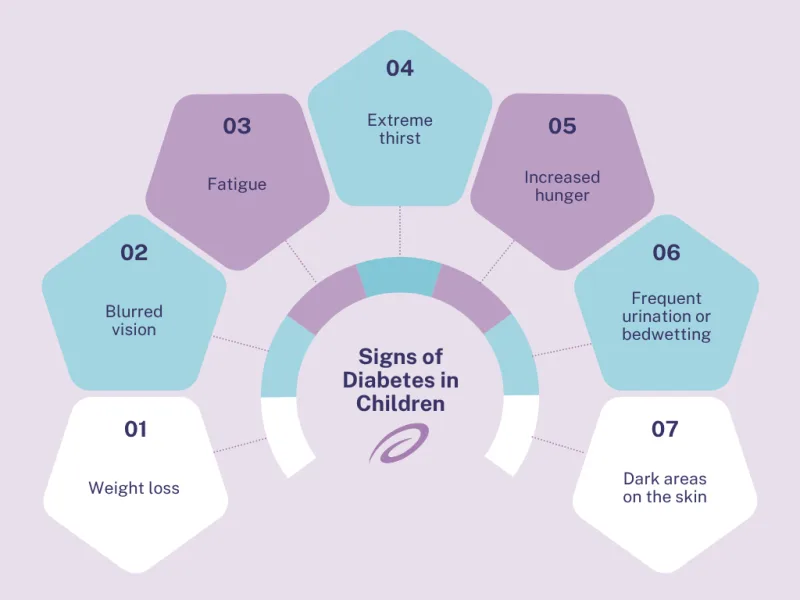
Diabetes in children is more common than many parents realize, and rates of both major types are climbing. <cite index="72-1">Both type 1 and type 2 diabetes affect kids and teens, and diabetes in young people is projected to keep increasing.</cite> Type 1 remains the more frequent diagnosis in youth overall, but type 2, once viewed as an adult disease, is now rising faster among children and teens than type 1.
[REVIEWER: add clinical insight here — e.g., what parents most often misunderstand when their child is newly diagnosed with either type]
Type 1 diabetes is an autoimmune condition, and it remains the diabetes type most associated with childhood. <cite index="72-1">Type 1 diabetes happens when the body doesn't produce enough insulin, the hormone that balances blood sugar levels, and there is currently no known way to prevent it.</cite>
The condition has become noticeably more common in young people over time. <cite index="73-1">Between 2001 and 2017, the estimated prevalence of type 1 diabetes in U.S. youth increased by 45%, with the largest increases seen among non-Hispanic white and non-Hispanic Black youth.</cite> Nationally, <cite index="78-1">the rate of new diagnosed cases of type 1 diabetes in youth rose by about 1.8% each year between 2002 and 2012.</cite>
<cite index="73-1">Risk factors for type 1 diabetes in children include genetics — particularly genes in the human leukocyte antigen (HLA) region — along with environmental factors such as certain viruses and early-life diet and growth patterns.</cite> None of these fully explain why any individual child develops the condition, and researchers continue to study the interplay between genetic and environmental triggers.
Type 2 diabetes in children was once considered unusual, but that's changed substantially. <cite index="73-1">Between 2001 and 2017, the prevalence of type 2 diabetes in U.S. youth increased by 95% — more than double the rise seen in type 1 — with the sharpest increases among non-Hispanic Black and Hispanic youth.</cite> <cite index="78-1">Nationally, new diagnosed cases of type 2 diabetes in youth increased by about 4.8% per year from 2002 to 2012, well outpacing the growth rate for type 1.</cite>
The connection to childhood weight is well documented. <cite index="73-1">The rise in type 2 diabetes among youth has paralleled increasing rates of overweight and obesity in children across North America and worldwide,</cite> and <cite index="73-1">data from national health surveys show that obesity among adolescents rose from about 17–18% in 1990–2000 to roughly 20–22% between 2017 and 2020.</cite> <cite index="73-1">The COVID-19 pandemic added further pressure, with increased screen time, higher stress levels, reduced physical activity, and less access to healthy food all contributing to accelerated weight gain in children during that period.</cite>
Family history plays a substantial role as well, beyond genetics alone. According to health reporting on CDC data, <cite index="71-1">over 75% of children with type 2 diabetes have a close relative with the condition, reflecting both inherited genetic risk and shared lifestyle habits within families.</cite>
[REVIEWER: add clinical insight here — e.g., how you discuss type 2 diabetes risk with families where obesity and diabetes both run in the household, without placing blame]
Why an Early Diagnosis Carries Extra Risk
Diabetes diagnosed in childhood isn't simply an earlier version of adult diabetes — it tends to carry a heavier long-term burden. <cite index="78-1">Because of their early age of onset and the longer duration of living with the disease, youth face a higher risk of developing diabetes-related complications at a younger age, which can reduce quality of life, shorten life expectancy, and raise healthcare costs over a lifetime.</cite>
This pattern holds even in comparisons within type 2 diabetes specifically. <cite index="73-1">Youth with type 2 diabetes often experience more severe complications than youth with type 1 diabetes of the same age and disease duration, and also more severe complications than adults who develop type 2 diabetes later in life.</cite>
What This Means Looking Ahead
Researchers have already modeled where these trends could lead. <cite index="72-1">Using data collected between 2002 and 2017, CDC-funded researchers built mathematical models projecting how diabetes cases in young people could continue increasing through 2060,</cite> underscoring that this isn't a short-term blip but a sustained shift in childhood disease patterns that public health officials are actively tracking.
Practical Takeaway
Diabetes in children isn't one story — type 1 remains an unpredictable autoimmune condition with no current prevention strategy, while type 2, though increasingly common in youth, is tied to modifiable factors like weight and activity, similar to type 2 in adults. Either way, an early diagnosis raises the stakes for long-term health, which makes early recognition, consistent care, and a strong relationship with a pediatric healthcare team especially important. Parents concerned about a child's symptoms or risk factors should talk to a pediatrician rather than wait for something to seem obviously wrong.
Frequently Asked Questions
Is type 1 or type 2 diabetes more common in children? Type 1 diabetes remains more common in children overall, but type 2 diabetes has been rising much faster among youth in recent decades, closely tracking increases in childhood obesity. Both types can occur at any age during childhood or adolescence.
Can type 2 diabetes in children be prevented? In many cases, yes. Since type 2 diabetes in children is strongly linked to obesity and lifestyle factors, maintaining a healthy weight and staying physically active can lower risk, particularly for children with a family history of the condition.
Why is childhood diabetes considered more serious than adult-onset diabetes? Children diagnosed with diabetes live with the condition longer, which raises their lifetime risk of complications and can shorten life expectancy compared to people diagnosed as adults. Youth with type 2 diabetes in particular tend to develop complications earlier and more severely than adults with the same condition.
What role does family history play in childhood type 2 diabetes? It plays a significant role. The large majority of children diagnosed with type 2 diabetes have a close relative with the condition, reflecting both inherited genetic risk and shared household habits around diet and activity.
Is childhood diabetes becoming more common? Yes. Rates of both type 1 and type 2 diabetes in youth have risen substantially over the past two decades, and researchers project the trend will continue for years to come, particularly for type 2 diabetes linked to rising childhood obesity.