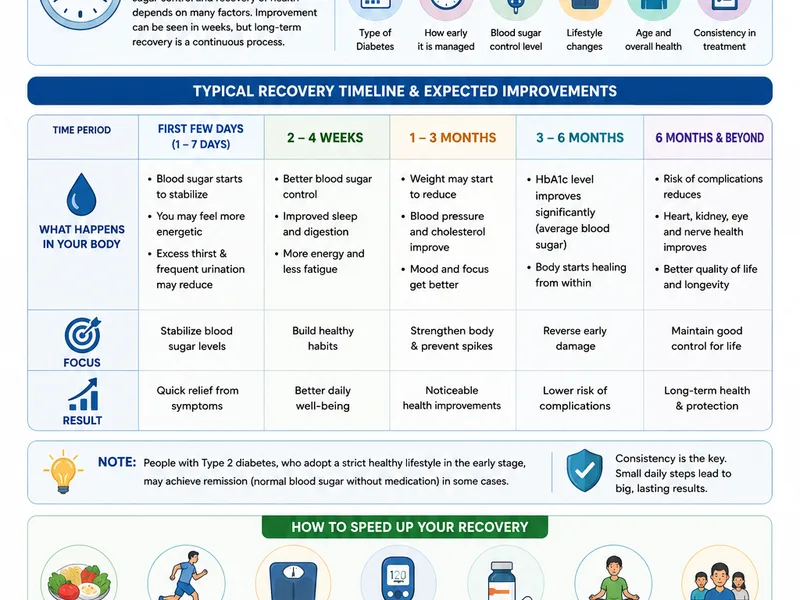
Diabetes recovery time is often extended because high blood sugar disrupts several systems the body relies on to heal: blood flow, immune response, and inflammation control. <cite index="120-1">Slow wound healing is common in people with diabetes due to the damage that chronic high blood sugar causes to nerves and blood vessels, and untreated wounds can lead to infections, ulcers, or in severe cases, amputation.</cite>
[REVIEWER: add clinical insight here — e.g., how you counsel a patient before elective surgery about realistic healing timelines and pre-op blood sugar goals]
What Actually Slows Healing in Diabetes
Healing is a multi-stage process, and diabetes interferes with more than one of those stages at once. <cite index="124-1">Normal wound healing progresses through clotting, an inflammatory phase where white blood cells fight bacteria and clear debris, a rebuilding phase where new tissue and blood vessels form, and a final phase where the skin strengthens and closes. In diabetes, wounds frequently stay stuck in the inflammatory phase for weeks or even months instead of progressing normally, which is what turns an ordinary wound into a chronic one.</cite>
Poor circulation is one of the central mechanisms behind this. <cite index="120-1">Elevated blood sugar can narrow and harden blood vessels over time, reducing blood flow, especially to the limbs</cite> — which matters because healing tissue depends on a steady supply of oxygen and nutrients carried by blood.
The immune system is affected too. <cite index="124-1">High blood sugar weakens white blood cells, making it harder for the body to fight infection,</cite> and <cite index="120-1">bacteria thrive in high-sugar environments, which can help infections develop more quickly and severely once a wound is present.</cite>
What the Research Shows About Recovery Time
The difference isn't just theoretical — it shows up clearly in surgical outcomes. <cite index="118-1">In a study comparing 50 diabetic and 50 nondiabetic patients after elective abdominal surgery, surgical site infections occurred in 30% of diabetic patients compared to 10% of nondiabetic patients, and delayed healing — taking more than 14 days to recover — occurred in 40% of diabetic patients versus 12% of nondiabetic patients. Wound dehiscence, where a surgical wound reopens, was also more common in the diabetic group.</cite> <cite index="119-1">On average, healing duration was notably longer for diabetic patients (about 18 days) compared to nondiabetic patients (about 12.5 days).</cite>
The researchers behind that study were direct about the takeaway: <cite index="119-1">diabetic patients experienced worse postoperative wound healing after abdominal surgery, and glycemic control along with careful perioperative planning may help improve surgical outcomes.</cite>
Foot Ulcers: A Recovery Concern of Their Own
Diabetic foot ulcers deserve their own mention, since they combine several of the mechanisms above in one especially vulnerable area. <cite index="121-1">A diabetic foot ulcer is the most common type of wound people with diabetes develop, typically occurring on the bottom of the foot, and peripheral neuropathy (nerve damage) along with peripheral arterial disease (restricted blood flow) are the biggest contributors.</cite> Reduced sensation from neuropathy is part of what makes these wounds risky — a minor injury can go unnoticed and worsen for some time before it's caught, which stretches recovery time considerably compared to a wound that's identified and treated right away.
[REVIEWER: add clinical insight here — e.g., how often you recommend patients with neuropathy do foot self-checks, or warning signs that mean a wound needs urgent attention rather than routine follow-up]
What Helps Close the Healing Gap
Blood sugar control is the single factor most consistently tied to better healing outcomes in diabetes. Keeping blood sugar within a doctor-recommended target range supports healthier blood vessel function and a stronger immune response, both of which directly affect how quickly a wound or surgical site can heal. Regular self-checks of any wound, particularly on the feet, and prompt attention to anything that isn't healing as expected, can prevent a manageable wound from progressing into a more serious, slower-healing complication.
For anyone with diabetes facing planned surgery, this is worth raising directly with a surgical and diabetes care team beforehand — glycemic management leading into a procedure is one of the more actionable ways to influence recovery time.
Practical Takeaway
Longer recovery time in diabetes isn't a matter of chance — it traces back to specific, well-documented effects of high blood sugar on blood vessels, immune function, and inflammation. Surgical wounds, everyday cuts, and especially foot ulcers all tend to take longer to heal and carry a higher risk of complications without good blood sugar control. The most effective lever available is consistent glucose management, ideally addressed proactively before a planned procedure rather than only after a wound isn't healing as expected.
Frequently Asked Questions
Why do wounds heal slower in people with diabetes? High blood sugar damages blood vessels and reduces blood flow, weakens immune cell function, and can trap wounds in a prolonged inflammatory phase instead of allowing normal healing to progress. Together, these effects slow every stage of the healing process.
How much longer does surgical recovery take with diabetes? Research comparing surgical patients found that diabetic patients had notably longer average healing times than nondiabetic patients after the same procedure, along with higher rates of infection and wound complications. Good blood sugar control before and after surgery can help narrow that gap.
Why are foot ulcers especially concerning for people with diabetes? Diabetic foot ulcers combine reduced blood flow with nerve damage that can mask early symptoms, meaning a minor injury can go unnoticed and worsen before treatment begins. This combination is a major reason foot ulcers take longer to heal and carry higher complication risk than other wounds.
Can better blood sugar control speed up healing? Yes. Keeping blood sugar within a target range supports healthier blood vessels and stronger immune function, both of which are directly tied to how efficiently the body can heal wounds or recover from surgery.
Should I tell my surgeon I have diabetes before a planned procedure? Yes, always. Diabetes affects healing and infection risk enough that a surgical team will often adjust pre- and post-operative care, including blood sugar targets, specifically to support better recovery.