Diabetes mellitus is a group of metabolic conditions characterised by chronically elevated blood glucose (blood sugar). The cause differs by type, but the core problem is the same: glucose builds up in the bloodstream instead of entering cells for energy, because insulin — the hormone that facilitates this transfer — is either absent, insufficient, or ineffective.
The WHO recognises three main types relevant to most patients:
Type 1 diabetes: An autoimmune condition in which the body destroys its own insulin-producing beta cells in the pancreas. Onset is typically in childhood or young adulthood, and insulin treatment is always required.
Type 2 diabetes: The most common form globally, accounting for around 90% of all diabetes cases. The body produces insulin but cells become resistant to its effects, and production may also decline over time. Strongly associated with obesity, physical inactivity, and family history.
Gestational diabetes: High blood sugar that develops during pregnancy in women who did not have diabetes before. Usually resolves after delivery but significantly increases the mother's risk of developing type 2 diabetes later in life.
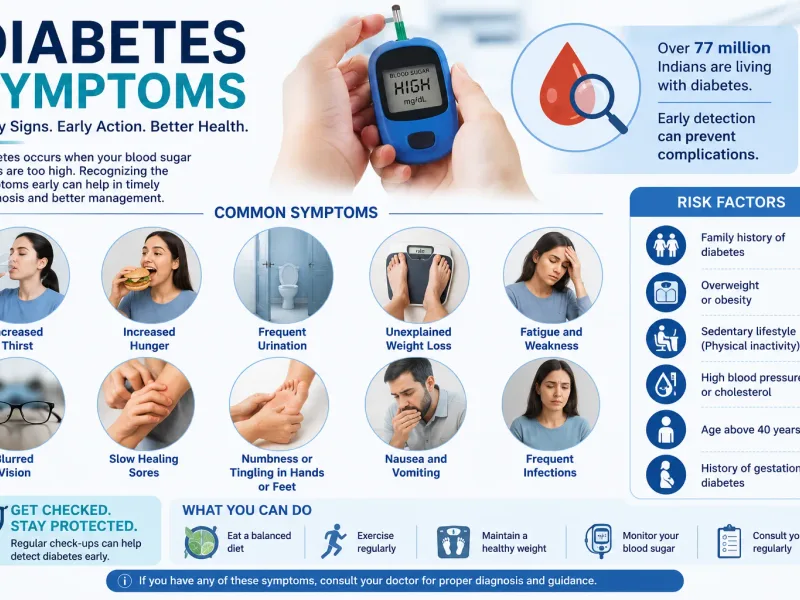
The classic symptoms of diabetes — recognised across all types — arise from the body's inability to use glucose properly and its attempts to compensate.
Frequent Urination (Polyuria)
When blood glucose rises above the kidney's reabsorption threshold, glucose spills into the urine and pulls water with it. The result is large volumes of urine, often throughout the night (nocturia). This is frequently the first symptom patients notice — and frequently the one they dismiss as a bladder issue.
Excessive Thirst (Polydipsia)
Fluid loss from frequent urination triggers intense thirst. Drinking more fluids then increases urination further. This cycle — thirst, drinking, urination — is a hallmark presentation of uncontrolled diabetes across both type 1 and type 2.
Unexplained Weight Loss
More common in type 1 than type 2, significant weight loss despite normal or increased eating occurs because the body cannot use glucose for fuel and begins breaking down fat and muscle for energy instead. In a young person, rapid unexplained weight loss alongside thirst and frequent urination requires urgent medical evaluation.
Fatigue
Cells starved of glucose — even when blood glucose is high — produce fatigue that does not resolve with rest. This is a non-specific symptom, but persistent, unexplained tiredness in someone with other risk factors warrants a blood sugar check.
Blurred Vision
High blood glucose draws fluid from the lenses of the eyes, changing their shape and affecting focus. This blurring is usually reversible with treatment but signals that blood sugar has been significantly elevated. It is distinct from — and should not be confused with — diabetic retinopathy, which is a long-term complication of sustained uncontrolled diabetes and is a leading cause of blindness in working-age adults, according to the WHO.
Slow-Healing Wounds and Frequent Infections
Elevated blood glucose impairs immune function and damages small blood vessels, both of which slow the body's ability to repair tissue. Cuts and sores that take unusually long to heal — particularly on the feet — and recurring skin, urinary tract, or fungal infections are warning signs that deserve investigation.
Tingling or Numbness in Hands and Feet
Peripheral neuropathy — nerve damage caused by sustained high blood sugar — produces tingling, burning, or numbness, typically beginning in the feet and moving upward. In established type 2 diabetes, neuropathy is one of the most common complications; its presence at diagnosis suggests blood sugar has been elevated for a significant period.
How Type 1 and Type 2 Symptoms Differ
The distinction matters because the urgency and management differ substantially.
Type 1 diabetes typically presents acutely — over days to weeks — with pronounced thirst, rapid weight loss, frequent urination, and fatigue. Without prompt diagnosis and insulin treatment, it can progress to diabetic ketoacidosis (DKA), a life-threatening emergency in which the blood becomes dangerously acidic. DKA symptoms include nausea, vomiting, abdominal pain, fruity-smelling breath, and confusion. This is a medical emergency requiring immediate hospital care.
Type 2 diabetes usually develops slowly, often without clear symptoms for years. Many people are diagnosed only through a routine blood test or when complications — eye disease, kidney problems, a non-healing wound — first bring them to medical attention. The Indian Council of Medical Research (ICMR) estimates that approximately 57% of people with diabetes in India are undiagnosed.
Gestational diabetes typically produces no noticeable symptoms and is detected through routine screening between 24 and 28 weeks of pregnancy. The WHO and ICMR both recommend universal screening for gestational diabetes in Indian pregnancies given the population's elevated risk.
[REVIEWER: add clinical insight here — e.g., the most common presentation you see in your practice, how you approach patients who come in with non-specific symptoms like fatigue or blurred vision, and what prompts you to test for diabetes proactively]
Who Is at Risk — and Who Should Be Tested
The International Diabetes Federation (IDF) Diabetes Atlas (10th edition, 2021) ranked India second globally for diabetes prevalence, with 74.2 million adults affected at that time. Updated ICMR data published in The Lancet Diabetes & Endocrinology (2023) places the figure at 101 million — with a further 136 million in the prediabetes range.
Risk factors for type 2 diabetes include:
Family history of diabetes (first-degree relative)
Age above 45 — though type 2 is increasingly diagnosed in younger adults and adolescents in India
Overweight or obesity, particularly central obesity (excess abdominal fat)
Physical inactivity
History of gestational diabetes or polycystic ovary syndrome (PCOS)
High blood pressure or abnormal cholesterol levels
Belonging to South Asian ethnicity — Indians develop diabetes at lower BMI thresholds than Western populations, a finding extensively documented in the literature
The ICMR recommends that adults above 30 with any one of these risk factors be screened for diabetes, even without symptoms. For those without risk factors, screening is recommended from age 45.
How Diabetes Is Diagnosed
Diabetes is confirmed by blood tests, not symptoms. The WHO and ICMR recognise the following diagnostic criteria:
Fasting plasma glucose: ≥ 126 mg/dL (7.0 mmol/L) on two separate occasions
HbA1c (glycated haemoglobin): ≥ 6.5% — reflects average blood glucose over the preceding 2–3 months
Random plasma glucose: ≥ 200 mg/dL (11.1 mmol/L) with symptoms
Oral glucose tolerance test (OGTT): 2-hour glucose ≥ 200 mg/dL
Prediabetes — the stage before type 2 diabetes, when blood sugar is elevated but not yet in the diabetic range — is defined by fasting glucose between 100–125 mg/dL or HbA1c between 5.7–6.4%. Prediabetes is reversible with lifestyle modification in many cases.
No diagnosis should be made or excluded on the basis of symptoms alone. A blood test is required.
[REVIEWER: add clinical insight here — e.g., how you explain the HbA1c result to patients who are unfamiliar with it, which test you prefer in practice and why, and how you approach a patient newly diagnosed with prediabetes]
Complications of Undiagnosed or Poorly Managed Diabetes
The complications of sustained uncontrolled blood glucose affect virtually every organ system:
Eyes: Diabetic retinopathy — the leading cause of preventable blindness in working-age adults globally (WHO)
Kidneys: Diabetic nephropathy — the leading cause of chronic kidney disease and dialysis-dependent kidney failure in India
Nerves: Peripheral and autonomic neuropathy
Heart and blood vessels: People with diabetes have two to four times the risk of cardiovascular disease compared to those without, according to the American Diabetes Association (ADA)
Feet: Diabetic foot ulcers and lower limb amputation — largely preventable with regular foot examination and good glucose control
None of these complications are inevitable. Early diagnosis and sustained management — blood sugar, blood pressure, and cholesterol — dramatically reduces the risk of all of them.
FAQ
Q: What are the first signs of diabetes? The earliest noticeable signs are usually frequent urination, excessive thirst, and unexplained fatigue. In type 1, these appear suddenly and worsen quickly. In type 2, they develop gradually and may be mild enough to dismiss for months or years. Blurred vision, slow-healing wounds, and recurring infections are also early indicators that warrant a blood test.
Q: Can you have diabetes without any symptoms? Yes — and this is extremely common with type 2 diabetes. The ICMR estimates that over half of people with diabetes in India are undiagnosed, most of whom have no obvious symptoms. Type 2 diabetes can be present for years before symptoms appear. Routine screening based on age and risk factors is the only reliable way to detect it early.
Q: What blood sugar level indicates diabetes? A fasting blood glucose of 126 mg/dL or above on two separate tests confirms diabetes. An HbA1c of 6.5% or above is also diagnostic. A random blood glucose of 200 mg/dL or above in a symptomatic person is sufficient for diagnosis. Values below these thresholds but above normal indicate prediabetes, which requires monitoring and lifestyle intervention.
Q: Is tingling in the feet a sign of diabetes? Tingling, numbness, or burning in the feet — known as peripheral neuropathy — can be a sign of diabetes, particularly if blood sugar has been elevated for a prolonged period. It can also result from other causes, including vitamin B12 deficiency, which is common in India. A doctor should evaluate persistent tingling in the feet with a blood test panel that includes both glucose and B12.
Q: What is the difference between prediabetes and diabetes? Prediabetes means blood sugar is above normal but below the threshold for a diabetes diagnosis — fasting glucose between 100–125 mg/dL, or HbA1c between 5.7–6.4%. It carries real health risks but is often reversible through weight loss, dietary changes, and physical activity. Without intervention, prediabetes progresses to type 2 diabetes in a significant proportion of people within five to ten years.