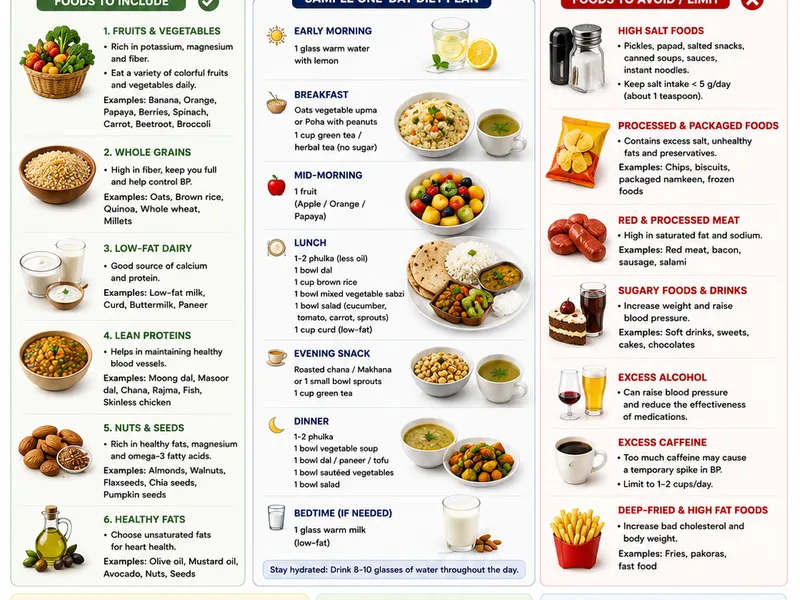
The leading diet plan for hypertension is DASH — Dietary Approaches to Stop Hypertension — a National Heart, Lung, and Blood Institute (NHLBI)-developed eating pattern built around vegetables, fruits, whole grains, and lean proteins, with sodium intake kept low. It requires no special or hard-to-find foods, just a shift in the proportions of what's already on the plate.
Here's what the plan actually recommends, and what the evidence says it can do for blood pressure.
DASH is based on research studies sponsored by the NHLBI showing that this eating pattern lowers high blood pressure and improves cholesterol levels, which in turn reduces cardiovascular risk. It's rich in potassium, calcium, and magnesium — minerals linked to healthy blood pressure — while being relatively low in saturated fat, sodium, and added sugar.
The diet emphasizes:
Vegetables, fruits, and whole grains as the foundation
Fat-free or low-fat dairy products
Fish and poultry (both generally lower in saturated fat)
Beans and nuts
Vegetable oils
And it limits:
Fatty meats, such as beef, pork, and lamb
Full-fat dairy products
Tropical oils, like coconut and palm oil
Sweets and sugar-sweetened beverages
[REVIEWER: add clinical insight here — e.g., how you typically introduce DASH to a newly diagnosed patient, and common misconceptions you address.]
How Many Servings Per Day
DASH doesn't use strict rules so much as daily and weekly serving targets, which scale up or down based on individual calorie needs. For a 2,000-calorie-a-day diet, NHLBI's example targets look roughly like this:
Grains: about 6 servings a day (choosing whole grains most of the time)
Vegetables: 4–5 servings a day
Fruits: 4–5 servings a day
Fat-free or low-fat dairy: 2–3 servings a day
Lean meat, poultry, and fish: 6 or fewer servings a day
Nuts, seeds, and legumes: about 4 servings a week
Fats and oils: 2–3 servings a day
Sweets and added sugars: 5 or fewer servings a week
These are general reference points from a 2,000-calorie plan, not a fixed prescription — actual daily needs vary by activity level, weight goals, and other individual factors, which is why a doctor or dietitian can help tailor exact serving counts.
The Sodium Target
Sodium reduction is a central part of DASH. The standard DASH plan targets 2,300 mg of sodium a day, roughly the amount in one teaspoon of table salt. A lower-sodium version of the plan — 1,500 mg a day — is associated with an even greater drop in blood pressure, and research shows the added sodium reduction lowers systolic blood pressure by roughly 2 to 7 mm Hg beyond what 2,300 mg alone achieves.
Combining DASH's food choices with lower sodium intake produces a bigger blood pressure reduction than following either approach on its own.
How Effective Is It, Really?
DASH is described in clinical literature as one of the most practical, evidence-based nutrition strategies available for managing hypertension, largely because its structure — specific servings per food group — makes it relatively easy to prescribe, follow, and track compared with vaguer dietary advice. It's also been studied in populations with related conditions, including obesity and diabetes, which frequently occur alongside high blood pressure.
[REVIEWER: add clinical insight here — e.g., what kind of blood pressure changes you typically see in patients who adopt DASH consistently versus partially.]
Getting Started Without Overhauling Everything at Once
A full DASH-style shift can feel like a lot at first. A few practical starting points:
Add before you subtract. Adding an extra vegetable or piece of fruit to meals already underway is often easier to sustain than cutting foods out immediately.
Read labels for sodium. Much of the sodium in a typical diet comes from processed and packaged foods rather than the salt shaker, so labels are often more revealing than expected.
Swap fats gradually. Moving from fatty meats and full-fat dairy toward fish, poultry, beans, and low-fat dairy can happen meal by meal rather than all at once.
Season with herbs and spices. This helps ease the adjustment period as the palate gets used to less added salt.
Who Should Talk to a Provider First
DASH is generally considered a safe, heart-healthy eating pattern for most adults, but anyone with kidney disease, diabetes, or other conditions affecting how the body handles potassium, protein, or sugar should review the plan with a doctor or registered dietitian before starting, since some DASH-recommended foods may need individual adjustment.
Frequently Asked Questions
What is the best diet plan for high blood pressure? DASH (Dietary Approaches to Stop Hypertension) is the diet plan most consistently recommended by health authorities for high blood pressure. It's built around vegetables, fruits, whole grains, and lean proteins, with reduced sodium, and is supported by NHLBI-sponsored research.
How much sodium should I eat on the DASH diet? The standard DASH plan targets 2,300 mg of sodium per day, while a lower-sodium version targets 1,500 mg per day for an even greater blood pressure benefit. Your appropriate target may vary, so it's worth discussing with a healthcare provider.
How long does it take for a diet to lower blood pressure? Blood pressure changes from dietary shifts can begin appearing within a few weeks of consistent changes, though reaching steady, dependable control from diet alone often takes longer and depends on the individual.
Can the DASH diet replace blood pressure medication? For some people with mild elevations, DASH combined with other lifestyle changes may be enough to reach a healthy blood pressure range. For others, it's used alongside medication rather than as a replacement, and any medication changes should be made with a doctor's guidance.
Is DASH the same as a low-sodium diet? Not exactly. DASH includes a sodium reduction component, but it's a broader eating pattern focused on food groups, nutrient balance, and overall diet quality — not sodium restriction alone.
The Takeaway
DASH isn't a restrictive diet built around foods you can't have — it's a serving-count shift toward more vegetables, fruit, whole grains, and lean protein, with sodium dialed back. Start with one or two changes that feel sustainable, track your numbers with home monitoring, and loop in a doctor or dietitian if you want the plan tailored to your specific calorie needs or existing health conditions.