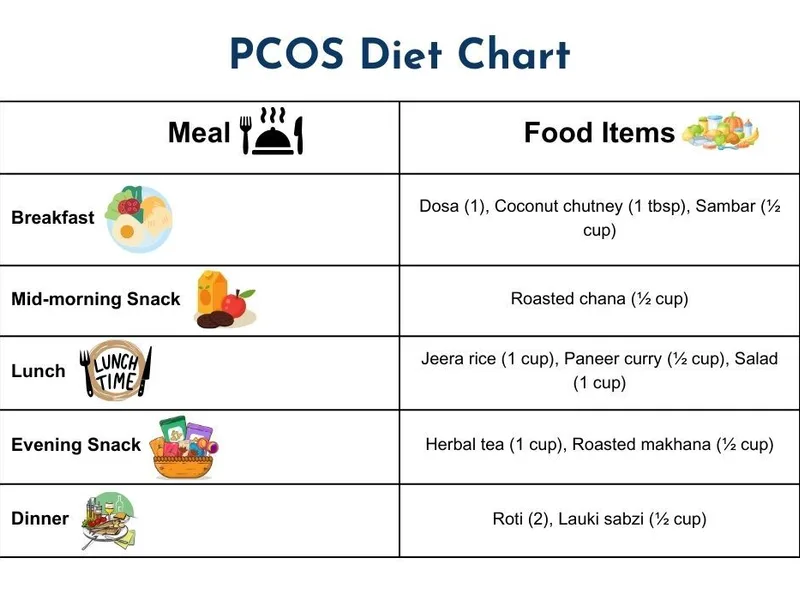
Why Diet Affects PCOS Symptoms at All
Most PCOS symptoms trace back to two interconnected problems: insulin resistance and elevated androgens. Diet directly influences both — and understanding how makes the dietary recommendations far more intuitive than a list of foods to eat or avoid.
Carbohydrates raise blood glucose more than any other macronutrient, which triggers insulin release. In PCOS, that insulin spike tends to push the ovaries toward producing more androgens — male hormones including testosterone. This is the mechanism behind irregular periods, excess hair growth, acne, and the chronic difficulty many women with PCOS have with weight management around the abdomen.
Eating in a way that blunts blood sugar and insulin spikes does not reverse the condition, but it does interrupt one of its core hormonal drivers. That is a clinically meaningful effect — and it is why diet, alongside physical activity, is a first-line recommendation from every major endocrinology guideline for PCOS management.
[REVIEWER: add clinical insight here — e.g., how you explain the insulin-androgen connection to patients who are sceptical that dietary changes could make a meaningful difference to their hormone levels, and what response you most commonly encounter]
Among all dietary patterns studied for PCOS, the Mediterranean diet has the most consistent and robust research support. It is built around vegetables, fruits, nuts, legumes, unprocessed grains, and extra virgin olive oil, with moderate fish and fermented dairy, and low intake of red meat, processed cereals, and sweets.
The benefits appear to extend beyond weight loss alone. Observational studies have found that greater adherence to a Mediterranean diet is associated with lower hyperandrogenism — elevated androgen levels — and improved insulin sensitivity. A randomised trial found that a moderate-carbohydrate Mediterranean-style diet outperformed a standard calorie-restricted, low-fat diet for reducing weight, waist circumference, fasting blood glucose, insulin resistance, and testosterone levels.
Part of the Mediterranean diet's practical advantage is sustainability. Because the pattern draws from a wide range of whole foods rather than eliminating entire categories, it is easier to maintain long-term than more restrictive approaches — and consistency, in dietary change for PCOS, matters considerably more than short-term perfection.
Low-Glycaemic- Eating: The Mechanism in Practice
A low-glycaemic-(low-GI) approach prioritises carbohydrates that raise blood sugar more slowly — and it overlaps heavily with Mediterranean eating. It is worth understanding on its own because the clinical trials have studied it specifically.
A randomised controlled trial found that a high-protein, low-glycaemic-load diet produced significant improvements in insulin sensitivity and body composition in women with PCOS. In a head-to-head comparison, menstrual regularity improved significantly more in women following a low-GI diet compared with those given conventional dietary advice — a finding that directly addresses one of the symptoms most disruptive to daily life for many women with PCOS.
In practice, low-GI eating means choosing whole grains over refined ones, pairing carbohydrates with protein or healthy fat to slow digestion, and prioritising high-fibre foods that blunt the blood sugar response. It does not mean eliminating carbohydrates.
The DASH Diet: A Well-Evidenced Alternative
The DASH diet — originally developed to manage high blood pressure — is increasingly recommended alongside the Mediterranean diet for PCOS, and for similar reasons. Both patterns limit saturated fats, processed meats, and refined sugar, addressing the chronic low-grade inflammation that is now recognised as a feature of PCOS independent of weight.
Research does not show strong evidence that one pattern outperforms the other specifically for PCOS outcomes. The more practically useful conclusion: the better diet is often whichever one a person can realistically maintain given their food culture, preferences, and lifestyle. A Mediterranean diet that someone follows consistently will outperform a theoretically superior plan that is abandoned within weeks.
Foods to Prioritise
Across the PCOS dietary research, several food categories appear consistently as beneficial:
Leafy greens and non-starchy vegetables — spinach, kale, methi (fenugreek), and bitter gourd are frequently recommended as part of an anti-inflammatory eating pattern, and are well-suited to Indian dietary traditions.
Lower-sugar fruits — berries, citrus, and guava in particular, which provide fibre and antioxidants without a large blood sugar impact.
Legumes and whole grains — dals, rajma, chana, brown rice, and oats are high in fibre and plant protein, supporting more stable blood sugar across meals.
Fatty fish — a Mediterranean-diet staple providing anti-inflammatory omega-3 fatty acids; mackerel, sardines, and rohu are accessible options.
Nuts, seeds, and olive oil or cold-pressed mustard oil — sources of unsaturated fat linked to the anti-inflammatory effects seen in Mediterranean-style eating.
Foods to Limit
The research is fairly consistent on what tends to work against PCOS management:
Added sugar and sweetened drinks — soda, packaged fruit juices, sugary tea and coffee, sweetened lassi, ice cream, pastries, and candy. These cause the fastest, sharpest blood sugar spikes and are the clearest category in the evidence.
Refined grains — maida (refined flour), white rice consumed in large quantities, white bread, and processed breakfast cereals that digest rapidly and elevate insulin demand.
Heavily processed and fried foods — packaged snacks, fried street food eaten regularly, and ultra-processed ready meals linked to systemic inflammation.
Processed meats — bacon, sausage, and deli meats, flagged consistently in Mediterranean and DASH guidance for their pro-inflammatory effects.
None of this means these foods are strictly forbidden. The evidence supports a pattern of mostly limiting them rather than eliminating them entirely — a distinction that matters for long-term sustainability and for avoiding the disordered eating patterns that can develop around overly rigid dietary rules.
What About Weight Loss?
Weight loss is not the only goal of a PCOS diet — but it remains one of the most evidence-backed interventions available. Research consistently shows that even modest weight loss of 5–10% of body weight can meaningfully improve insulin sensitivity and menstrual regularity in women with PCOS, largely because adipose (fat) tissue — particularly visceral abdominal fat — actively contributes to insulin resistance and androgen production.
The mechanism matters more than the calorie deficit. Low-GI and Mediterranean approaches tend to outperform generic calorie-cutting precisely because they improve insulin sensitivity through dietary composition, not just energy restriction. For women with PCOS who are not overweight — a significant minority — dietary focus shifts fully toward glycaemic load and anti-inflammatory foods rather than weight reduction.
What About Keto and Intermittent Fasting?
Both are frequently discussed online for PCOS and deserve a direct answer.
Ketogenic diet: Very low carbohydrate intake can improve insulin sensitivity in some women with PCOS, and a small number of trials have shown hormonal improvements. However, the evidence base for keto specifically in PCOS is considerably smaller and less consistent than for Mediterranean or low-GI patterns. It is also nutritionally restrictive in ways that can be difficult to sustain, and may not be appropriate for women trying to conceive. Worth discussing with a doctor or dietitian before starting — not a first-line recommendation based on current evidence.
Intermittent fasting: Limited PCOS-specific research exists. Some evidence suggests time-restricted eating may improve insulin sensitivity, but trial quality and sample sizes are insufficient for firm recommendations. For women with a history of disordered eating, fasting-based approaches carry additional risk.
[REVIEWER: add clinical insight here — e.g., how you respond when patients ask specifically about keto or intermittent fasting for PCOS, what concerns you raise, and whether you have seen clinical results with either approach in your practice]
FAQ
Q: What is the best diet for PCOS? No single diet is officially "best," but Mediterranean-style and low-glycaemic-eating patterns have the strongest and most consistent research support. Both focus on whole foods, fibre, healthy fats, and lean protein, while limiting refined carbohydrates and added sugar. The most effective diet is ultimately the one a person can maintain consistently over time.
Q: What foods should I avoid with PCOS? The clearest evidence points to limiting sugary drinks and sweets, refined grains such as white bread and maida-based foods, heavily fried and ultra-processed foods, and processed meats. All four worsen insulin resistance and inflammation — the two drivers underlying most PCOS symptoms. Occasional consumption is generally less concerning than making these dietary staples.
Q: Does a keto diet help with PCOS? Low-carbohydrate approaches can improve insulin sensitivity for some women, and a small number of PCOS trials have shown hormonal improvements with ketogenic eating. However, the evidence is considerably thinner than for Mediterranean or low-GI patterns, and the diet's restrictive nature makes long-term adherence difficult. Discuss with a doctor or registered dietitian before starting, particularly if trying to conceive.
Q: How much weight loss actually improves PCOS? Research consistently shows that losing approximately 5–10% of body weight improves insulin sensitivity, lowers androgen levels, and often restores more regular menstrual cycles in women with overweight or obesity. The mechanism matters as much as the amount — improvements in dietary quality drive hormonal changes independent of weight loss in some studies.
Q: Is PCOS still the correct medical term? As of May 2026, an international consensus published in The Lancet officially renamed the condition polyendocrine metabolic ovarian syndrome (PMOS), reflecting its multisystem nature. "PCOS" remains widely used and recognised — most patients, doctors, and published resources have not yet transitioned. Expect to see PMOS increasingly in clinical and research settings over coming years.