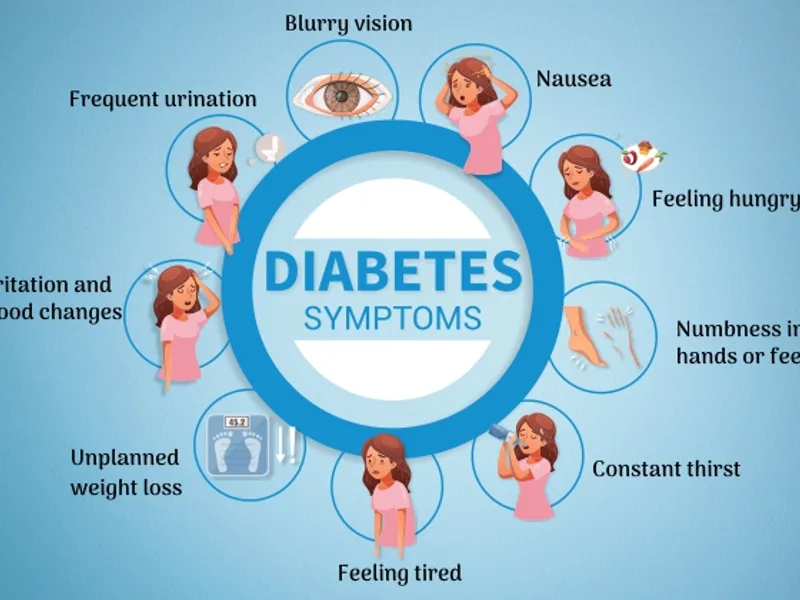
Diabetes usually announces itself through a small cluster of symptoms: needing to urinate often, feeling unusually thirsty or hungry, losing weight without trying, and feeling worn out. These symptoms show up in both type 1 and type 2 diabetes, though the speed at which they appear differs sharply between the two.
That difference in timing matters more than people realize. Type 1 symptoms can escalate within weeks. Type 2 symptoms can take years to become noticeable — which is exactly why so many cases go undiagnosed.
[REVIEWER: add clinical insight here — e.g., what you typically hear from patients describing their first symptoms, or how often early signs get dismissed as unrelated issues]
Every symptom traces back to one root problem: sugar building up in the blood instead of moving into cells. Normally, the pancreas releases insulin, which acts like a key, letting blood sugar into cells to be used as energy. In <cite index="3-1">type 1 diabetes, an autoimmune reaction stops the body from making insulin.</cite> In <cite index="6-1">type 2 diabetes, the body's cells stop responding normally to insulin, even when it's present.</cite>
Either way, the result is the same: glucose stays in the bloodstream instead of fueling the body, and that excess sugar is what drives the classic symptoms.
According to the <cite index="2-1">CDC, symptoms common to both type 1 and type 2 diabetes include frequent urination, increased thirst and hunger, unintentional weight loss, fatigue, irritability, blurry vision, and recurring urinary tract or yeast infections.</cite>
A few of these deserve a closer look:
Frequent urination and thirst. When there's too much sugar in the blood, the kidneys work overtime trying to filter and absorb it. When they can't keep up, the excess sugar is flushed out through urine, pulling fluids from tissues along with it — which triggers constant thirst.
Unexplained weight loss. Without enough working insulin, the body can't pull energy from glucose, so it starts breaking down muscle and fat for fuel instead. This can cause noticeable weight loss even without any change in diet.
Blurry vision. High blood sugar can pull fluid from the lenses of the eyes, affecting their ability to focus. This tends to resolve once blood sugar is brought under control.
Type 1 Diabetes: Symptoms to Watch For
<cite index="2-1">In its early stages, type 1 diabetes often causes no symptoms at all. As the disease progresses, symptoms can appear suddenly — over just a few weeks or months — and can become severe quickly, sometimes including stomach pain and diabetic ketoacidosis (DKA), a dangerous buildup of acids in the blood.</cite>
<cite index="8-1">Type 1 diabetes is less common than type 2, accounting for roughly 5 to 10 percent of diabetes cases,</cite> and it's <cite index="3-1">typically diagnosed in children and young adults, though it can develop at any age.</cite>
Parents should pay close attention to changes in bathroom habits. <cite index="2-1">In children, unexplained bed-wetting or a sudden increase in bathroom accidents can be an early sign of type 1 diabetes.</cite>
Type 2 Diabetes: Symptoms to Watch For
Type 2 diabetes is far more common, making up roughly <cite index="5-1">95 percent of the 37 million diabetes cases in the United States, according to CDC data.</cite> Unlike type 1, its symptoms build slowly. <cite index="2-1">Type 2 symptoms often take years to develop, and some people never notice any at all.</cite>
Beyond the shared symptoms above, <cite index="2-1">slow-healing cuts, sores, or wounds are more specifically associated with type 2 diabetes.</cite> Some people also develop darkened patches of skin in body folds like the neck, armpits, or groin — a sign linked to insulin resistance.
Because symptoms are so easy to miss, risk factors matter as much as symptoms do. <cite index="6-1">People are at higher risk of type 2 diabetes if they have prediabetes, are living with overweight, are 45 or older, have a parent or sibling with type 2 diabetes, are physically active fewer than three times a week, or have had gestational diabetes or given birth to a baby weighing 9 pounds or more.</cite> Certain racial and ethnic groups also carry higher risk, according to the CDC.
The encouraging part: <cite index="6-1">type 2 diabetes can often be prevented or delayed through proven lifestyle changes, including losing weight if needed, eating a healthier diet, and getting regular physical activity.</cite>
[REVIEWER: add clinical insight here — e.g., which type 2 symptoms patients most often overlook, or how you approach counseling someone with several risk factors but no symptoms yet]
Gestational Diabetes: The Exception
Gestational diabetes behaves differently from the other two types. <cite index="3-1">It develops during pregnancy and typically doesn't cause noticeable symptoms, which is why routine screening matters so much.</cite> Doctors generally test for it between weeks 24 and 28 of pregnancy, regardless of whether any symptoms are present.
When to See a Doctor
Don't wait for every symptom on this list to show up before getting checked. <cite index="7-1">Roughly 1 in 5 adults with diabetes doesn't know they have it,</cite> which is part of why undiagnosed diabetes remains such a widespread problem. If you're experiencing persistent thirst, frequent urination, unexplained fatigue, or any combination of the symptoms above, a simple blood test can provide clarity. This article is for general education only — a doctor can properly evaluate your symptoms and order the right tests for your situation.
Practical Takeaway
Diabetes symptoms are easy to dismiss individually — thirst, tiredness, and a bit of blurry vision don't sound alarming on their own. But together, especially alongside known risk factors, they're worth a conversation with a doctor and a basic blood sugar test. Catching diabetes early, whether type 1 or type 2, makes it far easier to manage and avoid long-term complications.
Frequently Asked Questions
What is usually the first sign of diabetes? Frequent urination combined with increased thirst is often the first noticeable pair of symptoms, since both stem directly from excess sugar in the bloodstream. Fatigue and unexplained hunger frequently appear around the same time, especially as blood sugar climbs higher.
How quickly do type 1 diabetes symptoms appear? Type 1 symptoms can develop within just a few weeks or months and often become severe quickly. This is different from type 2, where symptoms build gradually, sometimes over several years, and may go unnoticed for a long time.
Can you have diabetes with no symptoms at all? Yes. Type 2 diabetes and prediabetes frequently cause no noticeable symptoms in their early stages, and gestational diabetes usually has none either. This is why routine screening and blood tests matter, especially for people with known risk factors.
Is blurry vision always a sign of diabetes? Not necessarily, but persistent blurry vision alongside other symptoms like thirst or fatigue is worth mentioning to a doctor. High blood sugar can affect the lenses of the eyes, and vision usually improves once blood sugar is under control.
Can type 2 diabetes be reversed once symptoms appear? Type 2 diabetes can sometimes go into remission with sustained lifestyle changes, particularly when caught early. Weight management, diet changes, and regular physical activity are the main tools, though results vary and should be guided by a doctor.