Erectile dysfunction gets talked about in hushed tones or, more often, not talked about at all. That silence is a problem, because ED is frequently a symptom of something else going on in the body — something that, left unaddressed, carries its own risks.
Understanding why ED happens is the first step toward actually doing something about it.
It's Rarely Just One Thing
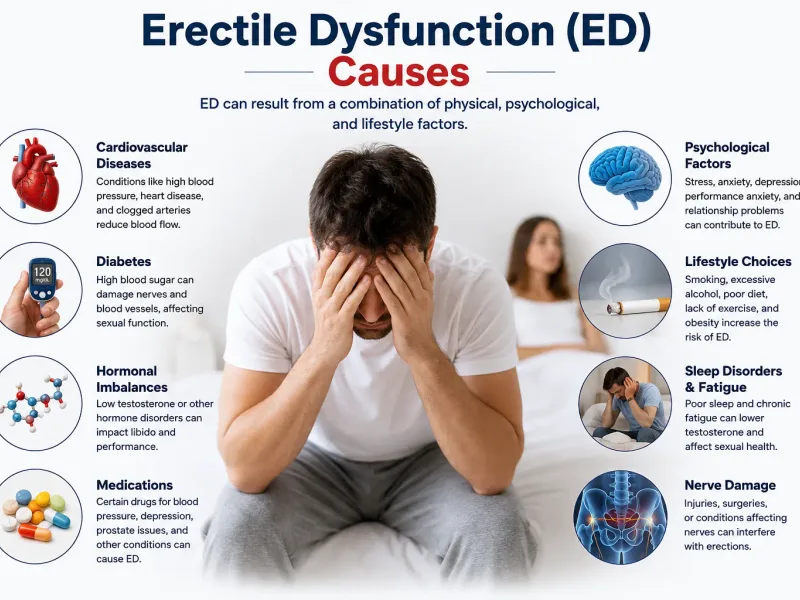
Here's what doesn't get said clearly enough: ED almost never has a single cause. In clinical practice, doctors find that most men presenting with ED have a combination of physical and psychological factors reinforcing each other. You might start with a mild circulation issue that makes erections less reliable, which then creates performance anxiety, which makes the problem worse.
The two feed each other. And treating only one while ignoring the other is why some men try medication and feel disappointed with the results.
The Physical Causes That Matter Most
Blood Flow Is Central
An erection is fundamentally a vascular event — it depends on blood flowing into the penis and staying there. Anything that impairs blood vessel function will affect erections, often before it causes obvious symptoms elsewhere.
This is why cardiovascular disease and ED are so closely linked. The blood vessels supplying the penis are smaller than coronary arteries, so they tend to show damage earlier. Some urologists describe ED as an early warning signal for heart disease — a view that has solid research behind it, though it's worth discussing with a doctor rather than self-diagnosing.
Atherosclerosis (hardening and narrowing of the arteries), high blood pressure, and high cholesterol all reduce blood flow in ways that affect erectile function. If you have any of these conditions and are also experiencing ED, that conversation with your doctor needs to happen.
Diabetes and Nerve Damage
Diabetes is one of the most common underlying causes of ED, and it works through two mechanisms simultaneously: it damages blood vessels and the nerves that trigger erection. Men with poorly controlled diabetes are significantly more likely to develop ED, and it can appear earlier and be more severe than in men without the condition.
The nerve damage piece is important because it changes how treatable the ED is. Vascular damage responds reasonably well to standard ED medications; nerve damage is a different problem, and management may look quite different.
Hormonal Causes — Less Common Than People Think
Low testosterone gets blamed for ED frequently, but it's actually a less common primary cause than most men assume. Testosterone deficiency can reduce sexual desire and affect erections, but many men with genuinely low testosterone have normal erectile function. And many men with ED have normal testosterone levels.
Thyroid disorders and elevated prolactin (a hormone that should be low in men) are less commonly discussed but worth testing for if other causes aren't apparent. A blood panel is a simple starting point.
Medications That Cause ED as a Side Effect
This one is missed more often than it should be. A number of commonly prescribed medications list ED as a side effect — certain antidepressants (particularly SSRIs), beta-blockers used for blood pressure, antiandrogens used in prostate treatment, and some antihistamines. If your ED began or worsened after starting a new medication, mention it to the prescribing doctor. Never stop a prescribed medication without speaking to them first, but a dose adjustment or switch may be possible.
The Psychological Causes
Anxiety Is Genuinely Physiological
Performance anxiety doesn't just feel bad — it triggers the sympathetic nervous system (the "fight or flight" response), which physically constricts blood vessels and works directly against the relaxation an erection requires. This is why anxiety about ED can cause ED in a self-perpetuating cycle that has nothing to do with any underlying physical problem.
Young men with ED are more likely to have a predominantly psychological cause, which is actually good news — it's often more responsive to talking therapies and stress reduction than to medication alone.
Depression
Depression and ED are closely linked, and the relationship runs in both directions. Depression reduces libido and can impair erectile function. ED causes or worsens depression. And some antidepressants used to treat depression also carry ED as a side effect. Unpicking this triangle requires a doctor who's paying attention to all three components, not just the most visible one.
Relationship Stress and Communication
This is the cause that gets written out of most medical content because it's harder to put in a checklist. Unresolved conflict, poor emotional intimacy, or difficulties communicating about sex can manifest physically as ED. This isn't weakness — it's neurobiology. The brain is the most important sexual organ, and what happens in a relationship affects what happens in the bedroom in ways that are real and measurable.
Lifestyle Factors Worth Knowing
Obesity, smoking, heavy alcohol use, and physical inactivity all contribute to ED through overlapping mechanisms — primarily by affecting cardiovascular health, hormone balance, and nerve function. Smoking in particular damages the small blood vessels involved in erection in ways that compound over time.
Poor sleep is underappreciated as a contributor. Testosterone is primarily produced during sleep, and chronic sleep deprivation suppresses it.
When to See a Doctor
If ED is happening consistently — not once after a stressful week, but regularly — it warrants a proper clinical evaluation. A can assess both physical and hormonal causes, while a is a reasonable starting point for blood pressure, diabetes, and cholesterol screening.
Younger men especially tend to delay this. The evidence suggests they shouldn't — early evaluation catches treatable causes before they progress.
You can find qualified specialists for this on Doctar.in's urology listings or browse sexual health doctors